
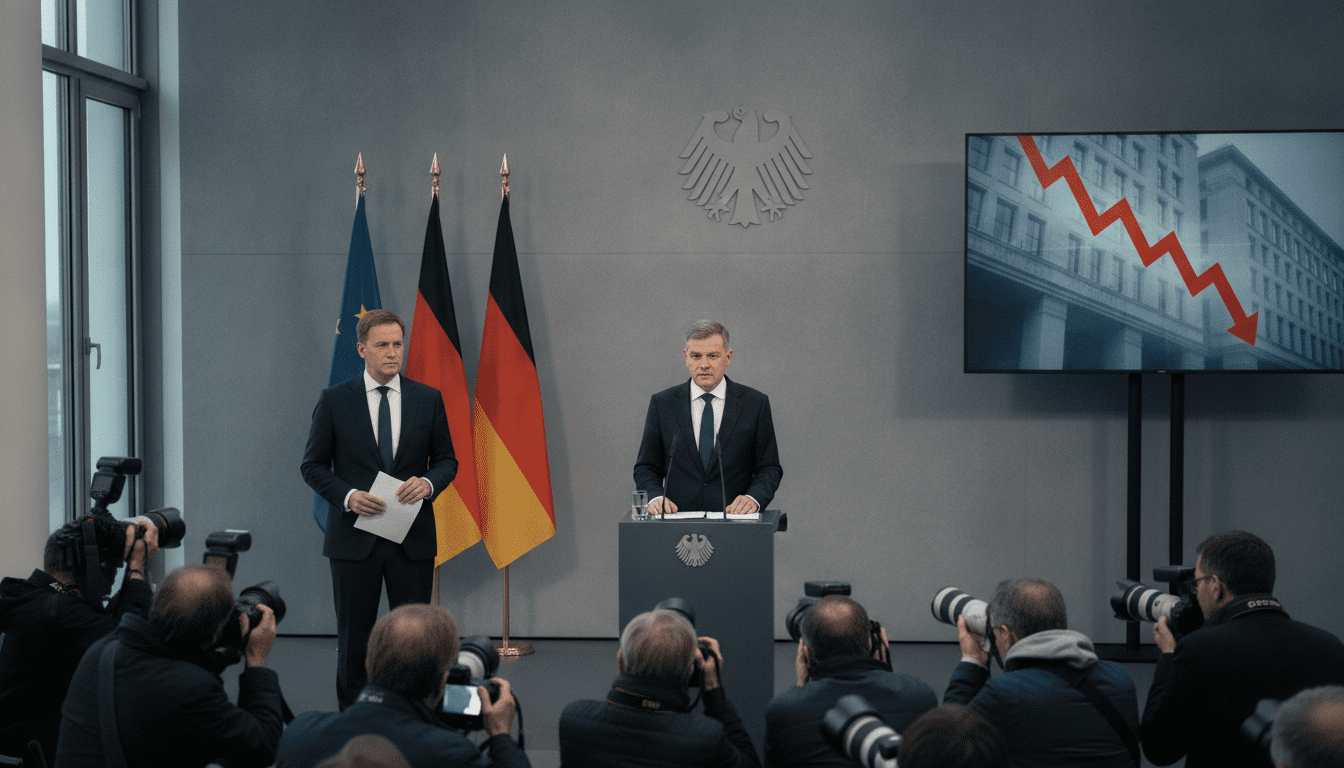
German government rejects UniCredit in Commerzbank takeover standoff
Germany’s finance agency refuses UniCredit’s exchange offer, blocking a Commerzbank takeover bid and defending the bank’s independence and jobs in Frankfurt.
The German federal government has announced it will not accept UniCredit’s exchange offer in the contested Commerzbank takeover attempt, reaffirming support for the bank’s independence. The Finance Agency of the Federal Government said the decision was taken by the steering committee responsible for the banking rescue fund, and that the offer lacked an adequate premium. The acceptance period for UniCredit’s voluntary bid was due to expire on June 16, 2026 but will be extended to July 3, 2026, the agency added.
Government cites insufficient premium and strategic concerns
The Finance Agency explicitly said the exchange proposal did not include a fair premium over Commerzbank’s market price and was therefore economically unacceptable. Officials also framed their opposition in strategic terms, arguing that Commerzbank’s autonomy should be preserved and that UniCredit’s tactics were “aggressive.” The steering committee judged that accepting the bid would not secure long-term national economic objectives.
Steering committee decision follows earlier criticism
Berlin’s rejection follows public criticism voiced in May, when government spokespeople labeled UniCredit’s approach unfair and inappropriate for a systemically relevant institution. The government has emphasized the Commerzbank’s role in financing Germany’s mid-sized companies and its significance as a major employer in Frankfurt. That stance has remained consistent as the takeover contest has intensified.
UniCredit’s holdings, options and the 11 percent tendered stake
UniCredit has already built a significant position in Commerzbank through purchases and derivative instruments, and recent figures show roughly 11 percent of Commerzbank shares were tendered to UniCredit under the voluntary swap offer. If those holdings are counted together with prior stakes and purchase options, UniCredit’s effective holding would rise toward roughly 38 percent. The Italian lender also secured additional purchase options and other instruments that increase its economic exposure.
Boardroom conflict and regulatory involvement
The takeover fight escalated after UniCredit warned it could seek to replace Commerzbank’s supervisory board and management if it failed to gain sufficient shareholder backing at the annual general meeting. Commerzbank publicly described those moves as coercive and referred the matter to Germany’s financial regulator, BaFin. Commerzbank alleges many tendered shares came from affiliated banks engaged in financial arrangements with UniCredit, which would make the exchange disadvantageous for those holders; UniCredit has denied those claims.
Economic and employment concerns in Frankfurt
Government officials underlined that Commerzbank plays a key role in lending to the Mittelstand and in maintaining Frankfurt’s financial-services ecosystem. Preserving jobs and local lending capacity were cited as central to the decision not to accept the exchange offer. The steering committee framed the choice as one to protect systemic stability rather than to favor a particular corporate outcome.
Next steps: deadlines, possible responses and market implications
With the acceptance window extended to July 3, 2026, the immediate focus will be whether UniCredit revises its offer or presses ahead with a different strategy to increase influence at Commerzbank. Regulators and German authorities retain tools to scrutinize a cross-border consolidation of a bank deemed systemically important. Market participants will watch shareholder movements closely and assess how the standoff affects Commerzbank’s stock, funding costs and strategic options in the weeks ahead.
The rejection marks a clear political intervention in a high-stakes corporate contest between two large European banks and sets up a tense summer of negotiations, regulatory reviews and potential litigation. The outcome will shape not only ownership of Commerzbank but also perceptions of Germany’s openness to foreign bank consolidation in strategic sectors.
