
Experts Clarify What Your Body Temperature Reading Means as Thermometers Vary
Body temperature explained: why digital thermometers differ, what counts as a fever, and how measurement site and device precision affect your reading.
Body temperature readings can vary by device, placement and calibration, and experts say interpreting a single number requires context. New guidance for consumers highlights that most digital thermometers report temperatures to one decimal place and that diagnostic thresholds differ by measurement site. Understanding those differences helps people know when a reading indicates a low-grade illness or a clinically significant fever.
Digital thermometer limits and precision
Digital home thermometers commonly used to take body temperature typically display a maximum reading in the range of 109 to 110 degrees Fahrenheit (about 42.7 to 43.3 °C).
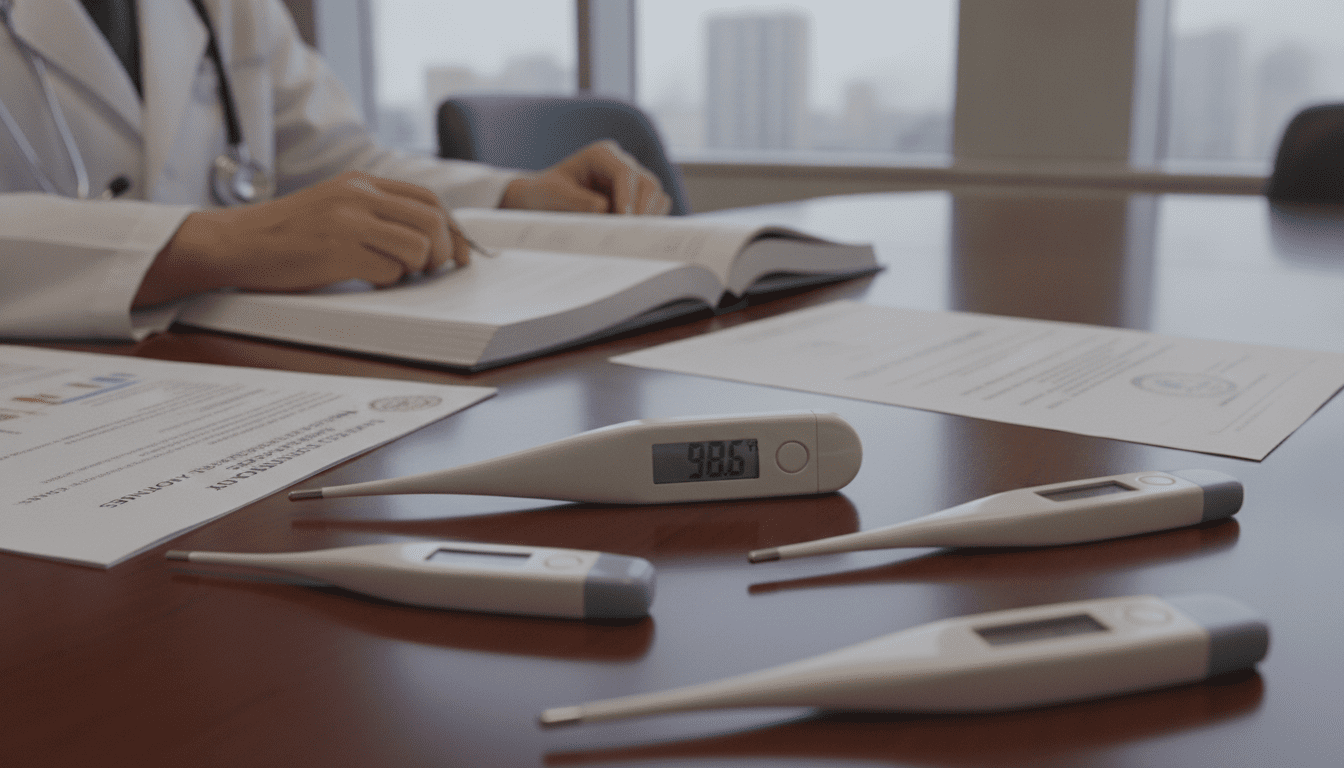
Most consumer devices show temperatures with one decimal place, for example 98.6°F, while specialized basal body thermometers used for fertility tracking can report to two decimal places. These differences in precision affect how small changes are displayed and interpreted.
Common temperature ranges and clinical cutoffs
A broadly cited guideline places normal body temperature between roughly 97°F and 99°F (36.1–37.2 °C).
Temperatures from about 99°F to 100.3°F (37.2–37.9 °C) are often described as a low-grade fever, and readings of 100.4°F (38.0 °C) or higher are commonly used as a clinical threshold for fever. These ranges are intended as general markers and can vary slightly depending on the source and measurement method.
How measurement site changes the reading
Where you place a thermometer matters: oral, axillary (underarm), tympanic (ear) and temporal (forehead) readings do not always match.
An oral reading of 100°F may be treated differently than an underarm reading of the same value because axillary measurements typically read lower than core oral or rectal values. Users should consult the instruction manual for their specific device to learn which measurement sites are supported and how the manufacturer recommends interpreting results.
Device calibration, manuals and measurement technique
Manufacturers calibrate thermometers to work within particular tolerances, and the user manual usually outlines how to interpret the device’s output.
Accuracy can be affected by battery condition, ambient temperature, improper placement and user technique; following the manufacturer’s steps—such as allowing the thermometer to equilibrate to room temperature and using the recommended site—reduces variability between readings.
Practical tips for more reliable readings
Take repeat measurements if a single reading is unexpected, and use the same device and site for follow-up checks to track trends accurately.
Wipe or change disposable probe covers as directed, replace batteries when performance drops, and store the thermometer according to the manufacturer’s recommendations to maintain consistent performance.
Interpreting small changes and fertility tracking tools
Basal body thermometers that measure to two decimal places can detect subtle shifts useful for fertility monitoring, but their heightened precision does not always indicate clinical change.
Clinicians caution that very small variations—especially those within a device’s margin of error—should not be overinterpreted without considering symptoms, time of day and recent activity such as exercising, drinking hot beverages, or being exposed to heat.
When to contact a healthcare provider depends on symptoms, the persistence and height of fever, and individual factors such as age and underlying conditions. If a temperature is unexpectedly high, if fever is accompanied by difficulty breathing, severe pain, persistent vomiting, confusion, or other worrying signs, seek medical advice promptly.
Routine temperature checks remain a useful tool for identifying illness when used consistently and with an understanding of device limitations. Taking measurements as instructed by the thermometer’s manual and considering measurement site, decimal precision and environmental factors will give a more accurate picture of whether a body temperature reading reflects a normal fluctuation or a sign of fever.
