
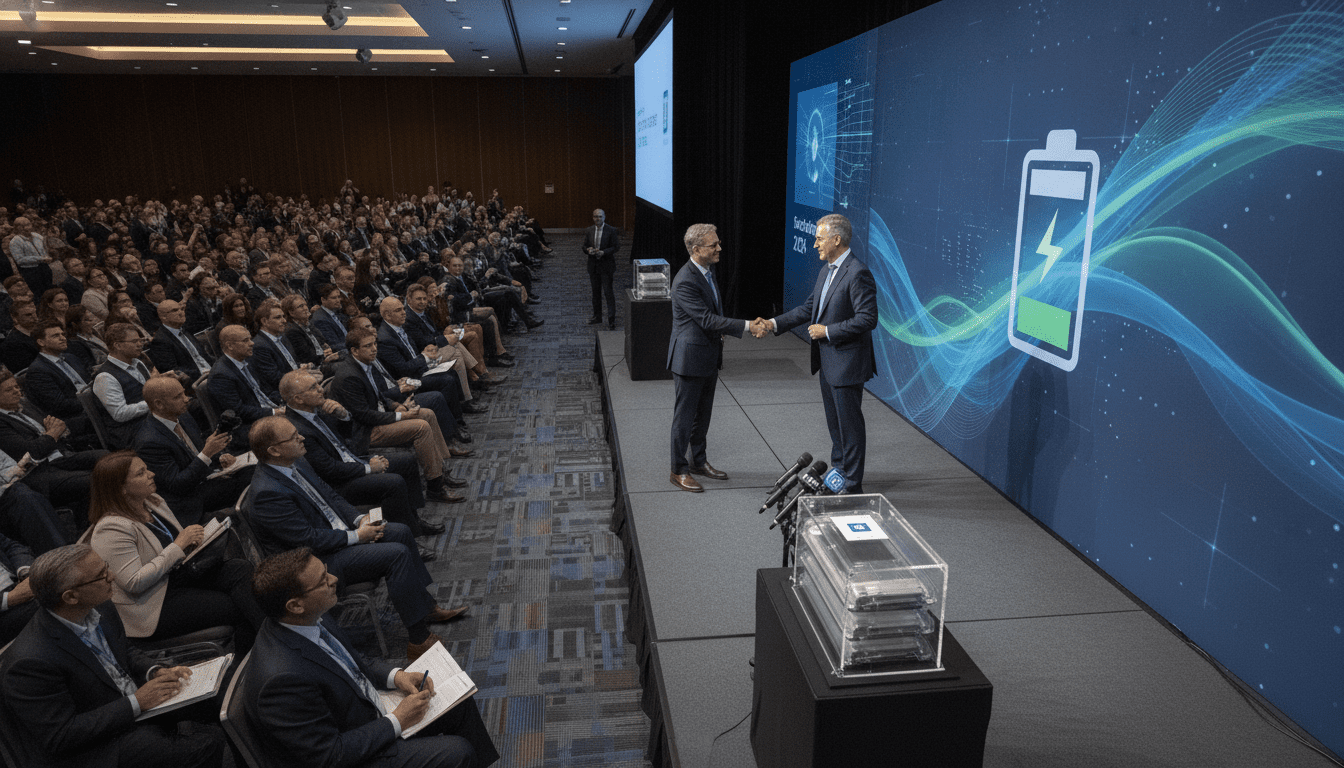
GM to Build Sodium‑Ion Batteries for Grid-Scale Energy Storage in New Peak Energy Partnership
GM will develop sodium‑ion batteries for grid-scale energy storage through a partnership with Peak Energy, with trial cells slated for production at its Battery Cell Development Center in 2028.
General Motors announced a major push into grid-scale energy storage on Tuesday, unveiling a partnership to produce sodium‑ion batteries tailored for utility and industrial deployments. The move positions GM to supply a new class of lower-cost, longer‑life storage cells while also expanding existing collaborations with LG Energy Solution and Redwood Materials. The automaker expects initial trial production of its sodium‑ion cells at its Battery Cell Development Center in 2028 and has committed substantial funding to accelerate new battery chemistries.
Partnership with Peak Energy Targets Sodium‑Ion Chemistry
GM said it is teaming with energy storage startup Peak Energy to design sodium‑ion cells specifically for grid applications. The collaboration will see GM supply the battery chemistry while Peak integrates the cells into its grid‑scale systems. Company executives described the approach as purpose‑built: the chemistry and system architecture are being engineered together to match the slower, high‑cycle demands of stationary storage.
Sodium‑Ion Advantages and Tradeoffs for Grid Use
Sodium‑ion batteries replace key materials used in lithium‑ion cells, lowering raw‑material costs and improving thermal stability, which reduces the risk of overheating. That improved safety profile allows some system designers to omit active cooling and elaborate fire suppression, trimming both upfront and lifecycle expenses. The technology generally requires larger, heavier cells to reach the same energy capacity as lithium‑ion, but GM and its partners argue the tradeoff is acceptable for stationary applications where energy density is less critical.
Trial Production Set for GM’s Battery Cell Development Center in 2028
GM plans to bring its first sodium‑ion cells into trial production at the Battery Cell Development Center in 2028, a timeline company officials say is accelerated by the new facility. GM has allocated funding to commercialize new battery chemistries as part of a broader investment in battery development and said the center will shorten the path from lab to pilot manufacturing. Executives expect the development center to shave roughly a year off commercialization timelines and drive down costs through integrated testing and scale planning.
Interim Supply Arrangements with LG Energy Solution
While sodium‑ion cells work toward trials and eventual commercialization, GM will continue supporting the market with established chemistries. The automaker confirmed it will sell lithium iron phosphate (LFP) cells to LG Energy Solution for incorporation into LG’s energy storage products. That arrangement leverages existing manufacturing ties and provides an immediate supply option for partners seeking proven performance today while sodium‑ion production ramps up.
Expanded Use of Second‑Life Packs with Redwood Materials
GM is also expanding collaboration with Redwood Materials to deploy second‑life EV battery packs for stationary storage at industrial sites and data centers. The automaker said it has a pipeline of roughly 10,000 used EV packs that will be funneled to recycling and storage projects. GM plans to purchase a 7.2 megawatt‑hour Redwood system for a Michigan plant, an installation the company projects will save approximately $3 million over the system’s lifetime through demand‑charge management and backup power benefits.
System Design Choices Aim to Cut Costs and Maintenance
Peak Energy’s sodium‑ion systems are being designed without active cooling and extensive fire suppression because the cells exhibit a lower thermal risk compared with many lithium chemistries. GM’s energy storage commercialization lead described the design philosophy as removing components rather than engineering around them—eliminating systems that add cost and potential failure modes. Those choices are intended to lower installation costs, reduce maintenance, and simplify long‑term operations for commercial customers and data center operators.
GM has framed the move as part of a broader industry trend in which automakers and battery recyclers seek to capture value in stationary storage markets. Battery recycler Redwood Materials and manufacturers including Ford have announced initiatives to repurpose EV packs or convert production capacity for grid batteries, signaling growing competition and collaboration across the auto and energy sectors. Outside of China, automakers have largely focused on lithium chemistries; GM’s sodium‑ion effort marks one of the first major Western automaker commitments to the technology.
The company emphasized that sodium‑ion cells will be used initially in energy storage systems rather than passenger vehicles, reflecting the technology’s current tradeoffs and the economics of stationary deployments. GM’s phased approach—supplying LFP in the near term, trialing sodium‑ion cells from 2028, and integrating recycled packs at industrial sites—reflects a strategy to address immediate customer needs while investing in lower‑cost, safer chemistries for the future.
