
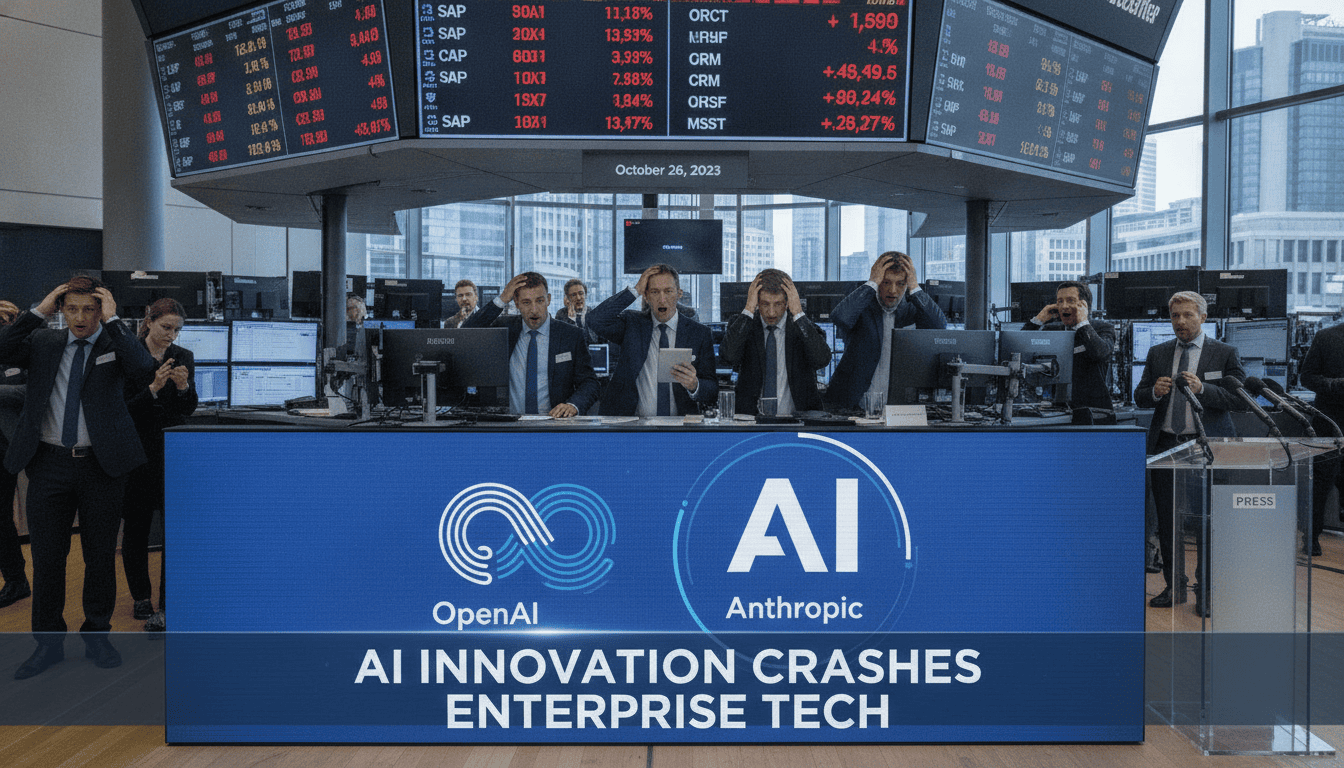
Anthropic and OpenAI Upgrades Send Tech Stocks Tumbling as SAP Feels the Impact
Anthropic and OpenAI’s latest AI features have rattled markets, prompting sharp sell-offs in software and enterprise stocks as investors fret their products could be displaced. The market reaction reflects a growing belief that US AI providers are pulling decisively ahead of competitors, amplifying pressure on established firms like SAP.
Market Reaction to New AI Features
The announcement of expanded capabilities from Anthropic and OpenAI triggered immediate market volatility across technology sectors. Investors sold shares in companies whose products are seen as vulnerable to automation or substitution by advanced AI models. Market participants cited the perception that the two US AI firms are accelerating past rivals when reassessing valuations.
Institutional and retail traders responded quickly, pricing in a faster shift toward generative and large-model-driven workflows. The sell-offs have not been limited to niche startups; major enterprise software and cloud vendors experienced declines as traders adjusted expectations for future revenue streams. Analysts described the moves as a repricing of risk tied to AI-driven disruption.
SAP Among Enterprise Vendors Under Pressure
SAP emerged as a visible casualty of the market shift, with investor concern centering on how new AI capabilities could change enterprise software demand. Market watchers pointed to fears that core ERP and cloud offerings might face competitive pressure as generative models automate tasks and streamline business processes. SAP’s exposure to long-term maintenance and licensing revenue made it particularly sensitive to sudden sentiment changes.
Company executives and investors now face scrutiny over how quickly they can integrate advanced AI into existing platforms to preserve margins and client relationships. The episode illustrates how perceptions of technological leadership can translate into near-term share-price volatility for established vendors, even before widespread customer adoption occurs.
Why Perception of a US Lead Matters
The market reaction underscores the power of perception in an industry where lead time can deliver outsized advantages. Anthropic and OpenAI are widely viewed as focal points for rapid model capability gains, and that narrative has influenced investor assessments of competitive dynamics. When markets believe suppliers are “unobtainably” far ahead, capital reallocates toward the perceived winners and away from firms deemed vulnerable.
This dynamic can accelerate a feedback loop: stronger share performance and capital inflows bolster the lead of frontrunners through hiring, compute access, and partnerships. Conversely, companies on the defensive may face higher borrowing costs and reduced appetite for innovation spending. Investors stressed that the current moves are less a final verdict on product roadmaps than a reflection of shifting expectations about who will set standards for the next wave of enterprise tools.
Industry Responses and Strategic Shifts
In response to the pressure, some incumbents are publicly accelerating AI initiatives, seeking partnerships, or highlighting integration roadmaps to reassure customers and markets. Firms are revising product timelines, announcing pilot programs, and emphasizing hybrid cloud strategies that combine existing enterprise features with new model-driven capabilities. These steps aim to demonstrate adaptability and to blunt narratives of obsolescence.
At the same time, customers are weighing integration risks, data governance, and total cost of ownership when considering model-driven replacements for established software. Procurement cycles and large enterprise transformations are likely to slow until clarity emerges about standards, interoperability, and long-term support models. That cautious stance could both delay and magnify competitive shifts once buyer confidence returns.
Broader Implications for European Tech Competitiveness
The episode has renewed debate about Europe’s position in the global AI landscape and the need for policy, investment, and industrial responses. Observers argue that concentrated investment in compute, talent, and regulatory clarity will be essential to prevent a widening gap. European companies and governments are exploring incentives for research, public-private partnerships, and frameworks to increase adoption of trustworthy AI in enterprise settings.
At the same time, some industry leaders note opportunities for differentiated offerings that emphasize data sovereignty, vertical specialization, and tighter integration with local business processes. The unfolding market response is prompting a strategic rethink: whether to pursue rapid emulation of US approaches or to carve out complementary, regionally tailored solutions.
Investors and corporate boards will be watching how quickly companies like SAP can translate strategy into demonstrable product improvements, and whether Anthropic and OpenAI sustain their momentum. The near-term volatility may settle as firms clarify roadmaps and customers test new capabilities at scale.
Looking ahead, market participants expect continued focus on competitive positioning rather than immediate technical superiority as the decisive factor for enterprise adoption. The episode highlights how advances from Anthropic and OpenAI are reshaping expectations across sectors and forcing established players to accelerate adaptation.
