
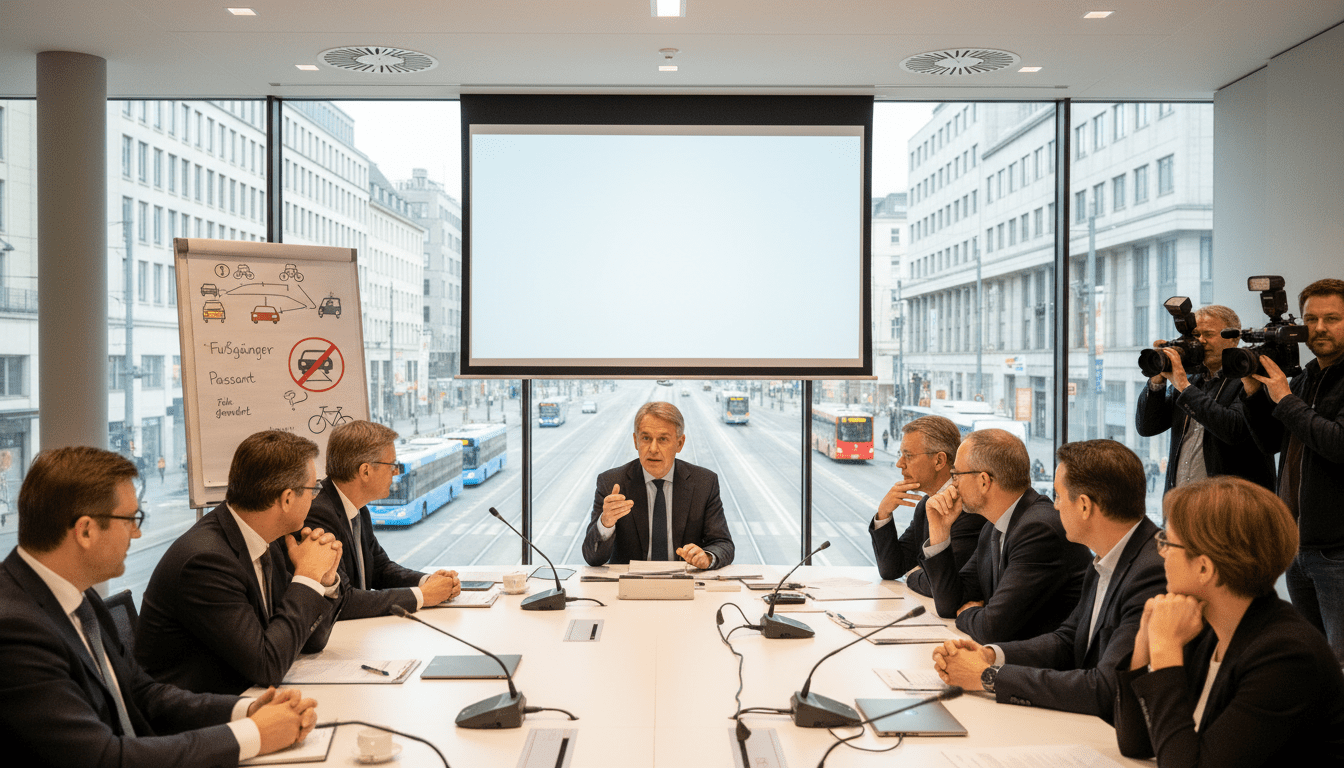
Deutsche Bahn Sparks Criticism Over ‘Walking’ Wording at Berlin Mobility Conference
Deutsche Bahn drew sharp criticism after a Berlin conference on station connectivity where its choice of wording and Denglisch branding were accused of sidelining pedestrians and ordinary rail passengers.
Deutsche Bahn and the Federal Ministry of Transport convened a two‑day forum in Berlin to discuss “Anschlussmobilität” — ways to make it easier for train passengers to complete the last mile from stations. The agenda named three modes of onward travel — cyclists, e‑scooter users and those “walking on foot” — a phrasing that quickly became the focal point of public and media debate. Critics said the language choice exposed a wider problem in how the rail operator communicates with customers.
Conference Focus and Framing
The event sought practical solutions for multimodal links at every station, from bike parking and micro‑mobility integration to pedestrian routing and signage. Deutsche Bahn positioned the forum as a technical exchange with municipal planners, mobility providers and federal officials aimed at improving connections for travelers. Organizers emphasized that better coordination between services and clearer station layouts would reduce missed connections and improve the passenger experience.
Nevertheless, the description of target groups and modes of travel triggered scrutiny beyond technical details, shifting attention to the words the company chose to represent people who use the rail network. Observers argued that language used in high‑level policy settings signals priorities and can shape what gets planned and funded.
‘Walking’ Phrase Sparks Linguistic Outcry
At the center of the controversy was a German phrasing that translated awkwardly into English and was perceived as omitting the traditional category of “pedestrians.” Commentators seized on the wording as emblematic of an impersonal communication style that appears more concerned with labels than with everyday users. The framing prompted wry critiques that, in effect, Deutsche Bahn had “abolished” the pedestrian in its official vocabulary.
Linguists and customer advocates pointed out that how a mobility provider names people matters for inclusion and clarity. When signage, outreach materials and technical briefs drift into jargon or mixed‑language labels, ordinary travelers can be left uncertain about services and routes — an outcome that runs counter to the conference’s stated aim of improving accessibility.
Denglisch and Branding Under Scrutiny
The language row also highlighted a long‑standing branding strategy at Deutsche Bahn that mixes English terms with German offerings. Examples cited by critics included Service Point for ticket desks, the Call a Bike rental brand, and terms used for automated or contactless services. Opponents say the mix of Denglisch and marketing language projects modernity while obscuring the straightforward information many passengers need.
Supporters of the practice say anglicized terms can be useful in global or urban contexts and occasionally streamline communication across platforms. Yet the current debate underscores a tension: branding that aims to appear cutting‑edge can distance users who expect clear, unambiguous guidance when navigating stations and transfers.
Political and Public Backlash
The wording dispute did not stay confined to language watchers; it prompted commentary from political figures and became a point of contention in online discussions. Some politicians used the moment to criticize Deutsche Bahn’s public communications and to link linguistic choices to broader complaints about service quality. A small but vocal portion of critics framed the issue as symbolic of corporate overreach into cultural norms.
Public reaction on social media and in letters to editors ranged from amusement to frustration, with many users noting that clear information about walking routes, platform access and connections matters more than branding. Analysts say such episodes can damage trust if travelers perceive a gap between polished messaging and the practical realities of station navigation.
Implications for Station Accessibility and Policy
Beyond rhetorical debate, language choices feed into tangible planning outcomes. If walking is not treated consistently as a core mode of station access, pedestrian infrastructure — safe crosswalks, direct paths, signage and barrier‑free routes — risks being underprioritized. Mobility planners argue that equitable last‑mile solutions must start with clear, citizen‑oriented communication and accessible physical design.
Experts urging reform recommend that Deutsche Bahn and policy partners adopt plain, user‑centered terminology in public documents and on station signage. That change, they say, should be paired with measurable commitments to improve pedestrian wayfinding, sheltered walkways, lighting and connections to local transit so that the rhetorical inclusion of “walking” is matched by concrete action.
Deutsche Bahn faces the challenge of reconciling a desire to present itself as a modern mobility provider with the everyday need for clarity and accessibility at its stations. The Berlin conference illuminated that language and branding choices have consequences for public perception and for the practical experience of travel, and critics say the operator must show that its words will be backed by visible improvements on the ground.
