
Thousands Protest Changes to Czech Public Broadcasters’ Funding in Prague
Government plan to abolish radio and TV fees and move funding to the state budget sparks mass demonstrations and strike threats in Czech public broadcasters.
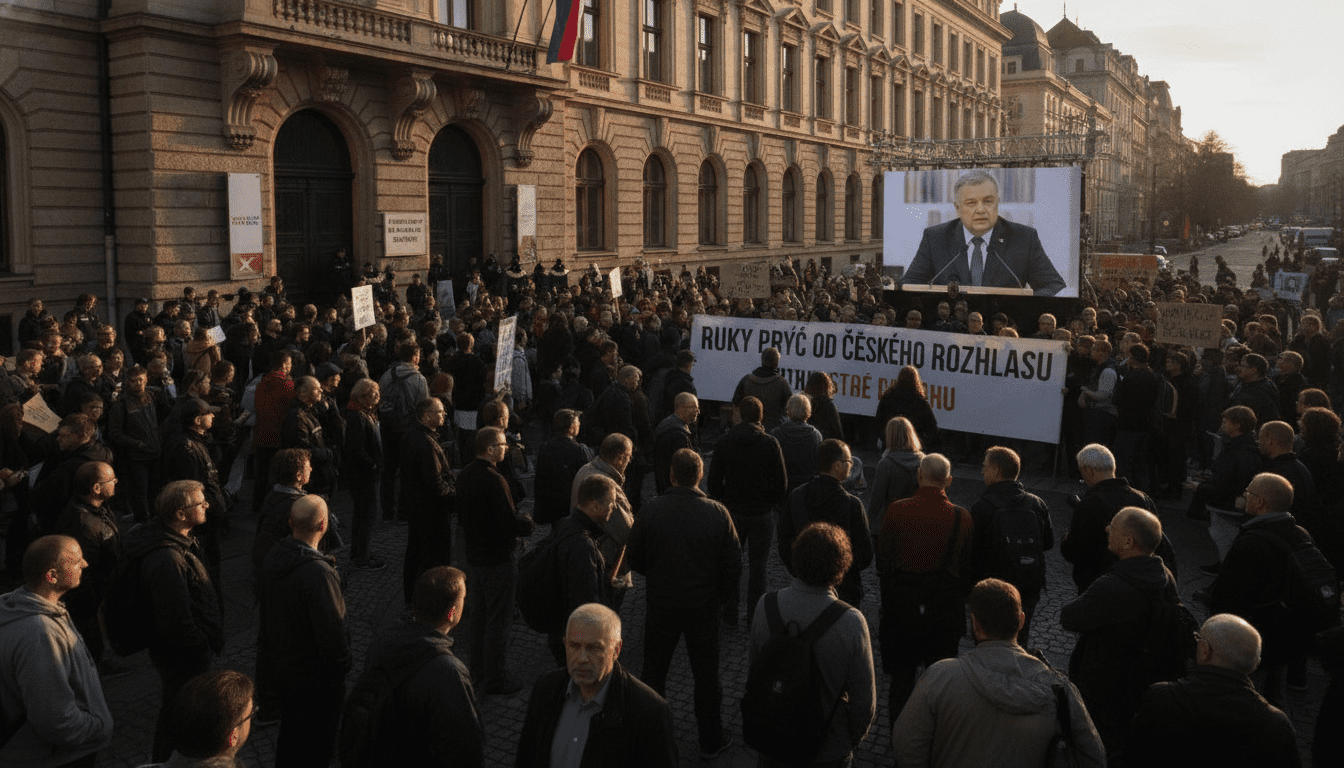
A strong turnout of protesters gathered outside the headquarters of Czech Television in Prague to oppose government plans that would alter funding for Czech public broadcasters. The crowd, numbering in the thousands according to local media and the CTK news agency, voiced alarm that moving financing from licence fees to direct state budget support could undermine editorial independence. Organizers from the movement One Million Moments for Democracy framed the rally as a defense of independent public media against political interference.
Protest Outside the Public Broadcaster in Prague
Thousands assembled in front of the public television building, waving signs and chanting for media independence. Organizers said the demonstration was intended as a show of solidarity with journalists and staff at Czech Television (ČT) and Czech Radio (ČRo). Local reports described a steady flow of participants from nearby streets and public squares, underscoring broad civic concern over the proposed funding changes.
Speakers at the rally warned that the measures would turn public outlets into tools of the government rather than independent services serving the public interest. Mikuláš Minář, a co-organizer, told the crowd that media belong to the public and must not be “stolen” by political actors. The event marked another major public mobilization by the group, which has organized similar demonstrations in recent months.
Details of the Government’s Funding Proposal
The cabinet led by Prime Minister Andrej Babiš has proposed abolishing the existing radio and television licence fees and replacing them with direct funding from the state budget beginning in 2027. Under the plan, public broadcasters would also face cuts of up to 15 percent from their current financing levels, according to government statements. Officials justified the change as a cost-saving measure and argued the move would streamline media funding.
Babiš and his ministers have insisted the change will not bring political interference, framing the reform as fiscal modernization. Nevertheless, the shift from an independent fee model to state budget allocations would place the broadcasters’ finances under parliamentary and ministerial oversight mechanisms, raising questions about long-term editorial autonomy. The government’s timetable sees the transition set to begin with the 2027 budget cycle.
Broadcasters Warn of Job Cuts and Industrial Action
Leaders at ČT and ČRo warned that the proposed cuts would force large-scale staff reductions and program closures, estimating the loss of hundreds of jobs. The two public broadcasters said they would be unable to absorb the proposed budget cuts without reducing newsrooms and public-service programming. Management statements highlighted the mismatch between the government’s cost-saving rhetoric and the practical impact on operations.
In response to the announced measures, employees at both ČT and ČRo called a warning strike for Monday, signaling escalating industrial action if the plan proceeds. The unions and staff committees framed the strike as both a protest against the reforms and a defense of editorial independence. Broadcasters also threatened legal and political challenges, arguing that the switch in funding mechanism violates principles of public-service media autonomy.
Civil Society and Opposition Voices Raise Concerns
Civil society groups, journalists’ associations and opposition politicians decried the plan as a threat to media freedom, pointing to the risks inherent in direct state funding. Commentators warned that when governments control the purse strings, there is an increased potential for pressure on newsroom decision-making and content. Several NGOs called for safeguards, including statutory protections and independent oversight structures, to preserve editorial independence if the reform moves forward.
Opposition figures criticized the proposal as politically motivated and urged the government to consult stakeholders, including journalists and media experts, before altering the financing model. Legal analysts suggested parliamentary debate and possible constitutional scrutiny could follow if lawmakers attempt to pass legislation without broad consensus. The debate has highlighted a deeper national conversation about the role and protection of public-service media in Czech democracy.
Prime Minister’s Defense and Political Context
Prime Minister Andrej Babiš, a billionaire businessman and leader of a right-populist movement, defended the reform as financially responsible and denied any intent to exert political control. His office said the change would uncover savings and improve efficiency within public broadcasters, while promising that editorial independence would be preserved under new oversight arrangements. Critics have pointed to Babiš’s long-standing contentious relationship with parts of the media landscape when assessing his assurances.
The policy unfolds against a backdrop of ongoing tensions between the government and independent institutions, with the media financing debate intensifying scrutiny of executive power. The proposal has become a focal point for broader political disputes over transparency, accountability and the future governance of public institutions. How lawmakers, civil society and the broadcasters themselves respond in the coming weeks will shape whether the plan advances or is revised.
Public unrest, broadcaster warnings and the planned warning strike indicate the proposal has ignited a sustained public debate over the future of Czech public broadcasters and the protections needed to safeguard independent journalism.
