
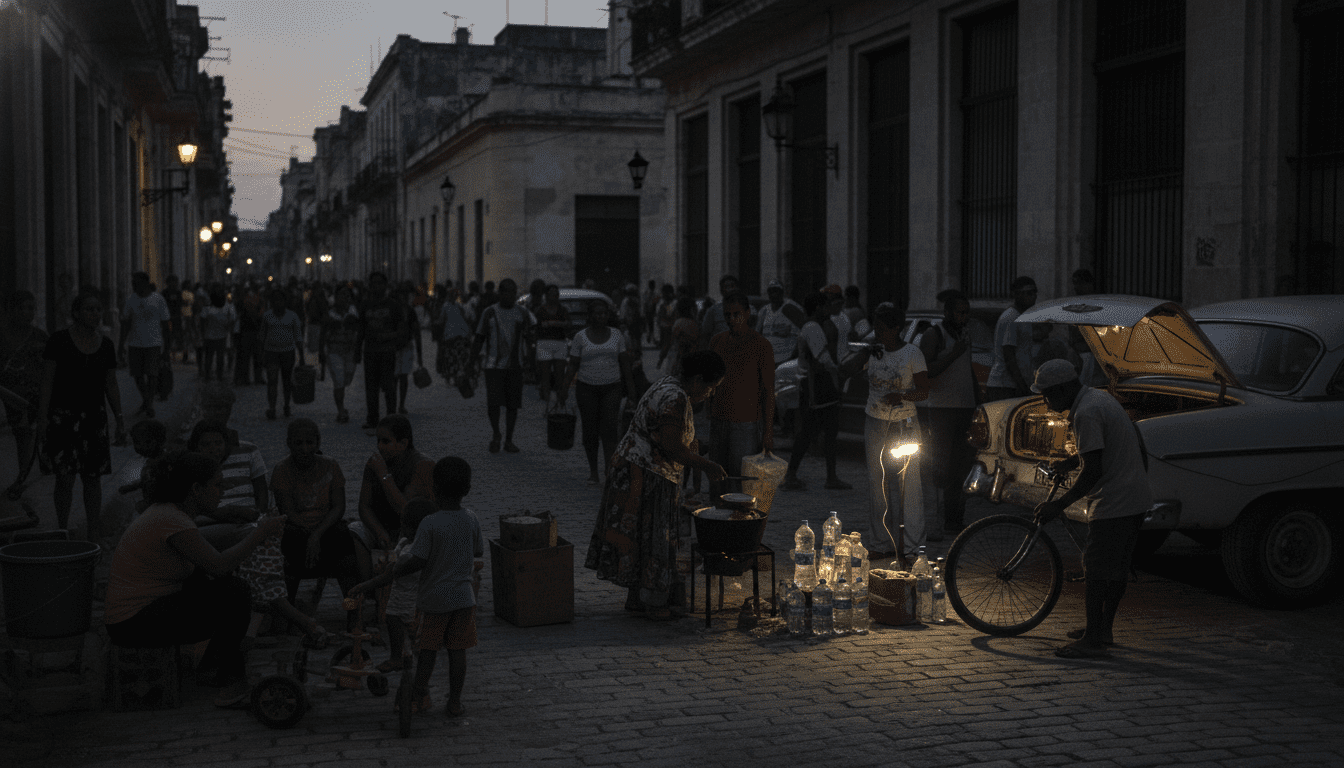
Cuban economic crisis reverberates in Santiago de Cuba as power cuts and shortages reshape daily life
Power cuts and shortages in Santiago de Cuba push residents into barter, remittances and small businesses, exposing the human cost of the Cuban economic crisis.
Santiago residents adapt as Cuban economic crisis deepens
At dawn the central market of Santiago de Cuba becomes a stage of survival: herbs, vegetables and small bundles of firewood are exchanged beside stalls selling live pigeons for ritual use. The Cuban economic crisis is visible in these everyday transactions, where reused bottles, shared meals and improvised commerce replace steady supply chains. Locals and seasonal foreign visitors alike navigate limited water, intermittent electricity and a cash economy that often forces creative, informal solutions.
Street vendors, scavengers and part-time traders have become a de facto safety net for many households. Men like Pedro collect plastic bottles for resale, while women such as Lamaya bake and sell turrones to make ends meet, turning small margins into the only reliable income some families see. These coping mechanisms are widespread and deeply embedded in daily life across the city.
Markets, remittances and reused water
Reused plastic bottles and informal water resale are common responses to unreliable municipal services and frequent outages at water treatment plants. Tourists and residents report that bottled water often comes from repurposed containers, filled when treatment facilities have power and sold quickly through kiosks and informal vendors. For visitors accustomed to packaged mineral water, the quality and safety of such supplies are a frequent concern, but locals have little alternative.
Remittances remain a vital but imperfect lifeline for many Cubans, routed through a growing network of private micro-enterprises. Money sent from relatives abroad is often converted into goods in another country and shipped or sold locally, with commissions and logistical costs eroding much of the intended value. That process both provides needed goods and concentrates hard currency in the hands of intermediaries, with knock-on effects for local prices and liquidity.
Power outages strain households and public services
Extended blackouts have become a structural challenge across Cuba, with longer cuts reported in provinces outside Havana. When electricity is available, water plants and small businesses may resume operation, but outages of many hours—sometimes approaching a full day—leave households without refrigeration, fans or reliable lighting. In poorer districts the effects are particularly acute: stolen fans and small batteries appear on local markets, and theft of appliances from public offices has risen as residents seek relief from the heat.
Hospitals and essential services are vulnerable as well, and reports of diesel intended for emergency generators diverted to the black market underscore the stresses on the supply system. The theft and resale of fuel and equipment carry legal and safety risks, while families confront rising costs to secure basic utilities through private means.
Agriculture’s decline and constraints on production
Once-dominant sectors such as sugar, cattle and citrus have contracted sharply, leaving fields fallow and many rural producers idle. Few of the sugar centrales that operated under the previous era remain functional, and strategic investment shifted toward tourism long before the pandemic reduced hotel occupancy. The result is a fractured food supply chain that pushes city residents toward markets for staples and increases dependence on imports or remittance-funded purchases.
Young professionals trained in agronomy describe the systemic obstacles they face: limited access to capital, scarce feed and a regulatory framework that requires permits for even routine activities like slaughtering livestock. Those constraints stifle efforts to scale small farms, keep production inefficient, and dampen incentives for entrepreneurs who might otherwise boost domestic food output.
Rise of Mipymes and informal finance
Since reforms widened the space for small private businesses, Mipymes—micro, small and medium enterprises—have proliferated, filling gaps left by the state. They operate transport services, import consumer goods and channel remittances, but they also concentrate scarce foreign currency and sometimes act as informal banks. The flow of dollars into Mipymes helps make goods available, but it also creates distortions: local currency becomes locked in private hands, while ordinary bank accounts and salaries lose purchasing power.
These enterprises have introduced both opportunity and friction. Owners can offer higher daily wages and new services, yet reports of exploitation and criminality—ranging from coercion of employees to fuel theft—highlight governance gaps. Legal exceptions that allowed some firms to import small quantities of fuel and goods have helped sustain markets, but they have also incentivized diversion and rent-seeking in an environment of weak oversight.
Social strain, inequality and coping networks
Inequality remains stark, with Afro-Cuban families disproportionately affected by poverty and fewer pathways to capital. Churches, neighborhood lending circles and informal rotating savings groups provide essential support, as state wages—often a few thousand pesos a month—are inadequate for basic needs. Women selling food, older residents vending coffee and collective saving schemes are part of an informal economy that keeps households afloat despite inflation and limited cash availability.
The social consequences of long-term scarcity include increased migration pressure, strained community relations and a normalization of small-scale survival tactics that blur legal and ethical lines. For many in Santiago, the choices are pragmatic: share resources with neighbors, join a collective savings pool, or engage in small commerce and ad hoc exchanges that keep food on the table.
Local entrepreneurs and residents express a range of attitudes toward the future, from resignation to cautious optimism. Some have adapted by building small flocks, raising pigs on household scraps or running private buses between provinces, while others hope for policy changes that would improve access to credit and stabilize basic services. For now, the interplay of outages, supply shortages and an expanding informal sector defines life in Santiago de Cuba.
As the Cuban economic crisis persists, the city’s informal economy and social networks will continue to shape how residents cope with limited services and scarce cash, even as questions about long-term recovery and equitable access to resources remain unresolved.
