
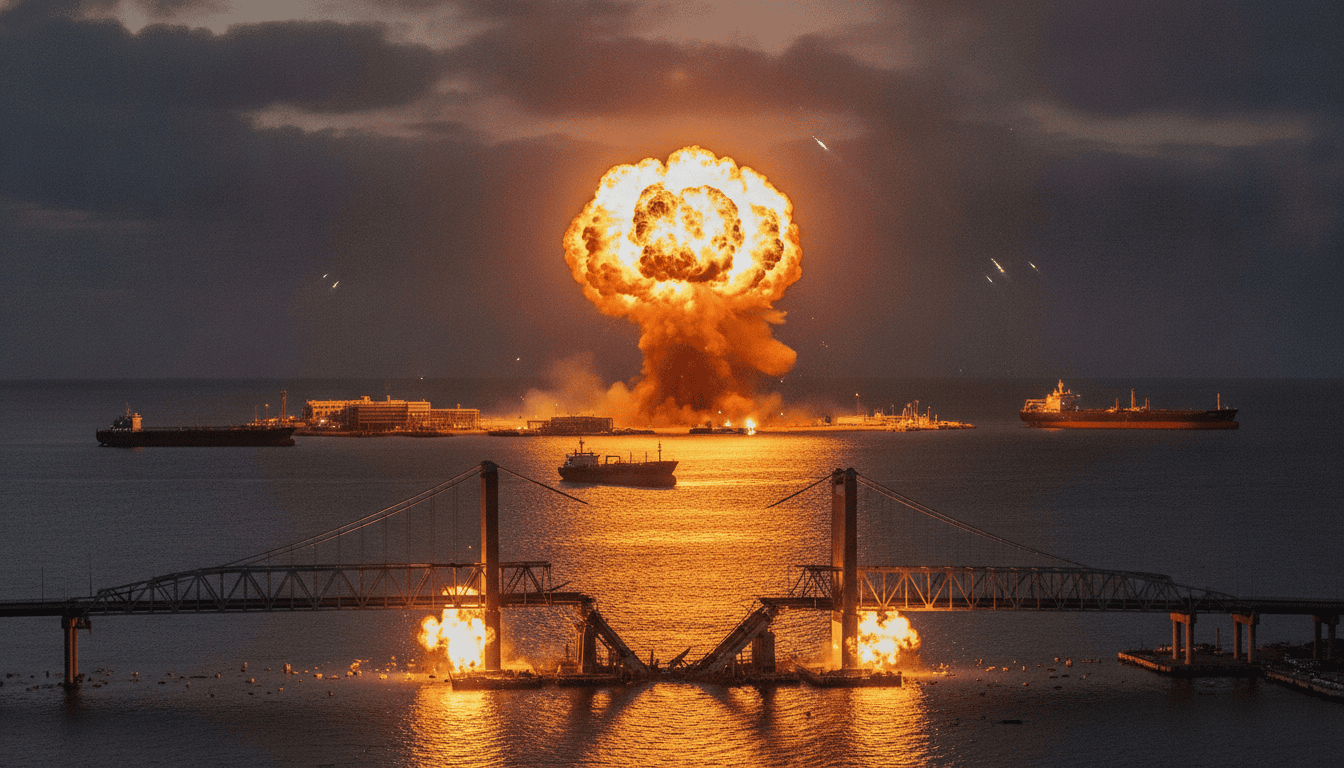
US strikes on Iran hit rail link and oil facilities in broad overnight campaign
US strikes on Iran hit rail links, Kharg Island and port facilities in a broad campaign after attacks on merchant ships, raising regional shipping and diplomatic risks.
Opening summary
The US strikes on Iran overnight targeted a wide range of strategic and symbolic sites, including a key railway bridge in the northeast and facilities on Kharg Island, a major oil shipping terminal, officials and Iranian sources said. CENTCOM described the operation as an extensive campaign against roughly 90 targets designed to degrade Iran’s ability to threaten maritime traffic in the Strait of Hormuz. Iranian authorities reported civilian casualties and domestic unrest following the strikes.
Targets and scope of the strikes
US military officials said the attacks spanned multiple provinces and included military and infrastructure targets, according to CENTCOM briefings released after the operations. Iranian authorities said bombardment severed the rail line linking Tehran and Mashhad by destroying two railway bridges, disrupting a crucial freight route to Central Asia. State and regional sites around the port cities of Chabahar and Bushehr were also reported struck.
The campaign appeared to mark a notable expansion in target selection, with Iranian officials charging that civilian infrastructure was hit. Washington framed the strikes as measures to reduce Tehran’s capacity to threaten freedom of navigation and to deter further attacks on commercial shipping.
Casualties and immediate damage reports
Iran’s health ministry reported 14 dead and 78 wounded as a result of the overnight operations, a toll that officials warned could rise as assessments continued. Local media and state agencies described damage to rail infrastructure, port facilities and other installations near population centers, though independent verification of the full scope of damage remained limited.
CENTCOM released imagery and video meant to demonstrate the precision and breadth of the strikes, while Iranian state sources characterized the attacks as unlawful and accused the United States of targeting civilians and funeral events. Both sides presented differing narratives about the timing and intent of specific strikes.
Retaliatory incidents and prior provocations
US officials said the strikes were a response to a recent Iranian assault on three merchant vessels in the Strait of Hormuz, which Washington and allies regard as unlawful attempts to harass commercial traffic. Iranian forces, for their part, continued to assert control over the strait and warned that maritime access would be governed by Iranian measures rather than American threats.
Following the US operations, Iran reported retaliatory strikes against US positions in the region, including locations in Bahrain and Kuwait and an early-warning installation in Qatar. Kuwaiti officials reported one person wounded in the exchange. Tehran reiterated that it would uphold its asserted control of the Strait of Hormuz despite international pressure.
Domestic political fallout and funeral scenes
The strikes and the wider confrontation unfolded amid large public gatherings tied to state funeral ceremonies in northeastern Iran, events that Iranian leaders used to demonstrate domestic solidarity. Video circulated showing confrontations at some ceremonies: officials and negotiators were jeered, and a senior diplomat was reportedly struck by a thrown object. State media published images of participants holding placards with violent slogans aimed at US leaders, further inflaming tensions.
Hardline factions in Tehran moved swiftly to translate public anger into policy, proposing parliamentary measures that would restrict negotiators from engaging with Washington. Officials and hardline lawmakers framed the US strikes as an attack not just on infrastructure but on national dignity, a rhetoric likely to complicate any rapid diplomatic de-escalation.
Signals from Washington and diplomatic posture
President Donald Trump addressed the strikes during a press engagement in Ankara, describing the operations as calibrated and arguing he did not expect a prolonged return to full-scale war. He warned Iran that the United States could reimpose a naval blockade of Iranian ports and spoke of the possibility that Kharg Island — a hub for Iran’s oil exports — had been struck. The president said he was open to negotiations but questioned whether Tehran would adhere to any new agreement.
Trump’s public comments also conveyed a political calculus, with observers noting the timing ahead of domestic elections could shape the administration’s appetite for further escalation. White House and Pentagon officials emphasized the strikes were intended to deter further Iranian attacks on commercial shipping, while also conveying punitive costs to Tehran for recent provocations.
Regional maritime and economic consequences
Shipping operators and regional trade partners reacted with caution after the strikes, with some vessels following US-advised corridors along the Omani coast while others turned back. The destruction of a rail link important for freight to Central Asia raised fresh concerns about land-route disruptions that could compound the economic strain on Iran, which has already suffered under years of sanctions and restricted trade.
Iran’s top negotiator posted on social media that the country would not be cowed by coercion and that the Strait of Hormuz would be reopened only by Iranian arrangements, not American threats. The competing claims and disrupted routes underscore the broader economic and security risks for global energy markets and regional trade flows if military operations continue.
The coming days will test whether diplomatic channels can reassert control over the confrontation or whether both sides deepen reciprocal strikes that further imperil civilians, commerce and regional stability.
