
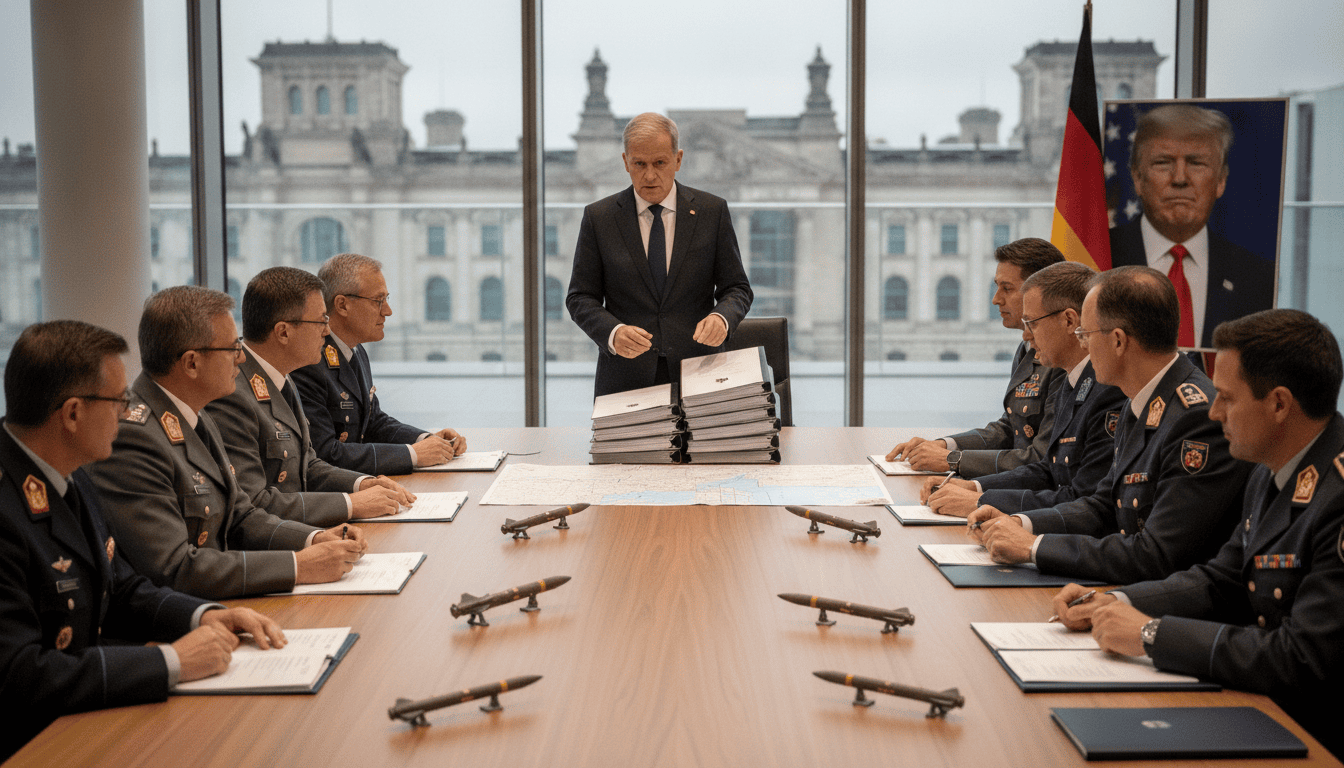
Germany secures Tomahawk missiles after US reversal, Pistorius calls purchase a sign of transatlantic friendship
Germany has arranged to buy Tomahawk cruise missiles from the United States after Washington initially signalled it would not station the long-range systems on German soil. The move, announced by Berlin this week, follows President Trump’s earlier refusal to proceed with a 2024 agreement to deploy Tomahawk-capable units, and Defence Minister Boris Pistorius described the purchase as a strong sign of transatlantic friendship. (tagesschau.de)
Berlin arranges direct purchase of Tomahawk missiles
The German government has taken steps to acquire Tomahawk land-attack cruise missiles and the associated launch systems after talks with U.S. counterparts, according to reporting by national outlets. Officials framed the acquisition as a way to preserve NATO deterrence and to ensure Germany can field long-range precision strike capability even if U.S. deployments do not materialize. (berliner-zeitung.de)
Procurement officials say the effort centres on buying both missiles and the mobile Typhon launchers that can deploy them, a configuration Berlin had previously sought under a planned U.S. battalion deployment. The package aims to provide Germany with an indigenous launcher-and-missile capability under German command while relying on U.S. production lines for the Tomahawk rounds. (bundesregierung.de)
How Trump’s earlier refusal reshaped plans
The present buy decision follows an abrupt shift in U.S. policy earlier this year when President Trump reportedly declined to station Tomahawk-equipped forces in Germany despite a prior agreement. That reversal prompted immediate debate in Berlin about a possible deterrence gap and accelerated German plans to secure alternative access to similar capabilities. (tagesschau.de)
German ministers and parliamentary figures said the U.S. decision underlined the need for Europe — and Germany in particular — to invest in its own long-range strike options while maintaining close cooperation with NATO partners. The government framed the purchase as a pragmatic response to changing allied force-posture decisions rather than a break with Washington. (deutschlandfunk.de)
Pistorius frames purchase as transatlantic reassurance
Defence Minister Boris Pistorius welcomed progress in talks with the United States and characterised the German effort to buy Tomahawks as a “strong sign of transatlantic friendship.” He said the acquisition would reinforce deterrence and send a unified message to potential adversaries without abandoning alliance consultation. (deutschlandfunk.de)
Pistorius has repeatedly argued that long-range missiles would fill an operational gap in Europe’s defence posture and that German-controlled launchers paired with U.S.-manufactured missiles would strengthen both national and NATO capabilities. He stressed that diplomatic engagement in Washington remained central to ensuring timely deliveries and interoperability. (deutschlandfunk.de)
Technical and timeline considerations for the Typhon-Tomahawk pairing
Procurement specialists note that buying Tomahawk missiles is only one element; integrating them with the truck-mounted Typhon launch system and connecting the package to NATO command-and-control will require time and testing. German planners expect phased deliveries and a multi-year integration timetable that includes training, logistics, and export-control approvals. (bundesregierung.de)
Officials have also signalled contingency planning for interim options, including accelerated development of European deep-precision-strike projects and cooperation with other allies to bridge capability gaps until full deployment is achieved. Those parallel lines of effort reflect Berlin’s aim to avoid over-reliance on any single supplier or pathway. (iiss.org)
NATO context and regional security implications
Allied planners say Germany’s acquisition will be assessed within the broader NATO deterrence framework to ensure it complements rather than duplicates allied capabilities. The Tomahawk purchase is likely to be presented to alliance bodies as a national contribution to collective security and to be coordinated with theatre-level planning. (bundesregierung.de)
Observers in capitals across Europe will watch closely how the procurement affects burden-sharing debates and whether it prompts similar capability moves by other NATO members. Berlin insists the aim is defensive deterrence, but commentators note the symbolic weight of a major continental power securing stand-off strike systems. (deutschlandfunk.de)
Domestic politics and parliamentary oversight
The purchase is expected to attract scrutiny in the Bundestag, where parties will press for details on cost, export approvals, and legal constraints governing the use of long-range conventional weapons. Budgetary approvals and export licences will form part of the parliamentary review process, with cross-party interest in timing and strategic justification. (bundesregierung.de)
Civil society and some opposition politicians have signalled concern about escalation risks and the broader direction of German security policy, even as many lawmakers acknowledge the operational need identified by the defence ministry. The government says it will provide briefings to relevant committees as procurement advances. (berliner-zeitung.de)
Germany’s move to buy Tomahawk missiles reflects a rapid policy pivot aimed at safeguarding deterrence in the face of shifting allied deployments, while keeping Washington engaged on delivery and interoperability. The procurement will now proceed through technical, legal and parliamentary steps as Berlin seeks to balance capability needs with alliance cohesion. (berliner-zeitung.de)
