
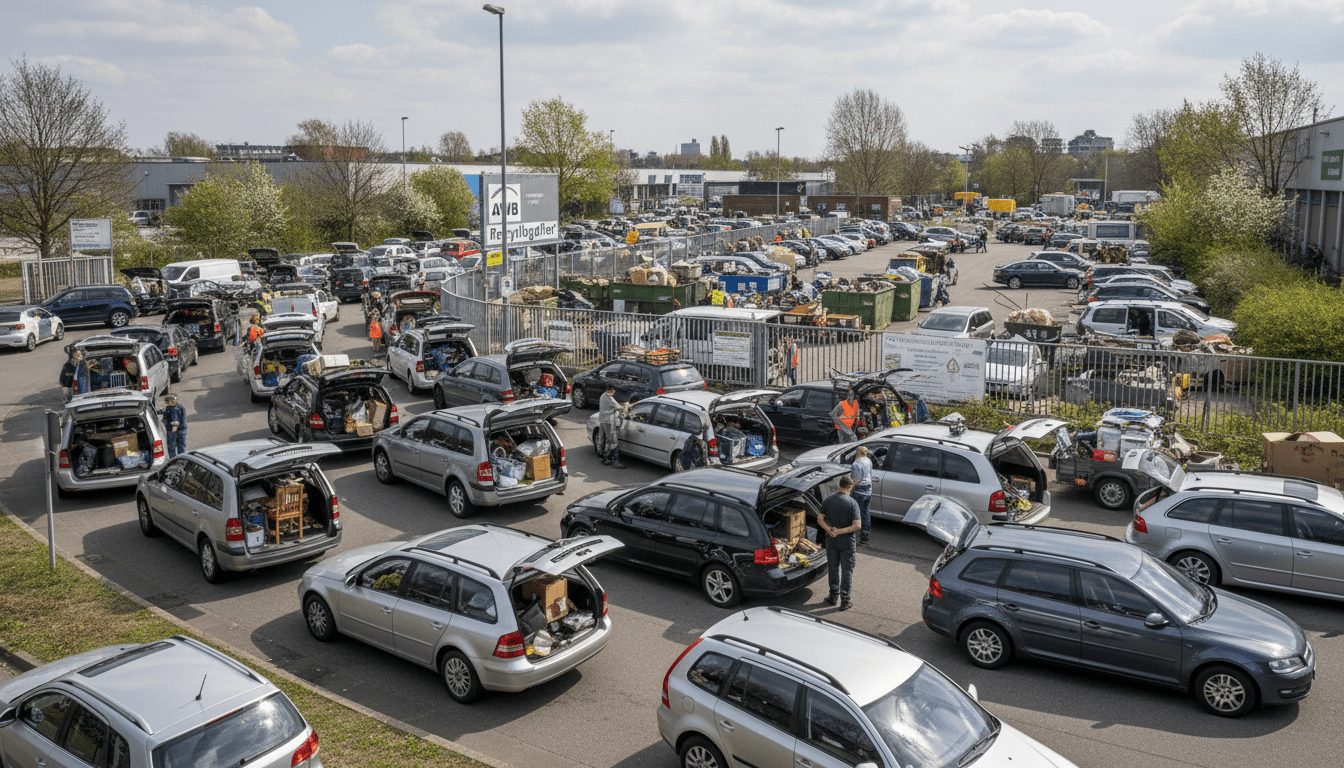
Spring cleaning fills Cologne recycling centers as Wertstoffhofs face fivefold weekend surge
Spring cleaning sends thousands to Cologne recycling centers as Wertstoffhofs record weekend queues up to 5,000 cars and a surge in discarded household items.
The spring clean-up has inundated Cologne recycling centers, with local Wertstoffhofs reporting unprecedented weekend congestion as residents clear out decades of belongings. The trend has pushed long queues of cars into surrounding neighborhoods and forced operators to manage a sharp rise in bulky and mixed waste. The surge has highlighted logistical strains and renewed calls for clearer guidance on sorting and reuse.
Weekend backups at AWB facilities
On busy Saturdays in April, the municipal waste company AWB has seen traffic peaks that are nearly five times the usual volume at its two recycling centers in the city. Staff reported lines of roughly 5,000 cars waiting to unload, producing hours-long delays that spill onto nearby streets. Operators say the spike is highly concentrated on a handful of weekend days tied to seasonal cleanouts.
These bottlenecks have required ad hoc traffic controls and temporary queuing zones to keep access roads clear and maintain safety. AWB officials have cautioned drivers to expect delays and to consider visiting on weekdays when possible. The company is reviewing staffing and opening patterns to ease pressure for the remainder of the season.
Range of discarded items surprises attendants
The material arriving at the centers has varied widely, from garden cuttings and renovation debris to large household furniture and sentimental objects. Among the items staff sorted were old sofas, kitchenware, a child’s ink-stained desk, and rusting carnival medals that once adorned a family’s mantelpiece. Many items show clear decades of accumulation, prompting workers to separate what can be recycled from what must go to residual waste.
Bulkier pieces often require additional handling or on-site dismantling before they can be processed, slowing throughput. Personnel noted that some deliveries include mixed loads—combining hazardous small items with household refuse—which complicates safe disposal and raises the risk of contamination.
Survey data shows broad spring-cleaning impulse
Recent polling indicates the surge reflects a widespread seasonal habit: a representative YouGov survey found that more than half of adult Germans plan or perform a spring clean in a given year. That behavior translates into concentrated disposal activity in municipalities across the country, and Cologne is exhibiting a clear example of how persistent habits intersect with municipal services. The pattern is amplified in households undergoing life transitions such as downsizing or bereavement.
Local recycling authorities say awareness campaigns tied to the annual clean-up may encourage people to bring more items to centers rather than resorting to illegal dumping. Still, the volume is testing standard operating procedures at many facilities.
Operational strains and staff safety concerns
The influx of vehicles and materials has stretched staffing levels and exposed crews to new safety hazards. Workers must frequently lift heavy furniture, sort through mixed loads, and identify potentially hazardous components such as batteries, electronic devices, or asbestos-tainted renovation waste. These tasks slow processing and increase the likelihood of injuries without adequate equipment and rotation.
In response, some centers have introduced temporary measures including additional staff, mobile sorting stations, and clearer signage to speed disposal. Municipal managers are also coordinating with law enforcement to prevent queue-related traffic violations and to protect staff from confrontations with frustrated residents.
Environmental and regulatory implications
The surge in disposals carries environmental implications beyond the immediate logistical challenge. Improperly mixed waste can reduce recycling rates and contaminate recyclable streams, forcing more material to incineration or landfill. Certain items—paint cans, solvents, and electrical equipment—require special processing; when mixed with general refuse they can compromise entire batches destined for material recovery.
Municipal officials emphasize the legal obligations for correct separation and note that some bulky waste still has reuse potential. Programs that channel salvageable furniture or working appliances to charities can reduce waste volumes while supporting community needs, but they require pre-sorting and reliable collection pathways.
Practical guidance for residents and municipal planning
Authorities urge residents to plan trips to recycling centers outside peak weekend hours, to pre-sort materials at home, and to use municipal bulk waste services or scheduled pickups for very large items. Many centers allow appointments or staggered drop-off times, which can significantly shorten waits. For items in good condition, residents are encouraged to pursue donation or resale channels rather than immediate disposal.
Longer-term, city planners are examining extended hours, temporary satellite drop-off points, and enhanced public information campaigns to spread demand across more days. Coordination with reuse organizations could divert usable goods away from the waste stream and reduce the burden on sorting facilities.
The spring wave in Cologne illustrates how a common household practice can rapidly translate into a municipal challenge when many people act simultaneously. Better planning, clearer rules on separation, and stronger partnerships with reuse organizations would ease pressure on Wertstoffhofs and improve recycling outcomes as the season progresses.
