
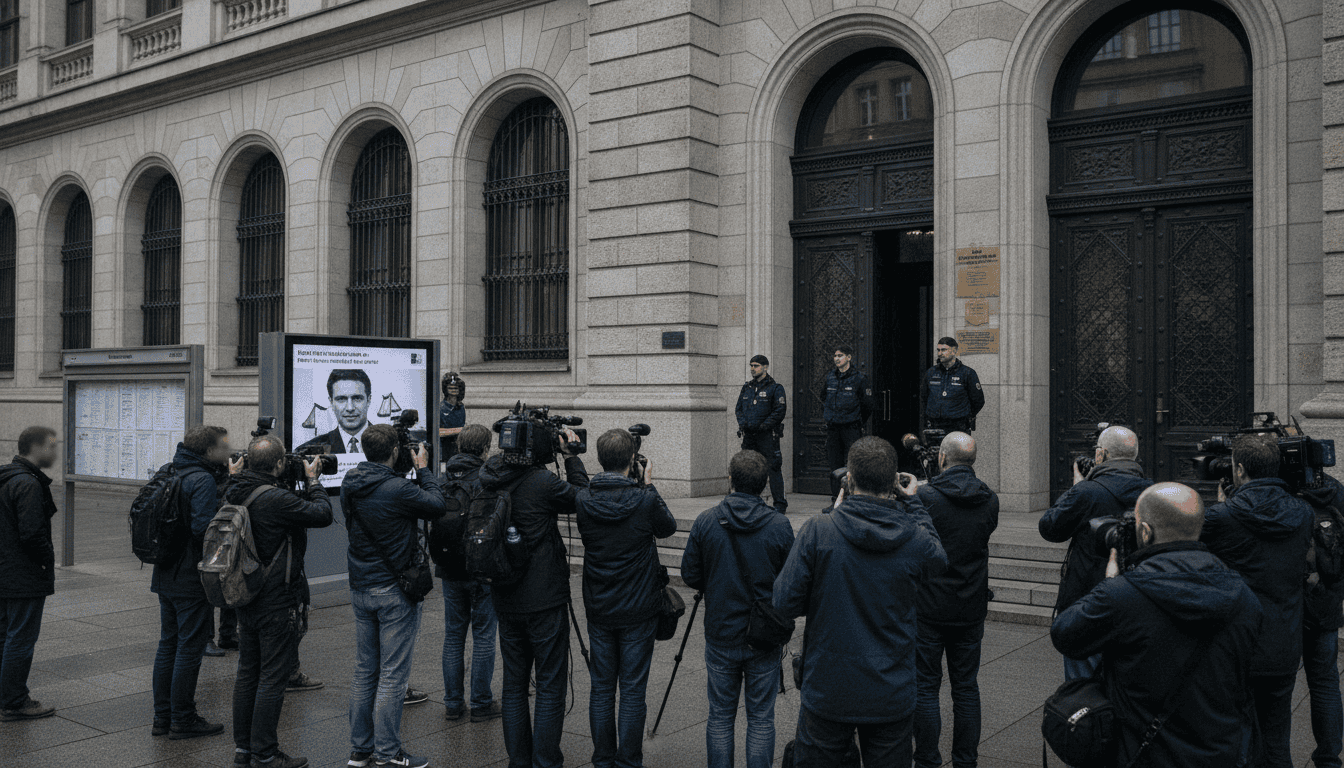
Berlin Christopher Street Day attack: suspect was earlier classified as a ‘Gefährder’ and convicted for planning a state-threatening crime
Berlin Christopher Street Day attack suspect had been classed as a ‘Gefährder’ and convicted for planning a state-threatening offense, prompting scrutiny.
The suspect in the Berlin Christopher Street Day attack, identified by authorities as a German-born man named Abdul B., had previously been classified by security services as a “Gefährder” and was convicted in an earlier case for preparing a serious, state-endangering offense. The revelation that the individual was on the authorities’ radar has intensified debate about the effectiveness of monitoring and preventive measures. Officials and investigators are now facing questions over how a person flagged as potentially dangerous could carry out violence at a major public event.
Security classification and past monitoring
A security classification as a “Gefährder” indicates that an individual was assessed as posing a potential risk to public safety, according to sources close to the investigation. That designation typically triggers varying levels of surveillance, intervention, or court action depending on available evidence and legal thresholds. In this case, the existence of such a classification has prompted scrutiny of both the timing and intensity of any monitoring the suspect received prior to the attack.
Law enforcement agencies often balance civil liberties with preventive action, and that balance can leave gaps in oversight, experts say. The current inquiries will examine whether legal limits, resource constraints, or information silos between agencies contributed to a failure to prevent the attack despite prior knowledge of the suspect.
Court record: conviction for preparing a state-endangering offense
Court documents and judicial sources indicate the suspect was previously convicted for preparing a crime described in German law as a serious, state-endangering offense. That earlier conviction suggests the individual had moved beyond mere suspicion to actions judged significant enough to warrant criminal penalties. Legal analysts say such convictions should normally trigger continued supervision, though the degree and duration of post-conviction oversight can vary.
Investigators will review the sentence, probation conditions, and any follow-up measures that were imposed at the time of the earlier conviction. Establishing whether obligations such as reporting, restrictions, or integration measures were implemented will be central to understanding the post-conviction trajectory that led to the recent attack.
Gaps in prevention: how the attack unfolded despite warnings
Authorities are now probing the sequence of events and decision points that preceded the incident to identify where preventive systems may have failed. Possible issues under examination include delays in information-sharing between federal and local agencies, limits on electronic surveillance, and the prioritization of cases under heavy caseloads. Officials have acknowledged that categorization as a “Gefährder” does not automatically equate to continuous, physical monitoring.
Experts argue that structural problems—such as understaffing, legal hurdles to extended surveillance, and fragmented data systems—can combine to create windows of opportunity for individuals who have shown prior intent or capability. The investigation will seek to determine whether such systemic weaknesses were present and whether they can be corrected to prevent similar incidents.
Investigative reporting and the role of public scrutiny
Journalists and investigators have begun tracing the suspect’s prior interactions with security services, judicial records, and public institutions, underscoring the role of independent reporting in clarifying complex pre-incident histories. Lena Kampf, deputy head of investigative reporting at the Süddeutsche Zeitung, discussed these developments on the newspaper’s “Auf den Punkt” podcast, highlighting both legal and operational questions that have emerged. Public scrutiny driven by media coverage is likely to shape the pace and transparency of official inquiries.
Authorities have cited the need to preserve ongoing investigative integrity while also addressing public demand for clear explanations. The tension between releasing sufficient information to maintain trust and protecting procedural secrecy for legal and operational reasons will be a focal point of forthcoming statements and hearings.
Wider context: simultaneous crises and political developments
The attack comes as the EU coordinates support for wildfires affecting France and Spain and as national political shifts are under way, with newly named ministers and party officials taking positions in a reshaped cabinet. Emergency resources across the region are being stretched by natural disasters, and those pressures may influence how security and crisis response functions are managed at both national and local levels. Meanwhile, broader political debates about civil protections, surveillance powers, and policing priorities are expected to intensify in the wake of the incident.
Additional developments, including public consultation on new ECB banknote designs and routine changes in parliamentary portfolios, have continued alongside the unfolding investigation, but the attack has become the immediate focus of government and public attention.
The coming days will likely bring more detailed disclosures from prosecutors and security services as formal investigations progress, and parliamentary committees may demand full briefings. Public authorities have signaled a commitment to review both specific operational decisions and broader systemic issues to determine how to better prevent attacks by individuals previously known to the state.
