
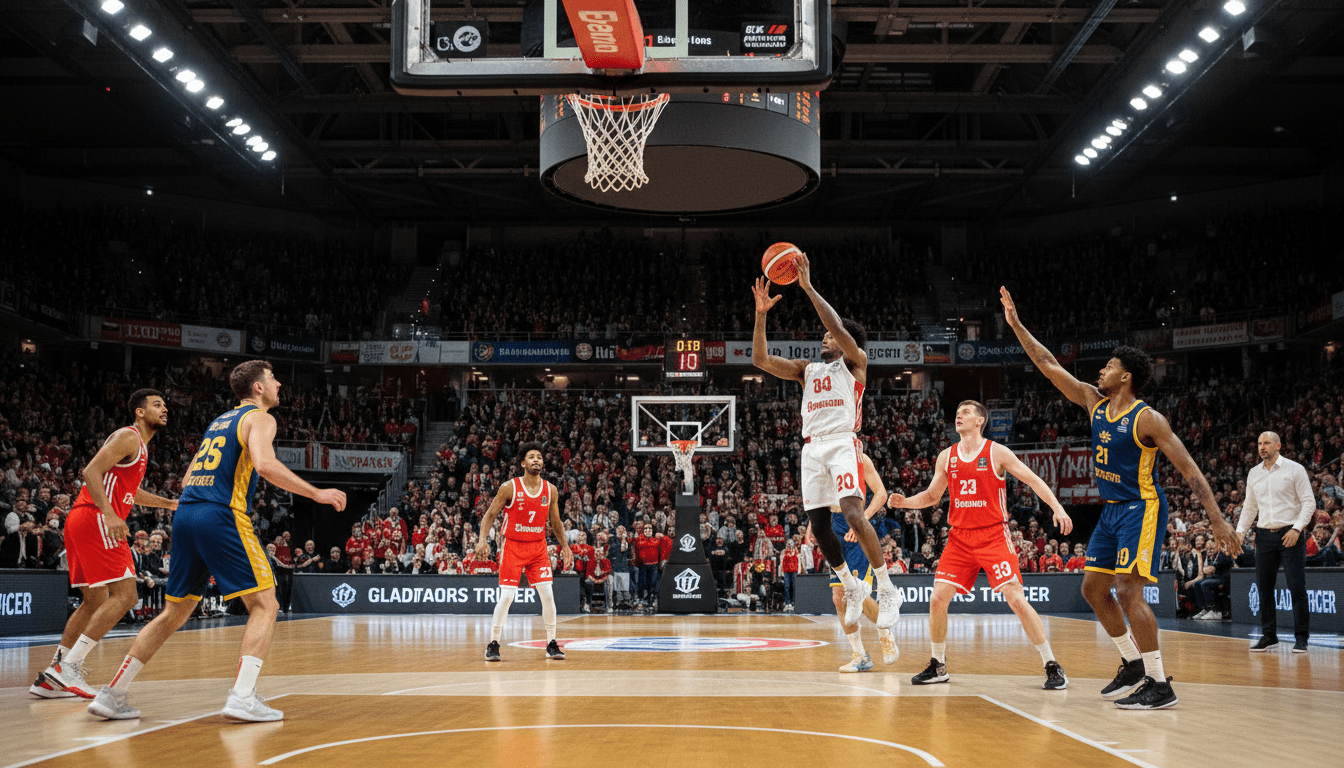
Bayern Munich vs Trier: Bayern recovers after early fast-break shock to win 101-80 in Playoff opener
Bayern Munich vs Trier saw the German champions overcome a blistering start from the Gladiators Trier to secure a 101-80 victory in the first game of the best-of-five quarterfinal series in Munich. The match featured an early barrage of fast-break points from Trier and a dominant second-half response from Bayern that turned a 26-17 deficit into a commanding win.
Early fast-break pressure hands Trier the initiative
Trier set the tone in the SAP Garden by forcing immediate transition opportunities, converting a rapid 2-0 lead inside 18 seconds. The Gladiators, who lead the league in offensive pace, repeatedly punished Bayern for ball losses and unsettled defensive rotations in the opening quarter. Their success in the first ten seconds of possessions — a season-long strength — translated into a surprising 26-17 lead after the first period.
Bayern’s slow start reflected what coach Svetislav Pesic had warned about pregame: Trier “forc[es] the fast break” and executes the transition game at an elite level. The visitors’ quick offense and aggressive rebounding left Munich scrambling to find defensive answers early. The first quarter suggested the series could become a serious test for the favored champions.
Jordan Roland’s fast start and second-half fade
Jordan Roland produced a ferocious opening stint, converting a deep three-pointer and driving effectively to the rim as Trier built its early cushion. The 29-year-old guard, a focal point of Trier’s attack, scored five quick points and looked every bit a primary offensive weapon in the early stages. However, Roland’s influence waned as the game progressed and he finished with just seven points as Bayern tightened the screws defensively.
Trier’s reliance on Roland’s scoring made adjustments easier for Munich once rotations settled and help defense improved. The Gladiators continued to threaten in transition but without sustained offensive production from their leading scorer, they struggled to match Bayern’s depth over 40 minutes. Roland’s roller-coaster night summed up Trier’s mix of high-impact bursts and intermittent droughts.
Bayern’s balanced scoring fuels comeback and control
Andreas Obst led Bayern with 24 points, orchestrating the comeback and providing the offensive spark the hosts needed after the first quarter. He was joined by a collection of double-figure contributors: Isiaha Mike (16), Oscar da Silva (13), Nenad Dimitrijevic (13), David McCormack (11) and captain Vladimir Lucic (10). That distribution allowed Munich to rotate scoring threats and sustain pressure when Trier tired.
The champions overcame early turnovers in the second quarter, transforming a deficit into a 48-44 halftime lead through improved ball security and quicker contesting of transition lanes. Bayern’s frontcourt and bench minutes combined to blunt Trier’s break opportunities, and the hosts gradually extended control in the second half. A 101-80 final score reflected a decisive closing stretch in which Munich’s experience and roster depth prevailed.
Season context and expectations for Bayern
Bayern enter the series under pressure to salvage the club’s domestic and continental ambitions after earlier exits in other competitions. The team arrived at the quarterfinals with the label of league favorite and the expectation that anything short of reaching the final would be disappointing. Injuries have intermittently thinned the roster, but recent returns from minor knocks have helped deepen the rotation ahead of the critical playoff phase.
Coach Svetislav Pesic, who has repeatedly emphasized defensive responsibility, reminded his players after the game that guarding must be consistent regardless of venue. Bayern’s result in Game 1 underscores their capacity to absorb an early shock and rely on veteran leadership and a multi-pronged offense to regain command. For a club with championship aspirations, closing out lapses like the first quarter will be essential in the series.
Trier’s strengths, limitations and what to adjust
The Gladiators, reborn from the earlier TBB Trier organization, offered proof of their fast-paced credentials and posed a sustained matchup problem through transition and three-point threats. Their early tempo and opportunistic scoring are precisely the reasons Trier advanced to the quarterfinals and why they remain dangerous as an underdog. Yet the team’s reliance on quick bursts and a single primary scorer exposed vulnerability when opponents tightened defense and stretched rotations.
To sustain the upset bid, Trier must find a way to maintain offensive production from multiple players across full games and limit turnovers that invite transition. Game management in the second quarter and the ability to create half-court sets when the fast break is curtailed will be crucial. If they can diversify scoring while keeping Bayern’s bench from dominating swings, the series can remain competitive.
Series outlook and immediate focus ahead of Game 2
The best-of-five shifts quickly, with Game 2 scheduled in Munich, giving Trier limited time to regroup and forcing the visitors to remain in the host city between games. Bayern will aim to refine its defensive approach to prevent another early fast-break surge and to protect the ball for cleaner offensive possessions. The Gladiators will emphasize staying composed, hunting early scoring without sacrificing possession, and pushing the pace only when turnovers or missed shots create clear opportunities.
Players on both teams acknowledged the stakes and the prospect of tactical adjustments. Johannes Voigtmann highlighted the need for a consistent defensive mindset, while Pesic insisted that there were “no excuses” and that the focus must remain on execution. With the series still in its opening stages, both clubs have time to make strategic tweaks and reassess personnel matchups.
The immediate narrative is clear: Bayern Munich vs Trier opened with a jolt but concluded as a test of depth and discipline, and the outcome sets the tone for a series that could demand both tactical adjustments and mental resilience from the Gladiators and the champions alike.
