
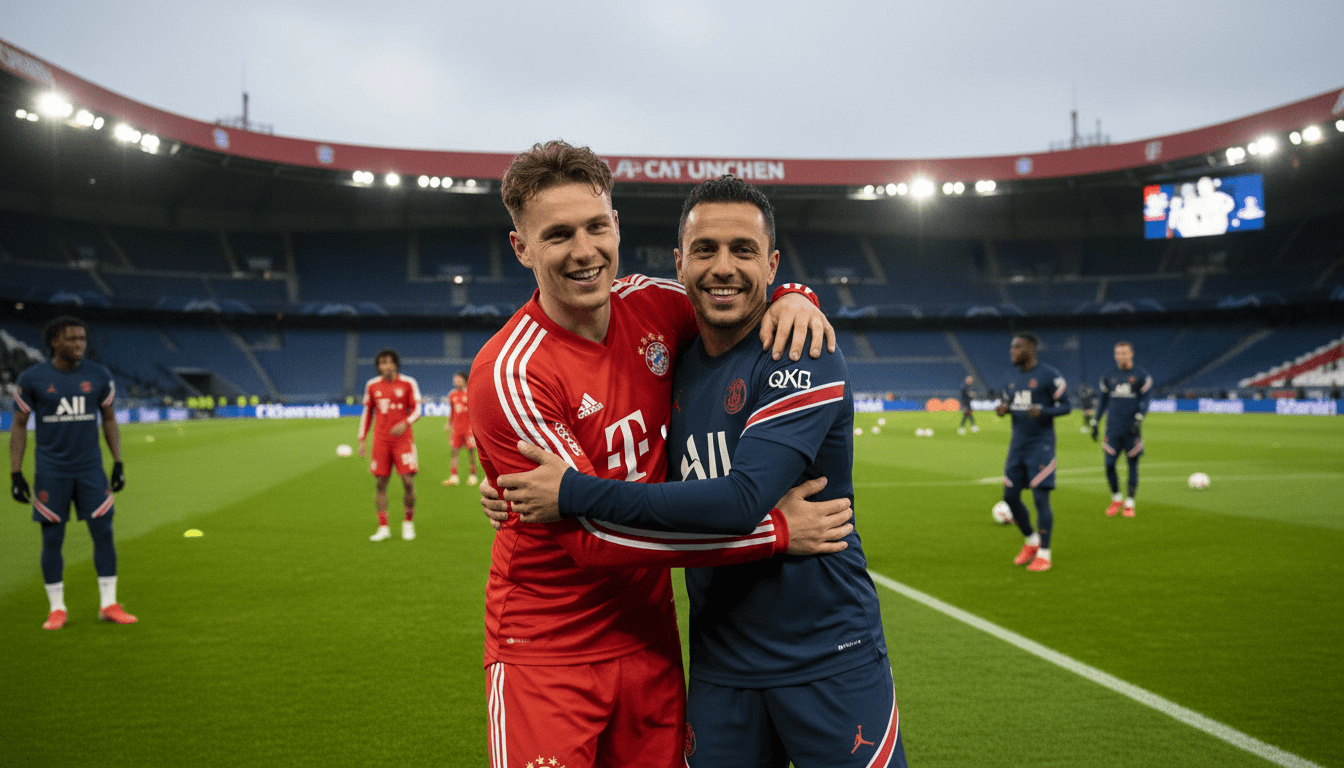
Bayern vs PSG Tactical Preview: Man-marking, flank trade-offs and what the return leg may decide
Bayern vs PSG tactical preview: man-marking, flank matchups and midfield battles that could decide the Champions League return leg and tactical adjustments.
The first leg between Bayern and PSG turned into a tactical chess match dominated by modern man-marking, setting the stage for a high-stakes return. Bayern vs PSG tactical preview focuses on how flank assignments, midfield matchups and pressing choices will shape the outcome. Key absences and positional switches mean individual duels could decide the tie more than collective buildup play.
Man-marking set the tone in Paris
Both teams adopted intensive individual marking early in the tie, using one-on-one duels to impose pressure and disrupt the opponent’s rhythm. Bayern and PSG repeatedly tried to force turnovers high up the pitch rather than rely on zonal squeezing, which produced chaotic transitions and openings at both ends. That approach turned several moments into isolated battles whose winners shaped decisive attacking sequences.
PSG’s decision to push its full-backs and use midfield players to pick up opponents created irregular defensive shapes for Bayern to exploit. When defenders like Marquinhos were pulled wide to cover pacey wingers, gaps appeared centrally for Bayern’s dribblers to exploit. The tactical risk-reward dynamic of man-marking meant each coach had to weigh the physical cost of wide tracking against potential control of the middle.
Flank trade-offs: Hakimi, Marquinhos and Díaz
Paris sent Achraf Hakimi forward to contest Alphonso Davies, a choice that forced Marquinhos out of position and tested his recovery runs across long distances. Those lateral movements exposed vulnerability on the flank, and Luis Díaz used quick changes of direction to punish spaces that opened when Marquinhos chased across. The consequence was a sequence of high-speed duels that often decided immediate attacking chances.
Bayern’s halftime substitution that introduced Konrad Laimer at left-back reshaped the opposite wing and offered a potential blueprint for the second leg. With Hakimi unavailable through injury for the return, Bayern can use Laimer’s inward tendencies to create overloads and reduce the need for Marquinhos to cover extended distances. How each side adapts to that personnel change will be pivotal in determining who wins the wide battles.
Midfield chess: Kimmich, Vitinha and Zaïre-Emery
The midfield contest repeatedly swung on how teams chose to shadow or free their distributors, with Vitinha at times following Joshua Kimmich so closely he effectively operated higher than PSG’s forwards. That selective tracking opened space in the ten-yard zone and invited Bayern’s creative players to drive into areas vacated by the Parisian midfield. Moments when Bayern occupied the central corridors produced their clearest scoring opportunities.
Conversely, PSG used Warren Zaïre-Emery’s positioning to neutralize specific passing lanes from Bayern’s right side and to stifle transitions into the number ten area. João Neves and Désiré Doué also played roles in sacrificing territory to prevent quick vertical passes, forcing Bayern into wider, less dangerous channels. The midfield exchanges became a series of micro-decisions about whether to follow opponents or protect central corridors.
Pressing, risk tolerance and game state management
PSG’s forwards regularly showed aggressive anticipation on Rückpässe, pushing higher and earlier to unsettle goalkeeper distributions and provoke long clearances. That high-risk pressing accepted occasional gaps in midfield in exchange for opportunities to pounce on hurried exits, shaping an erratic rhythm that prevented Bayern from establishing steady possession. By deliberately encouraging contested clearances, PSG sought to neutralize Bayern’s usual patient control.
Bayern responded by alternating between cautious one-on-one containment and bursts of aggressive pressing, depending on the scoreline and field position. When they pushed to recover a deficit, Munich stretched into more dangerous pressing shapes that increased both their chances and their exposure. The outcome was an often frenetic match tempo where tactical patience and calculated gambles were traded continuously.
Attacking quality and the likelihood of another open tie
The first leg underlined the offensive quality of both squads, with intricate combinations and individual finishes that were difficult to defend even when matchups were anticipated. Quick one-touch passes, deceptive pauses and timed runs repeatedly created openings, culminating in high-quality goals that reflected both technical skill and tactical intent. Those attacking traits suggest the return will likely produce further end-to-end passages rather than a cautious, low-scoring standoff.
Given the two teams’ willingness to accept openings in order to press or to man-mark, the return leg should remain open, with individual duels once again likely to tilt the balance. Coaches will have to decide whether to prioritize compactness or maintain the aggressive patterns that produced scoring opportunities in Paris. The absence of a key full-back for PSG adds a tactical variable that could encourage Bayern to lean more heavily on wide tempo and direct transitions.
The Bayern vs PSG tactical preview points to a return leg defined by individual matchups, midfield positional contests and the coaches’ willingness to accept risk. Whoever manages the balance between defensive discipline and attacking intent—on the flanks and in midfield—will have the clearer path to progress in the Champions League tie.
