
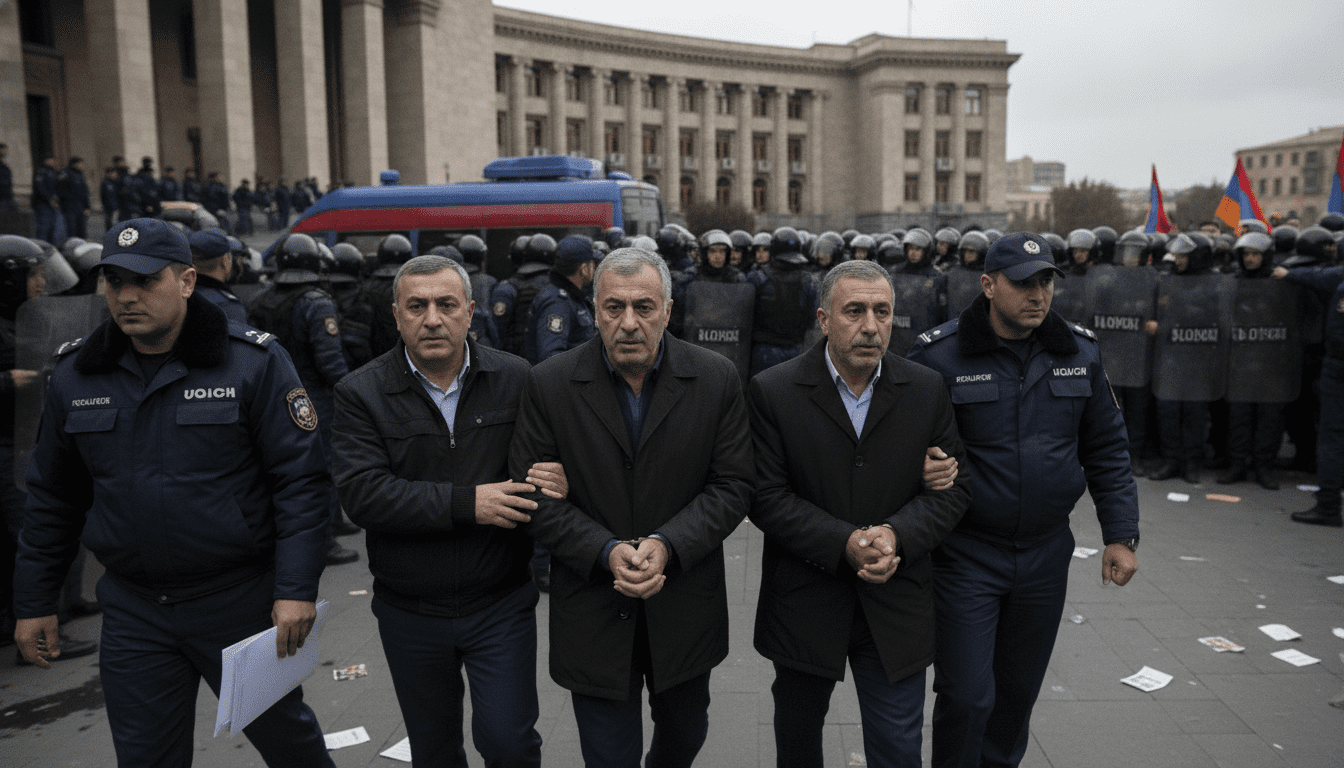
Armenia arrests opposition politicians amid post-election dispute
Armenia arrests opposition politicians after June 7 parliamentary vote; candidates from Strong Armenia detained on vote‑buying charges amid criticism of selective justice.
In a move that has intensified political tensions, Armenian authorities detained several opposition figures in mid‑June, accusing them of vote‑buying in the parliamentary election held on June 7, 2026. The arrests include Ruslan Barsegjan and Ashot Egiasarjan, both candidates on the pro‑Russian Strong Armenia list, who were placed in pretrial detention for up to two months. Former MP Ruben Akopyan was also taken into custody, while opposition politician Asatur Kotscharjan was ordered to remain under house arrest. The detentions come roughly two weeks after the vote and have prompted swift condemnation from opposition parties and statements of concern from international observers.
Opposition leaders detained and legal measures imposed
Ruslan Barsegjan and Ashot Egiasarjan face formal criminal allegations of bribing voters, according to official statements from prosecutorial authorities, which authorized pretrial detention for up to 60 days. Ruben Akopyan’s arrest was announced separately, with prosecutors citing related investigative needs. Asatur Kotscharjan was not jailed but placed under house arrest, a restriction that the opposition says limits his ability to campaign and coordinate legal challenges. The authorities say these measures are part of routine criminal proceedings connected to irregularities alleged during the June 7 election.
Government frames actions as enforcement of election law
Officials have defended the detentions as necessary enforcement of electoral law and an effort to ensure accountability after reports of inducements and improper voting practices. Prosecutors argue that the measures are investigative, not political, and that the detentions are proportionate to the alleged offenses. The Central Election Commission has released provisional results showing Prime Minister Nikol Pashinyan’s Civil Contract party won 49.7 percent of the vote on June 7 and retains the ability to form a government. Government spokespeople emphasize the need to separate legal processes from political rhetoric while investigating post‑election complaints.
Strong Armenia accuses the government of political repression
The Strong Armenia party, led by businessman Samwel Karapetjan, denounced the arrests as an attempt to “destroy democracy” and accused state institutions of being used as instruments of repression. Party leaders vowed to contest the detentions through legal channels and pledged to “fight with all the force of the law,” characterizing the criminal cases as selective and politically motivated. Several other opposition parties have expressed solidarity with the detained figures and criticized what they described as a pattern of legal pressure on rivals during and after the campaign. The party has also lodged an appeal with the Constitutional Court challenging the election outcome.
Constitutional Court petition and timetable for review
Following the arrests, Strong Armenia filed a petition with the Constitutional Court seeking to overturn or re‑examine the June 7 results, a move joined by other opposition groups. Under Armenian procedure, the court must decide within two days whether to accept the challenge for full consideration, a fast‑track step that will determine whether the dispute moves to a public hearing. If the court admits the case, judges will weigh evidence and arguments about alleged violations, including whether criminal proceedings during the campaign affected the fairness of the vote. Legal experts note that the court’s decision on admissibility will be pivotal for the opposition’s next steps.
International observers flagged campaign climate and selective‑justice concerns
The Organization for Security and Co‑operation in Europe (OSCE) said voters had a genuine choice on June 7 but described the campaign as “extremely confrontational.” The observer mission noted a substantial number of criminal cases opened against opposition candidates during the campaign period, saying these prosecutions contributed to an impression of selective justice. Western diplomats and rights groups have urged transparent legal procedures and called for investigations to be carried out in full compliance with due process. At the same time, some regional actors framed the events through geopolitical lenses, given Strong Armenia’s pro‑Russian orientation and the government’s stated aim to rebalance foreign ties.
Political stakes for Pashinyan’s western pivot and domestic stability
Prime Minister Nikol Pashinyan, whose Civil Contract party seeks to loosen Armenia’s traditional dependence on Moscow and strengthen relations with Western states, faces a delicate balancing act. The post‑election arrests risk deepening domestic polarization at a time when the government is pursuing a strategic pivot that requires international legitimacy. Opposition claims of politically motivated prosecutions could complicate Pashinyan’s outreach to Western partners, who have emphasized rule‑of‑law standards in their engagement with Yerevan. Conversely, supporters of the detentions argue that enforcing electoral law is essential to preserving public trust in institutions.
Tensions are likely to persist as the Constitutional Court weighs the admissibility of the opposition’s challenge and as prosecutors proceed with investigations. The coming days will test Armenia’s judicial institutions and political leaders as they navigate competing demands for order, legal accountability and democratic fairness.
