
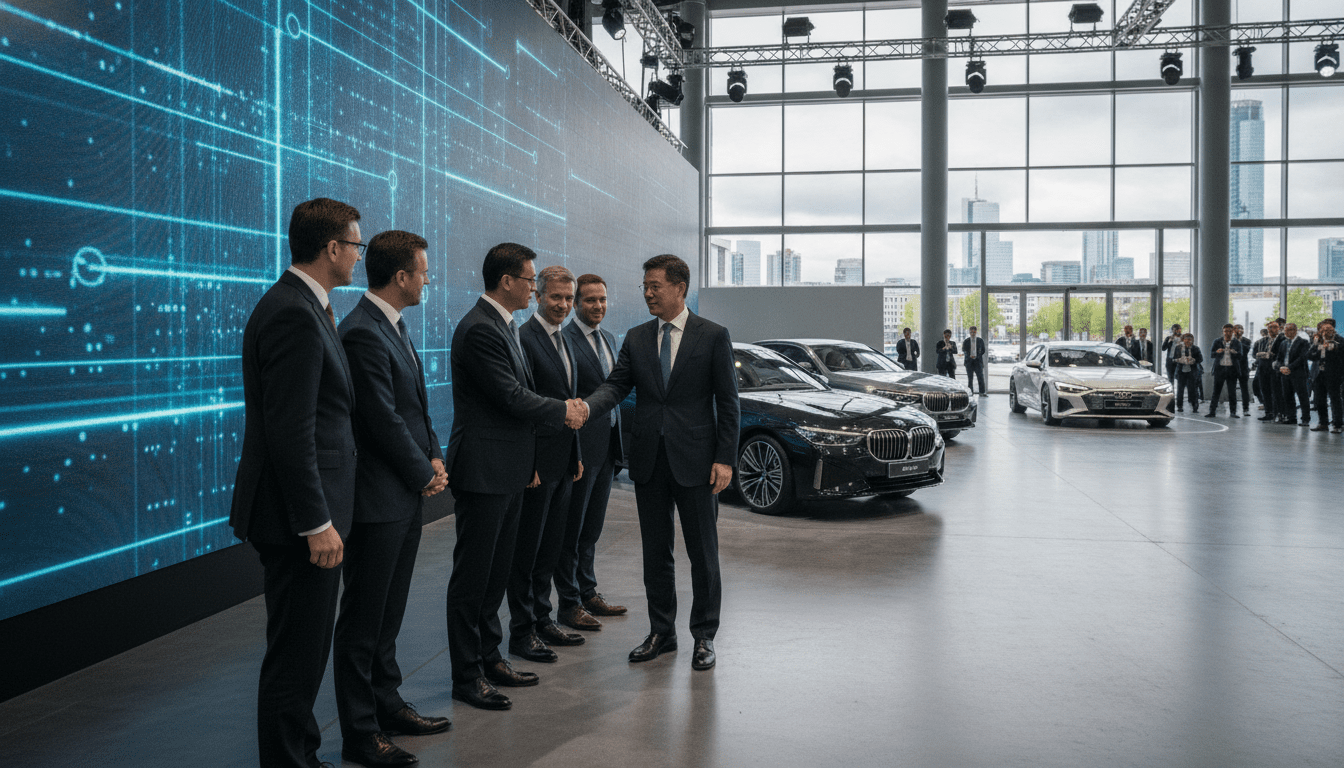
German auto industry in China loses ground as BYD targets global leadership by 2030
German auto industry in China loses ground amid a surge in Chinese exports and BYD’s push for 2030 dominance, forcing European makers to choose between deeper China ties or protectionist policies.
Germany’s auto industry in China is facing mounting market setbacks as Chinese manufacturers accelerate exports and push advanced, affordably priced electric vehicles. German brands have invested heavily in China and deployed premium features tailored to local buyers, yet sales momentum has lagged and market share is slipping. The widening gap is prompting a strategic tug-of-war inside boardrooms and in Brussels over whether to deepen engagement with China or erect trade barriers.
Sales slide amid aggressive Chinese exports
Chinese carmakers are expanding overseas rapidly, with exports rising sharply and new models aimed at global consumers. Several Chinese brands now offer vehicles with features that were once the preserve of high-end European cars, at significantly lower prices.
That competitive pressure is visible in urban showrooms where advanced infotainment, rear-seat massage options, and autonomous-assist systems are becoming standard on mid-priced models. For German manufacturers, matching this value proposition while preserving margins has become increasingly difficult.
Manufacturers shift R&D and model launches to China
Automakers based in Germany have responded by localizing development and launching their most advanced electric and autonomous models in China first. Executives argue that proximity to suppliers, software talent and large-scale pilot markets makes China the logical place to iterate new technologies.
Some manufacturers have explicitly tailored cars for the Chinese market and kept those variants out of European lineups for now. This strategy aims to keep pace with innovation, but it also raises questions about whether European consumers and suppliers will benefit from the technologies being cultivated overseas.
BYD’s 2030 ambition reshapes competitive landscape
China’s BYD has signaled its intention to become the world’s largest automaker by 2030, a goal that has shifted industry expectations. BYD’s rapid ascent combines vertical integration, software-driven features and aggressive pricing that together compress traditional competitive advantages.
The company’s expansion forces legacy manufacturers to reconcile long-standing premium branding with the reality of global price and feature competition. The result is a bifurcated market where scale, software capability and supply-chain control are increasingly decisive.
Policy responses in Brussels and Berlin risk fragmenting the market
European policymakers are debating measures to protect domestic production from a flood of Chinese-made vehicles and components. Proposals range from tariffs and stricter certification to incentives for onshore battery production and software sovereignty initiatives.
Analysts warn that excessive protectionism could shrink the addressable market for European automakers and lock them into regional niches. Conversely, unchecked exposure to Chinese competition may accelerate job losses and supplier consolidation within Europe, creating a difficult trade-off for regulators.
Strategic choices for keeping European industry competitive
Industry leaders say the core risk to Europe is not trade volumes alone but falling behind on the technologies that define future mobility: autonomous systems, in-car software and integrated electric powertrains. Staying competitive will require both public and private investments in software, semiconductors and battery ecosystems.
Some executives advocate for deeper commercial engagement with China to co-develop platforms and components, while others urge strengthening domestic supply chains and regulatory standards. Balancing those approaches will determine whether European firms can remain global contenders or become regional players.
The coming decade will decide whether Germany’s auto industry in China can regain momentum or cede decisive ground to well-capitalized Chinese rivals. European companies and policymakers face urgent choices about investment, market access and industrial policy that will shape the global car industry well beyond 2030.
