
Aleph Alpha-Cohere merger announced by German minister sparks debate over state-led AI industrial policy
Germany’s Digital Minister Karsten Wildberger announced the Aleph Alpha-Cohere merger, provoking debate over state-backed deals and Europe’s path in AI competitiveness.
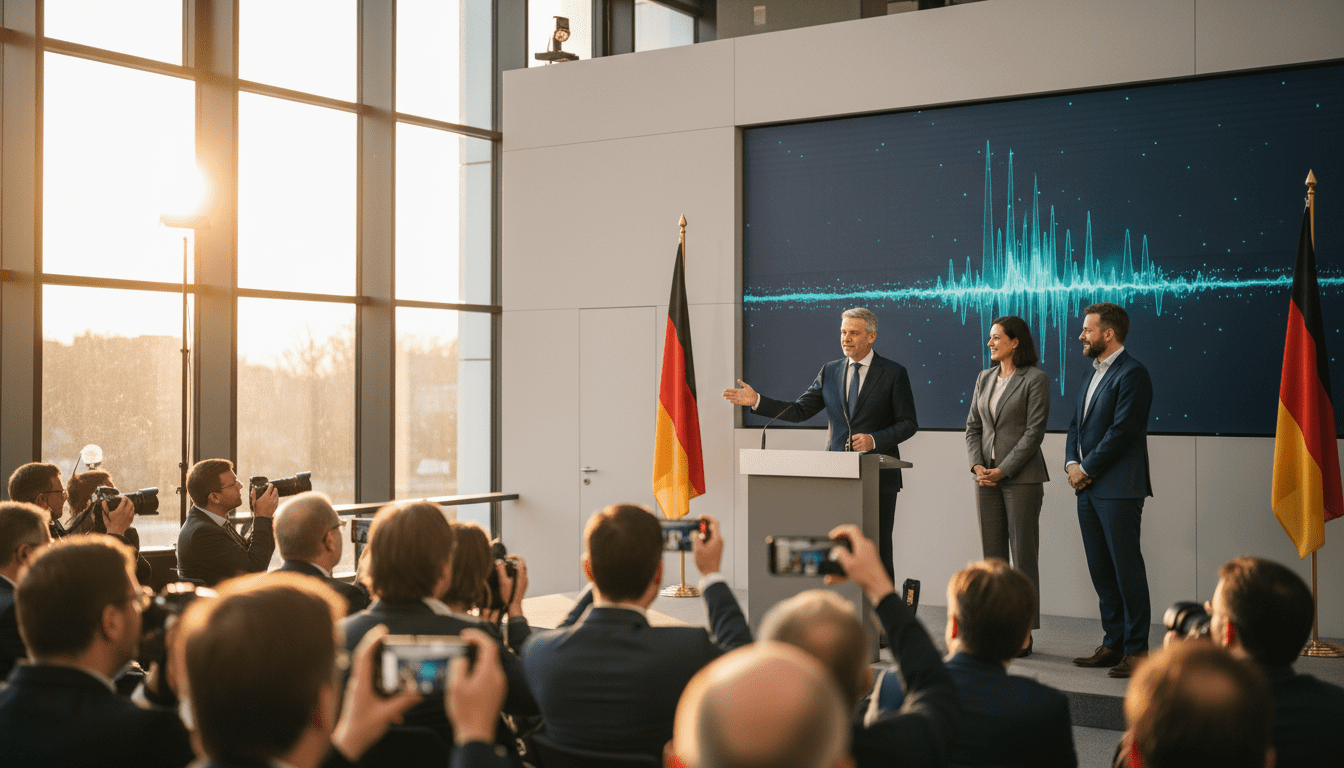
Karsten Wildberger on Friday unveiled a government-backed move to merge Heidelberg-based Aleph Alpha with Canadian AI firm Cohere, calling it a strategic step for Germany’s technological future and naming it the Aleph Alpha-Cohere merger. The announcement, attended by Cohere’s co-founder and Wildberger’s Canadian counterpart, was framed as a milestone for trusted AI in Europe. The minister said the partnership would strengthen German access to advanced language models while signalling closer transatlantic cooperation in technology.
Details of the announcement
Wildberger presented the arrangement at a high-profile press conference where both companies’ founders appeared alongside visiting Canadian officials. He described the merger as a “pivotal moment” for national AI capabilities and for positioning Europe as a source of trustworthy alternatives to dominant US providers. Government officials emphasized regulatory alignment and potential procurement opportunities as immediate follow-up items.
Comparative market position
Analysts note that even combined, Cohere and Aleph Alpha remain small relative to market leaders such as OpenAI and Anthropic. Market observers say the two companies bring complementary strengths—Cohere’s established product footprint and Aleph Alpha’s ties to European clients—but lack the scale of the largest AI platform providers. That gap raises questions about whether a government-facilitated tie-up can overcome structural disadvantages in compute, talent and global reach.
Motivations behind the deal
Sources close to the companies say Cohere gains from Aleph Alpha’s customer relationships within regulated European sectors, where trust, data residency and compliance are critical. For Aleph Alpha, the arrangement promises broader product distribution and access to Cohere’s engineering resources. The implicit element of the deal, according to critics, is the prospect of state contracts making the partnership commercially attractive in Germany and the EU.
Political and industrial policy debate
The announcement has split opinion in political and industry circles. Supporters argue the merger demonstrates proactive state support for strategic technologies and helps diversify Europe away from dependence on US cloud and AI vendors. Detractors contend that using procurement to steer the market risks favouring politically selected winners rather than fostering competition. They warn against premature industrial policy that could distort innovation incentives and lock in inferior solutions.
Calls for structural reforms instead of single deals
Experts and industry representatives are urging policymakers to focus on broader measures: stronger European market integration, easier access to growth capital for startups, and regulatory frameworks that enable scale without sacrificing safeguards. They say these structural steps would have a more durable impact on Europe’s AI ecosystem than one-off, high-profile mergers. According to critics, the Aleph Alpha-Cohere merger does little to address underlying deficits in venture funding, data infrastructure and access to specialized compute.
Operational and regulatory implications
Implementation will require close coordination on data handling, model governance and procurement rules in Germany and possibly at the EU level. Regulators and customers in sectors such as finance and public administration will likely scrutinize compliance with data residency and conformity requirements. The companies must also outline clear commitments on research openness, model safety and the handling of sensitive public-sector workloads to secure broad institutional trust.
Germany’s digital leadership framed the move as an effort to build a “trusted AI” alternative, but industry observers note that trust must be earned through transparent practices, independent audits and demonstrable performance. The merger partners will face a test in proving their combined offering can meet enterprise requirements on reliability and scalability.
Looking ahead, the transaction will be measured both by its commercial success and by whether it sparks wider policy shifts that strengthen European AI capacities. If the merger catalyzes investment in compute infrastructure and cross-border market access, it could mark a constructive step. If it becomes a singular intervention without follow-up reforms, critics say it will amount to symbolic politics more than lasting industrial change.
The Aleph Alpha-Cohere merger highlights the tensions between immediate strategic moves and the need for durable, market-fostering reforms; its ultimate impact will depend on the details of implementation, regulatory acceptance and whether it prompts broader commitments to scale European AI capabilities.
