
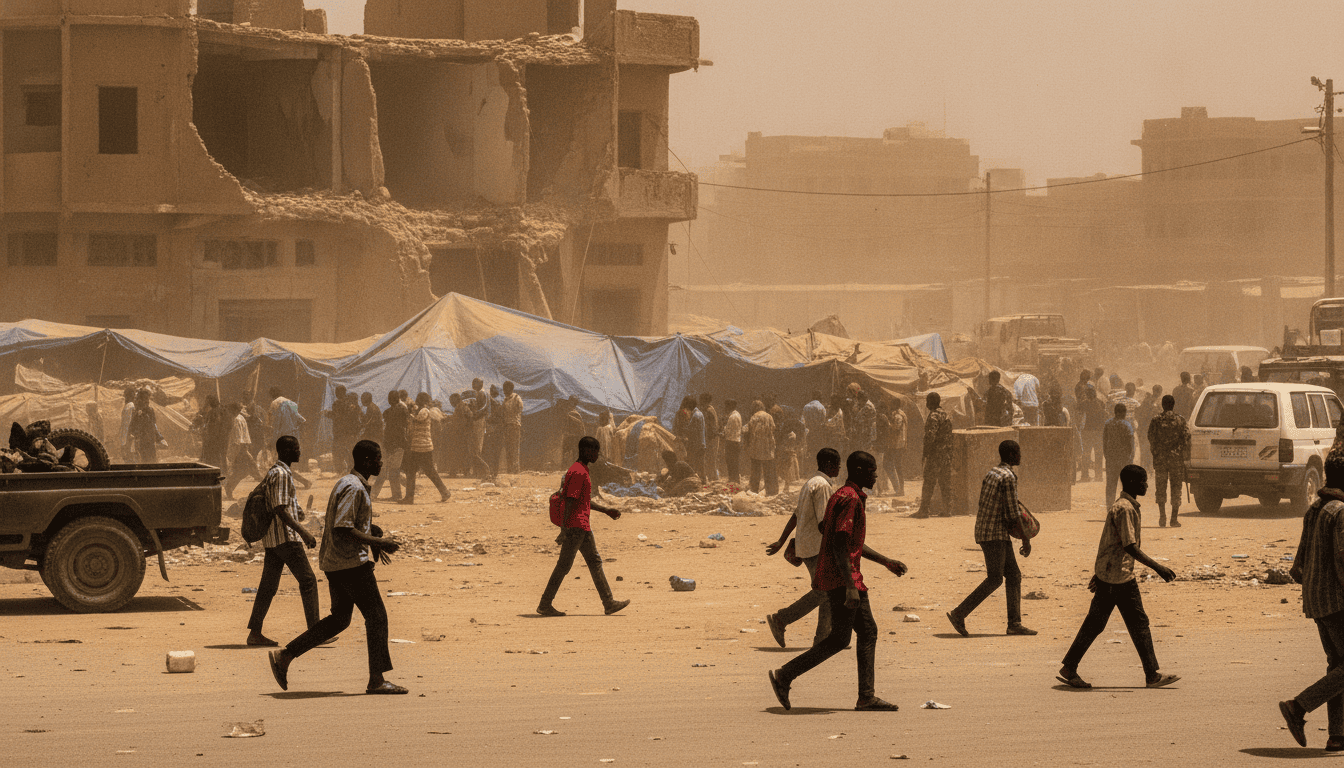
Al-Obeid Faces Growing Siege Risk as UN Warns of Potential Mass Atrocities
Al-Obeid is under mounting threat as RSF forces tighten a siege around the city, raising fears of mass atrocities similar to Al-Fashir, UN officials and aid groups warn.
The Sudanese city of Al-Obeid, a strategic hub in North Kordofan, is increasingly encircled by Rapid Support Forces (RSF) units and their allies, heightening the prospect of a large-scale humanitarian and human-rights crisis. United Nations human-rights chief Volker Türk told the UN Human Rights Council that the signs of an unfolding catastrophe are clear and urgent. Local supplies are strained, civilian infrastructure is being targeted, and humanitarian access is shrinking as the city shelters residents and tens of thousands of displaced people.
Humanitarian conditions deteriorating in Al-Obeid
Save the Children reported a recent surge in displacement around Al-Obeid, with roughly 11,000 people uprooted in the last two weeks and nearly half of them children. The city, already home to about half a million residents, now hosts nearly 100,000 displaced people in addition to its population. Water systems and health services have been severely disrupted by sustained attacks and supply interruptions, increasing the risk of disease outbreaks during the rainy season.
Drones and strikes have damaged markets, schools, and fuel depots, compounding civilian suffering. The UN has documented civilian casualties from drone attacks, citing dozens of deaths in a single three-week period in June alone. With cholera and other waterborne illnesses a heightened threat, humanitarian agencies warn the situation could rapidly escalate without sustained access and protection.
Military moves point to a broader RSF campaign
Analysts say the RSF’s troop concentrations, drone operations, and encirclement maneuvers suggest preparation for a major ground offensive on Al-Obeid. The city sits at the crossroads of routes linking Darfur and the Nile Valley and provides access southward toward oil-producing regions, making it a logical strategic target. After the RSF’s seizure of much of western Sudan in late 2025, observers note a renewed push eastward that places Al-Obeid directly in the path of contested supply lines.
The SAF has fortified positions inside the city and maintained an eastern supply corridor, but it redeployed forces earlier this year to other fronts, creating vulnerabilities. Military analysts caution that a capture of Al-Obeid would give the RSF control over key highways and logistical chokepoints, undermining SAF operations and civilian relief flows across central Sudan.
Al-Fashir precedent sharpens international concern
The violent takeover of Al-Fashir in October 2025 left a grim imprint on international observers after UN investigators described events with “indications of genocide.” Independent inquiry teams and rights organizations recorded mass killings, sexual violence, and widespread abductions during that assault. UN investigators have since issued supplemental findings cataloguing mass murders and systematic abuses, a backdrop that has intensified scrutiny of developments around Al-Obeid.
Members of the independent international investigation have drawn explicit parallels between tactics used in Al-Fashir—encirclement, attacks on civilian infrastructure, and blocked humanitarian access—and current patterns around Al-Obeid. Those experts warned in Geneva that ignoring these patterns risks repeating the most severe outcomes witnessed in Darfur and North Darfur.
Investigative findings and calls from human-rights experts
The United Nations’ independent mission released additional documentation expanding its earlier report on Al-Fashir, citing further evidence of mass murders and brutal sexual violence targeted at women and girls. Mona Rishmawi, one of the investigators, emphasized that the same modalities—restrictions on aid, infrastructure strikes, and encirclement—are present in Al-Obeid and should not be dismissed as inevitable byproducts of combat.
Human-rights officials say the RSF has denied allegations of mass abuse, but the investigators maintain that credible evidence points to patterns of systematic crimes in RSF-controlled territories. The UN High Commissioner for Human Rights has called for urgent international attention and concrete measures to protect civilians and preserve humanitarian corridors.
Divergent analyst views on the city’s prospects
Not all analysts expect Al-Obeid to fall quickly. Nohad Eltayeb of ACLED highlights key differences between Al-Fashir and Al-Obeid, noting SALF-held supply routes in the east and a strategic stalemate that could produce prolonged fighting rather than an immediate collapse. Eltayeb projects a likely campaign of attrition, with sustained skirmishes, drone strikes, and intermittent sieges that degrade living conditions without decisive territorial change.
Others counter that the combination of RSF advances in the west and control over southern oil corridors increases the incentive to press for a decisive victory in Al-Obeid. Both outlooks agree on one point: civilians will bear the brunt of any protracted fighting, with access to food, water, and medical care becoming increasingly precarious.
International appeals intensify as risks mount
Volker Türk has urged world leaders to treat the situation as an urgent priority, calling for ideas and actions to prevent further atrocities in Kordofan. Humanitarian agencies and rights groups press for unfettered access to deliver lifesaving aid and for measures to deter attacks on civilians and infrastructure. Diplomats face growing pressure to coordinate sanctions, protections for aid workers, and mechanisms to monitor accountability for alleged crimes.
Even as international debate continues over the most effective leverages, residents of Al-Obeid confront an immediate choice between staying in a besieged city or risking dangerous movements on roads exposed to raids and checkpoints. Reports of looting, arbitrary arrests, and abductions along routes out of the city underline the stark calculus families must now make.
The coming weeks will be decisive for Al-Obeid’s civilians: whether standing supply corridors and international pressure can prevent the kinds of mass abuses documented in Al-Fashir, or whether continued encirclement and escalation will produce a new humanitarian disaster in central Sudan.
