
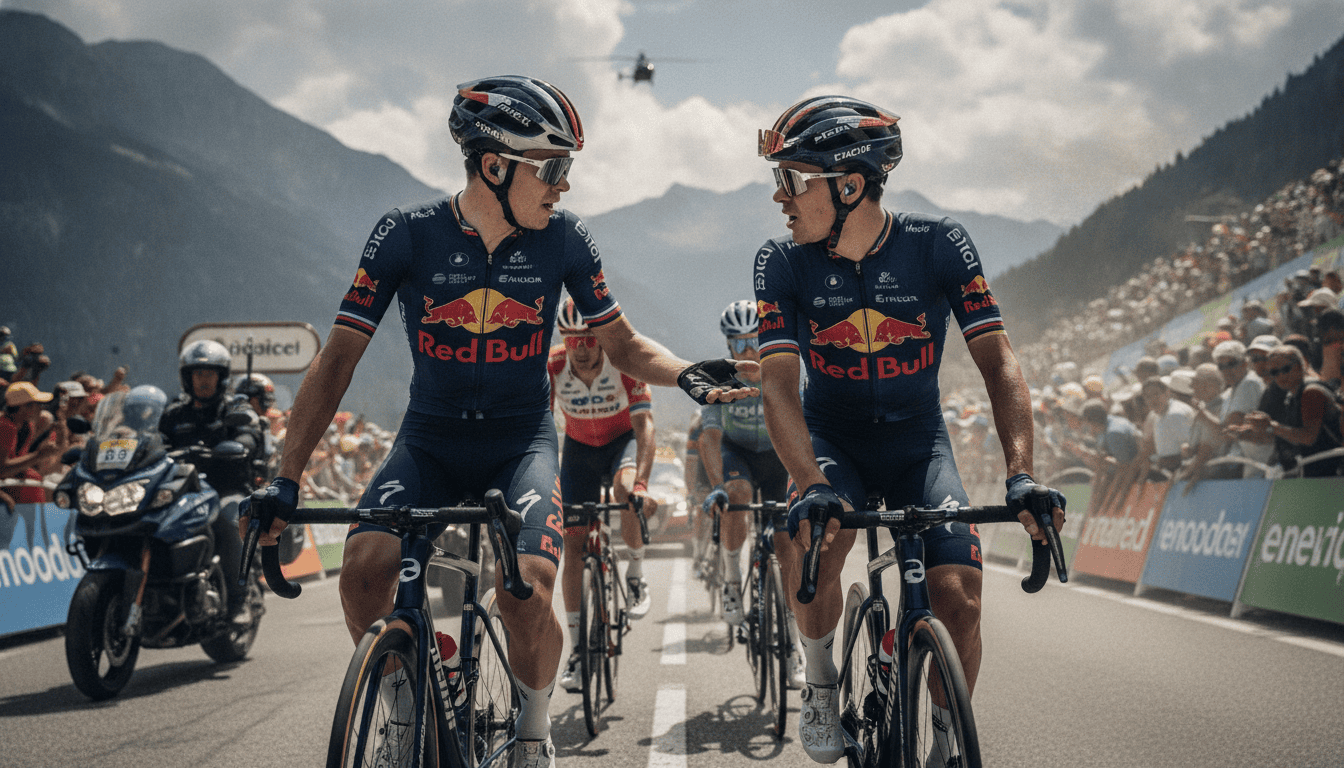
Red Bull team conflict surfaces between co-captains Evenepoel and Lipowitz after Tourmalet stage
Remco Evenepoel expressed public frustration with teammate Florian Lipowitz after the sixth stage of the Tour de France, highlighting a Red Bull team conflict over leadership and chase duties on a decisive mountain day.
The Red Bull team conflict between co-captains Remco Evenepoel and Florian Lipowitz became public following the sixth stage of the Tour de France, when frustration over pacing and chase work erupted after the descent from the Tourmalet. Evenepoel told Belgian media he was “angry, and rightly so” after asking for a brief pull but feeling denied, a remark that underlined tensions within the team. The confrontation occurred after a pursuit group of eight riders failed to close on stage winner Tadej Pogačar and Jonas Vingegaard, leaving questions about role clarity and strategy. Team management now faces the task of resolving the dispute before it affects Red Bull’s wider ambitions in the race.
What happened on the sixth stage
The sixth stage saw a dramatic separation on the climb to the Tourmalet, where Pogačar and Vingegaard broke clear and claimed the podium spots for the day. A chase group including Evenepoel and Lipowitz formed on the descent, but the pair could not fully coordinate their efforts to reel the leaders back in. Vingegaard alone might have been caught had the nine-rider gap been managed differently, but the pursuers finished 19 seconds behind the Dane and almost three minutes behind Pogačar. Those time gaps exposed tactical weaknesses and set the backdrop for the subsequent exchange between the two Red Bull co-captains.
Evenepoel voices his displeasure
Remco Evenepoel publicly aired his frustration after the stage, saying he had worked hard in previous races and expected reciprocal support when needed. He specifically referenced riding long turns in earlier events and asking for a single kilometer of pull in the chase, which he says was declined. Evenepoel’s comments to Belgian outlets described his anger as justified and signaled that the matter would be discussed thoroughly that evening. The frankness of his remarks has drawn attention because internal disagreements at this level rarely surface so openly during a Grand Tour.
Lipowitz’s mountain form and the race dynamics
Florian Lipowitz, meanwhile, delivered a strong showing on the high mountains, putting time into Evenepoel on the ascent to the Tourmalet and demonstrating clear climbing prowess. The German rider lost roughly 20 seconds to Evenepoel on the climb but then managed to reconnect on the descent, a sequence that highlighted differing strengths between the two leaders. Lipowitz told reporters after the stage that he felt the teamwork had functioned well and expressed cautious optimism about their partnership. The performance contrast on the climb and descent underlines why Red Bull chose a dual-leader approach but also why that model can strain decision-making in live race situations.
Team management and the co-leadership experiment
Red Bull team principal Ralph Denk had previously dismissed concerns about pairing the two leaders, expressing confidence that the arrangement would work. His earlier assurances now face a test as race realities force quick decisions about hierarchy and responsibilities. Red Bull must balance the ambitions of two top riders while preventing public spats that could erode group cohesion. How management addresses Evenepoel’s grievances and codifies in-race duties will be closely watched by rivals and commentators alike, since a unified leadership structure is often decisive in Grand Tour outcomes.
Strategic implications for the rest of the Tour
The incident raises immediate strategic questions for Red Bull as mountain stages continue to shape the general classification. If the team cannot harmonize its leaders’ efforts, opportunities to challenge the dominant riders could be squandered. Conversely, a swift, clear resolution could allow Red Bull to exploit the complementary talents of a strong climber and a powerful all-rounder. Either way, rivals will monitor whether the Red Bull team conflict affects pacing in key moments or leads to divided loyalties during critical attacks.
Beyond the tactical ramifications, there is also a morale factor: internal disputes can ripple through a squad and complicate race-day assignments for domestiques and support staff. The team’s response in the next 24 to 48 hours will be pivotal in determining whether this episode becomes an isolated flare-up or a sustained problem. Riders, directors, and coaches will need to align on who makes final calls in split-second situations to prevent further misunderstandings.
Riders on Grand Tour teams often face complex personal ambitions that must be reconciled with collective goals, and Red Bull’s co-captain model was an attempt to harness two high-potential leaders. The confrontation after the sixth stage underscores how fragile that balance can be when stakes are high. How the team navigates this moment could influence not only its performance in this Tour but also future decisions about leadership structures in Grand Tours.
The coming days will reveal whether Red Bull can translate a tense post-stage exchange into a constructive adjustment or whether internal rivalry will persist as a handicap in the mountains.
