
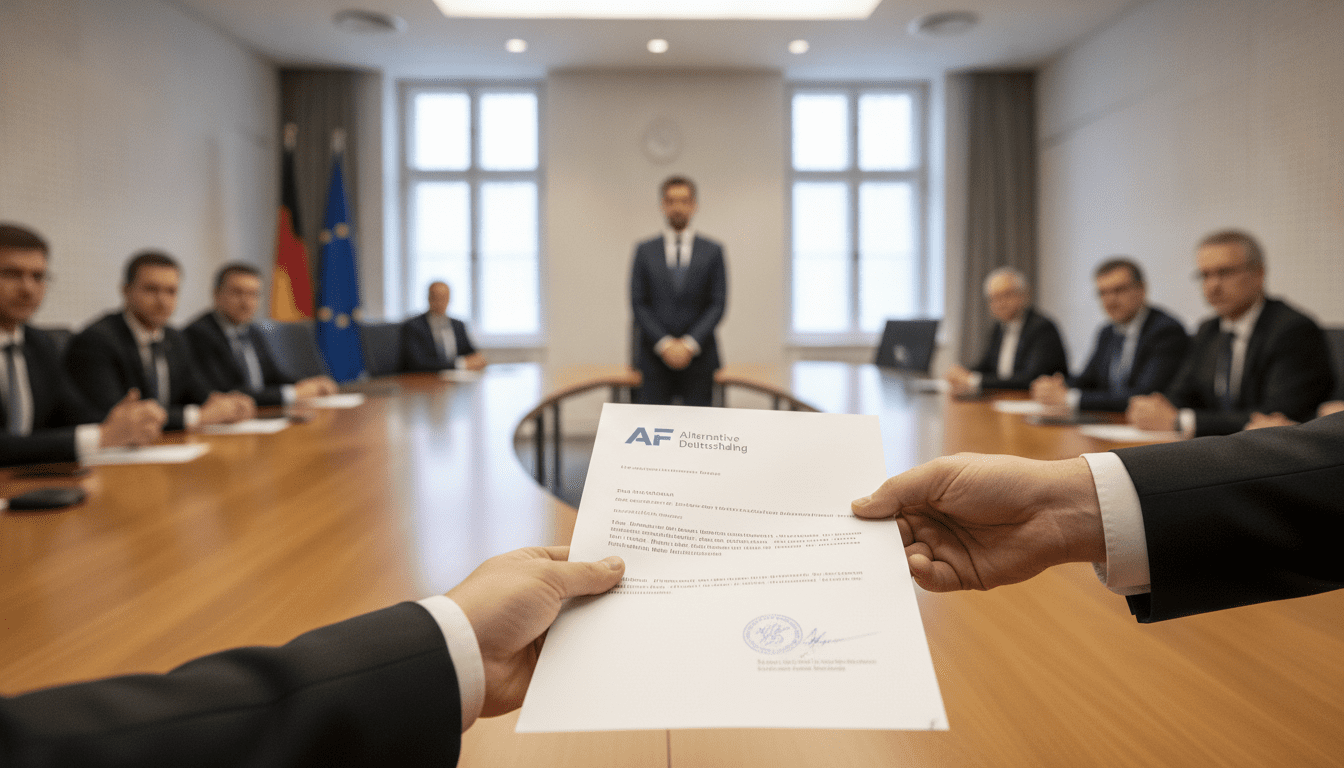
AfD Federal Board Bans Tom Rohrböck from Party Events
AfD federal board bars Tom Rohrböck from party events, saying the businessman exerted covert influence and members must keep distance from controversial adviser.
Tom Rohrböck, a businessman long linked in media and party gossip to behind-the-scenes influence in the Alternative for Germany (AfD), has been formally barred from participating in or organising AfD events, the party’s federal leadership announced on Monday. The ruling, adopted at a meeting of the AfD national board, directs members to keep distance from Rohrböck and prohibits him from involvement in official party activities.
AfD Federal Board Bars Rohrböck
The AfD federal board said on Monday that “Mr. Tom Rohrböck shall neither attend AfD party events nor co-organize them,” a decision that aims to restrict his physical and organisational access to party structures. Party officials framed the measure as a disciplinary and reputational step intended to limit external influence on internal decision-making.
Board members who supported the motion argued the prohibition was needed to prevent informal power networks from shaping strategy and candidate selection, while critics inside the party said the step was overdue. The decision is administrative, not a criminal finding, but it marks a clear public distancing by the AfD leadership.
Decision Text and Party Rationale
According to the party statement, the ban applies to participation in events organised by the Alternative for Germany and extends to roles in event planning or co-organisation. The board described Rohrböck as an external actor who often operates from abroad and whose proximity to party affairs has become a liability.
Officials cited concerns about transparency and the appearance of outside manipulation when explaining the move, stressing that the party must avoid informal chains of influence that could undermine internal rules. The board’s order does not revoke membership because Rohrböck was not a registered member of the party, but it does signal a formal break in cooperation.
Who Is Tom Rohrböck?
Tom Rohrböck is a businessman who has appeared in reporting and party chatter as an adviser and facilitator to certain AfD figures. He is not a formal member of the AfD, but long-standing accounts portray him as a person who provided advice, contacts and logistical support to party operatives over several years.
Media descriptions have labelled him variously as a “puppet master” or “shadow man,” phrases Rohrböck rejects when they appear in public discourse. Those close to him say he acted as a consultant on campaign logistics and communications, while detractors claim his involvement blurred the lines between private consultancy and informal political stewardship.
Allegations of Behind-the-Scenes Influence
Critics within and outside the party argue that Rohrböck’s activities exemplify a wider problem of informal networks exerting influence without public scrutiny. Allegations include shaping candidate lists, advising on messaging and facilitating contact with external groups and donors, accounts that party officials say created conflicts with internal governance.
Supporters of restrictions argue that transparent, accountable procedures must govern party decision-making, and that reliance on unelected advisers risks legal and electoral fallout. Opponents of the board decision characterise it as an internal power play, intended to curb particular factions rather than address misconduct uniformly.
Reactions Within the AfD and Wider Politics
The ruling triggered swift reactions among AfD factions, with some members welcoming the step as necessary discipline and others denouncing it as factional manoeuvring. Local and regional party figures vary in their view of Rohrböck’s role, and some municipal leaders have privately acknowledged the difficulty of severing practical links to non-members who offered organisational help.
Outside the AfD, rival parties and commentators framed the ban as evidence of internal turmoil and a recognition by the leadership that opaque external influence harms the party’s credibility. Civil society groups and political analysts said the move underlines ongoing tensions about the party’s direction and governance standards.
Potential Legal and Electoral Implications
Though the board’s measure is administrative, it could carry legal and electoral consequences if it reflects wider efforts to limit undeclared external funding or irregular campaign support. Observers note that formal prohibitions reduce the scope for cross-border consulting arrangements that might complicate compliance with campaign finance rules.
The decision may also affect candidates and local organisers who relied on Rohrböck for logistical support, forcing rapid adjustments as regional offices reassign tasks and vet external contractors. How strictly the ban is enforced will be watched closely by both party insiders and regulatory authorities.
The AfD leadership framed the prohibition as a step to strengthen internal governance and public trust, while acknowledging that managing relationships with external advisers will be an ongoing challenge. The party statement left open the possibility of revisiting the measure if circumstances change or new facts emerge.
The next phase will test whether the board’s order translates into concrete behavioural changes on the ground, and whether members comply with the directive or continue to rely informally on outside advisers.
