
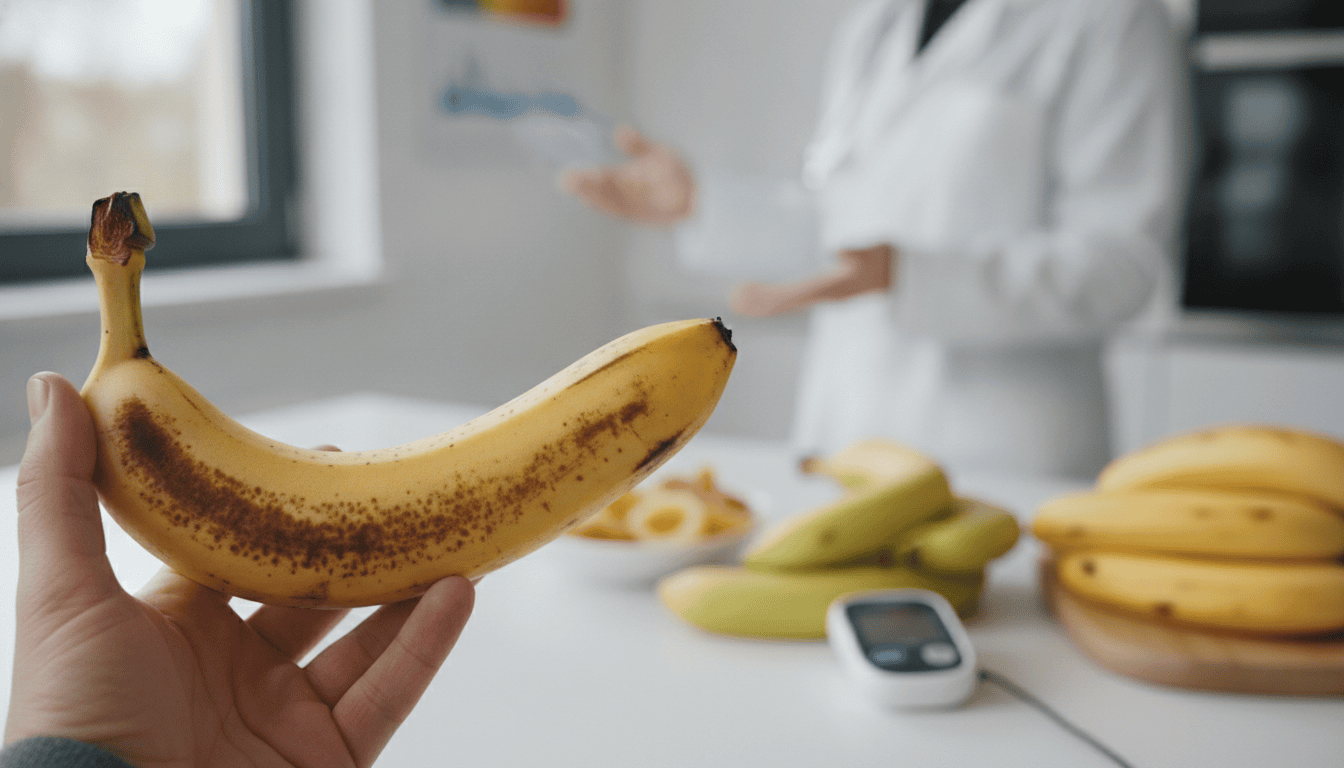
Bananas and blood sugar: How ripeness, portion size and food pairing shape glucose response
Bananas and blood sugar: Dietitians explain how ripeness, portion and pairing can limit glucose spikes while preserving nutrition.
Key finding: ripeness drives sugar and fiber balance
Bananas and blood sugar are closely linked to the fruit’s ripeness. As a banana ripens, starches convert into simple sugars, increasing its potential to raise blood glucose after eating.
This biochemical shift means slightly green or just-ripe bananas will usually produce a smaller, slower glucose rise than fully ripe or overripe fruit. Choosing ripeness deliberately is a simple way to modulate the effect on blood sugar.
Nutritional profile of a typical banana
A medium banana (about 115 grams) provides roughly 110–120 calories, around 26 grams of carbohydrates and close to 2 grams of fiber, along with small amounts of protein and fat. These nutrients make bananas a concentrated source of natural sugars alongside vitamins and minerals.
Because carbohydrate and sugar content are the primary drivers of post-meal glucose response, portion size has a direct impact: larger or multiple bananas in one sitting will raise blood sugar more than a single, smaller fruit.
Why fiber and resistant starch matter for glucose
Unripe bananas contain more resistant starch and higher levels of fiber-like components that slow digestion and blunt blood sugar increases. As ripening proceeds, resistant starch is converted into fermentable sugars and the fruit becomes easier and faster to digest.
This physiological difference explains why two visually similar bananas can produce different glucose responses depending on color and texture, even when their weight and calorie counts are comparable.
Guidance for people managing diabetes
People with diabetes do not need to avoid bananas entirely, but they should tailor choices to glucose targets and overall meal plans. Opting for a smaller, less ripe banana and monitoring blood glucose after eating can help individuals understand personal responses.
Health professionals commonly recommend pairing fruit with protein or fat — for example, a banana with a handful of nuts or plain yogurt — because mixed meals typically reduce the magnitude and speed of glucose rises compared with eating fruit alone.
Simple strategies to reduce post‑meal spikes
To limit blood sugar elevation, control portion size, choose a banana that is slightly firm rather than spotty and combine the fruit with protein, healthy fats or fiber-rich foods. These small adjustments influence digestion rate and the blood-glucose curve.
Other tactics include using a banana as flavoring in a smoothie with protein powder, slicing it over plain Greek yogurt, or pairing it with peanut or almond butter to add fat and protein; each strategy moderates the glycemic effect.
When to monitor and when to avoid larger portions
People using insulin or other glucose-lowering medications should check blood glucose after introducing a new portion size or ripeness level, because individual responses can vary and treatment may need adjustment. Those experiencing frequent spikes should consult their healthcare team for specific carbohydrate targets.
For most people without glucose-control issues, bananas can be enjoyed regularly in moderate amounts as part of a balanced diet, but attention to ripeness, portion and food pairing will help avoid unexpected spikes.
Bananas remain a nutritious, convenient snack that can fit into many eating patterns; by choosing slightly unripe fruit, limiting portion size and combining it with protein or fat, consumers can enjoy the flavor while managing blood sugar more effectively.
