
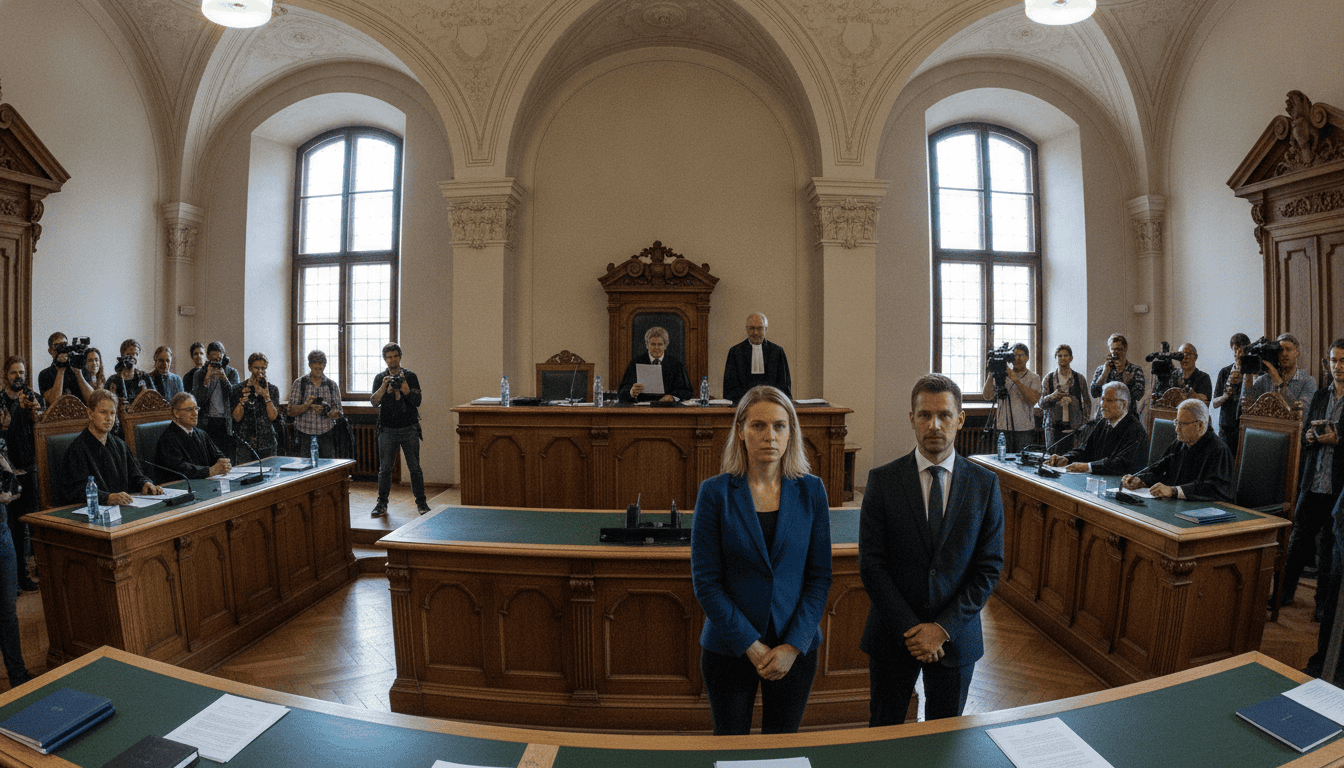
Susann E. sentenced to two years’ probation by Dresden court for supporting NSU
Dresden court sentences Susann E. to two years’ probation for supporting the NSU, finding her guilty of aiding a terrorist group and assisting a violent robbery.
Susann E. was sentenced on Thursday by the Higher Regional Court in Dresden to two years’ imprisonment suspended on probation after being found guilty of supporting the National Socialist Underground (NSU) and of aiding a weapon-enabled robbery. The court convicted her on three counts of supporting a terrorist organization and one count of accessory to a particularly serious armed extortion, while ruling the sentence may be served on probation. The federal prosecutors had sought a four-year prison term, and the verdict is not yet legally binding.
Court ruling and charges
The Higher Regional Court (Oberlandesgericht) in Dresden concluded that evidence presented at trial established Susann E.’s role in enabling the NSU’s underground existence in Saxony. Judges found that she provided identity support on multiple occasions to Beate Zschäpe, one of the group’s members who later received a conviction for her role in the cell. The convictions cover three episodes of support for a terrorist organization and one instance of assistance in a violent, weapon-enabled robbery.
Prosecutors’ case and specific allegations
Prosecutors from the Federal Public Prosecutor General (Bundesanwaltschaft) told the court that Susann E. lent Zschäpe her identity and documentation while Zschäpe lived in hiding in Zwickau. The indictment alleged that Susann E. allowed Zschäpe to use her health insurance card for medical appointments and aided in securing a motorhome that was later used by the NSU during its final armed robbery. Those facts formed the core of the prosecution’s narrative tying small acts of assistance to the maintenance of the NSU’s underground network.
Defense stance and sentencing disparity
Defense attorneys asked for an acquittal, arguing there was no proof that Susann E. knew about the NSU’s crimes or intended to support their violent undertakings. The court, however, found the available evidence sufficient to establish criminal liability under German terrorism-support statutes. The sentence of two years on probation fell short of the four-year prison term requested by the federal prosecutors, reflecting the court’s assessment of culpability and mitigating factors in the defendant’s favor.
Courtroom atmosphere and public reaction
The proceedings drew public attention and demonstrators to the court precincts; about two dozen people protested outside the hearing against right-wing violence and extremism. The demonstrations underscored the lingering public sensitivity surrounding the NSU saga and the perception that networks of supporters played an enabling role. Observers noted a measured atmosphere in court as judges weighed documentary evidence, witness testimony and legal arguments over the course of the trial.
Historical context of the NSU campaign
The ruling comes against the backdrop of one of Germany’s most notorious far-right crime sprees. The National Socialist Underground, composed of Beate Zschäpe and the two men Uwe Böhnhardt and Uwe Mundlos, is linked to a series of racially motivated attacks and nine murders of small-business owners of Turkish and Greek origin, along with the killing of a German police officer. The cell carried out bombings that injured dozens in Cologne and financed its life underground through a string of bank robberies that spanned years beginning around 2000.
Legal implications and possible appeals
The court specifically noted that the judgment is not final and may be subject to appeal by either the defense or the prosecution, a routine next step in complex criminal proceedings of this kind. If appealed, higher courts will review legal findings and procedural questions before any sentence becomes final. The ruling is likely to renew debate about how German authorities investigate and prosecute peripheral actors who provide material or logistical assistance to extremist cells.
The Dresden verdict highlights ongoing judicial scrutiny of individuals accused of enabling extremist networks and may prompt renewed attention to how support roles are investigated and charged. As the case moves through potential appeals, it will remain a focal point for victims’ relatives, civil society groups and policymakers concerned with preventing and prosecuting right-wing terrorism.
