
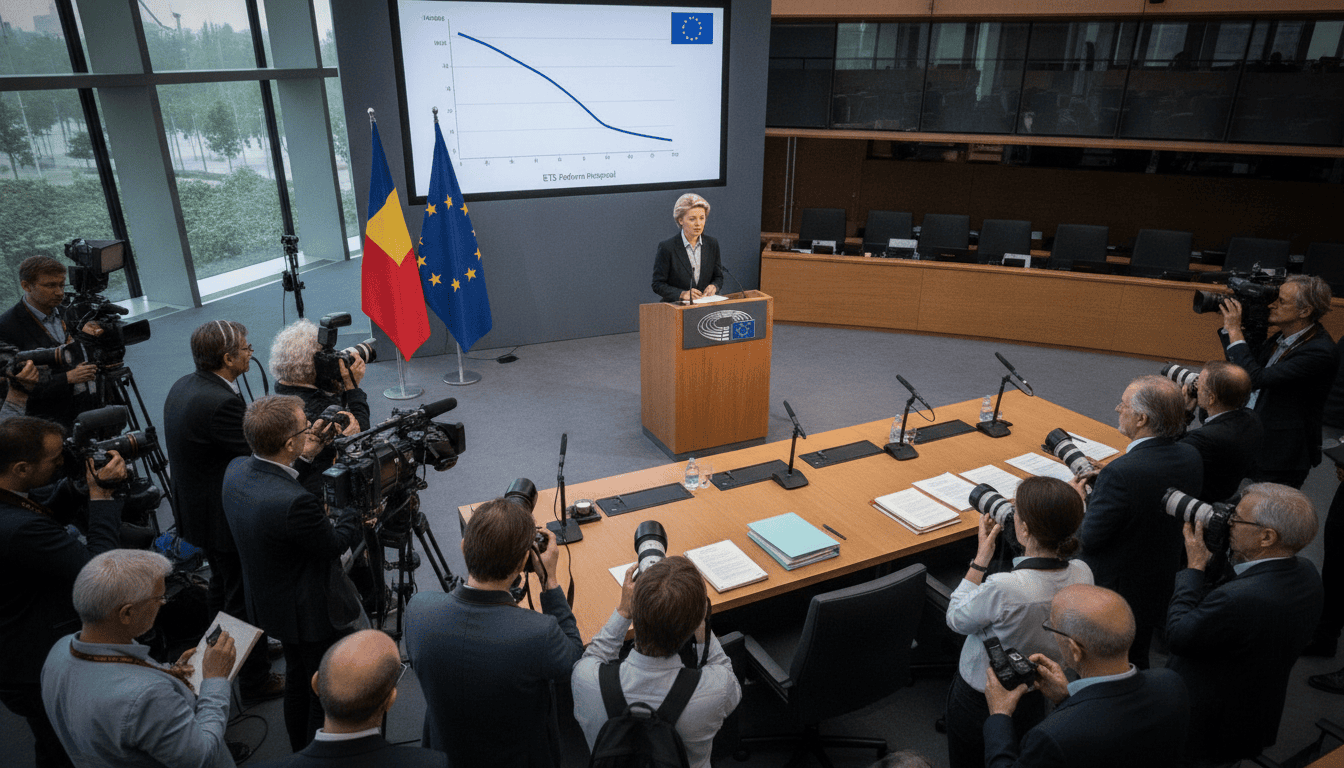
EU Emissions Trading System reform slows permit cuts and broadens coverage to aviation and waste
EU Emissions Trading System reform slows permit cuts, extends carbon pricing to more flights and waste, and links free allowances to clean investments.
The European Commission has proposed a significant revision to the EU Emissions Trading System (ETS) that would slow the annual reduction of carbon permits and expand the scheme’s scope to additional sectors. Under the proposal, the Commission would make more emission allowances available from 2031 and attach new conditions to free certificates for industry, measures it says are needed to shield European companies from high energy costs and foreign competition. The move aims to keep the EU on course for a 90 percent emissions reduction by 2040 compared with 1990 while pursuing climate neutrality by 2050.
Commission eases planned annual permit decline
The Commission’s draft recalibrates the rate at which the total number of ETS allowances is reduced each year, tempering previous targets to give industry more breathing room. Current rules foresee annual reductions of 4.3 percent until 2027 and 4.4 percent from 2028, but the new proposal would slow those cuts from 2031 onward to 3.7 percent between 2031 and 2035 and to 1.7 percent between 2036 and 2040. Officials argue the adjusted glide path still aligns with the EU’s revised climate benchmarks while responding to economic pressures on energy-intensive sectors.
The change would mean a larger supply of tradable emissions permits in the 2030s than under existing law, a shift likely to soften price pressures in the carbon market. The Commission says it will compensate for the slower decline by targeting emissions reductions in other areas and by extending ETS coverage to additional sources of greenhouse gases.
Aviation and maritime coverage will be expanded
As part of the revision, the Commission proposes extending ETS obligations beyond current intra‑EU flights and imposing stricter rules for shipping. Today, only flights within the European bloc fall under the system; under the new plan, the carbon price would also apply to flights that touch certain non‑EU hubs, potentially affecting routes through airports such as Istanbul and Abu Dhabi. Long‑haul services to destinations like the United States or China would generally remain outside the extended scope.
For maritime transport, the Commission has signalled further obligations for ship operators and additional reporting and compliance requirements, aimed at reducing emissions across sea freight lanes. The broader coverage is intended to close gaps in the policy that have allowed emissions from international transport to escape pricing and regulation.
Free allowances linked to decarbonisation investments
A notable element of the proposal ties the receipt of free ETS allowances to concrete investment commitments to move away from oil and gas. Companies would be required to demonstrate spending on technologies such as hydrogen, electrification or other low‑carbon fuels to qualify for continued transitional support. The Commission frames the measure as a way to steer industry incentives toward cleaner production while still offering temporary relief from full auctioning of permits.
This conditionality is designed to accelerate industrial uptake of alternative fuels and low‑carbon processes, and to avoid simply preserving the status quo through free allocations. The change could reconfigure how major steel, cement, fertilizer and chemical producers plan capital expenditure over the next decade.
Industry calls and political rationale behind the changes
The Commission acknowledged that the revisions respond to sustained pressure from several member states and energy‑intensive industries that warned of competitiveness risks amid high energy prices. European firms argued that a steeper carbon price trajectory could drive production abroad and threaten jobs, prompting calls for a more gradual transition. Some companies have already retooled operations to lower their emissions, while others warned that looser ETS rules risk undermining the climate transition.
Brussels has balanced these concerns against climate targets, saying the slower reduction pathway is a temporary calibration that keeps long‑term objectives intact. The Commission also proposes to include waste‑to‑energy facilities in the ETS, which it says will help offset slower permit declines by capturing emissions reductions in previously uncovered sectors.
Next steps: Council, Parliament and the revenue debate
The Commission’s proposals now head to the Council of the European Union and the European Parliament for negotiation and approval, where member states and legislators will debate the details. A central point of contention will be how to allocate the substantial revenues generated by the ETS; the Commission wants at least half of the proceeds ring‑fenced for industrial decarbonisation investments. Other capitals and MEPs may push for different shares or broader uses, including social measures or climate adaptation.
Lawmakers will also weigh the precise timelines and technical design of the conditional support for free allowances, and how to ensure the expanded aviation and maritime measures comply with international aviation and shipping rules. The legislative process could involve prolonged talks given divergent national priorities and sectoral interests.
The Commission presents the package as an attempt to reconcile competitiveness, energy security and climate ambition, but the draft is likely to face robust scrutiny and amendment during interinstitutional negotiations.
Negotiations in the Council and Parliament are expected to shape the final law, with outcomes that will determine how quickly European industry bears the full cost of carbon and how the EU balances near‑term economic pressures against its long‑term climate commitments.
