
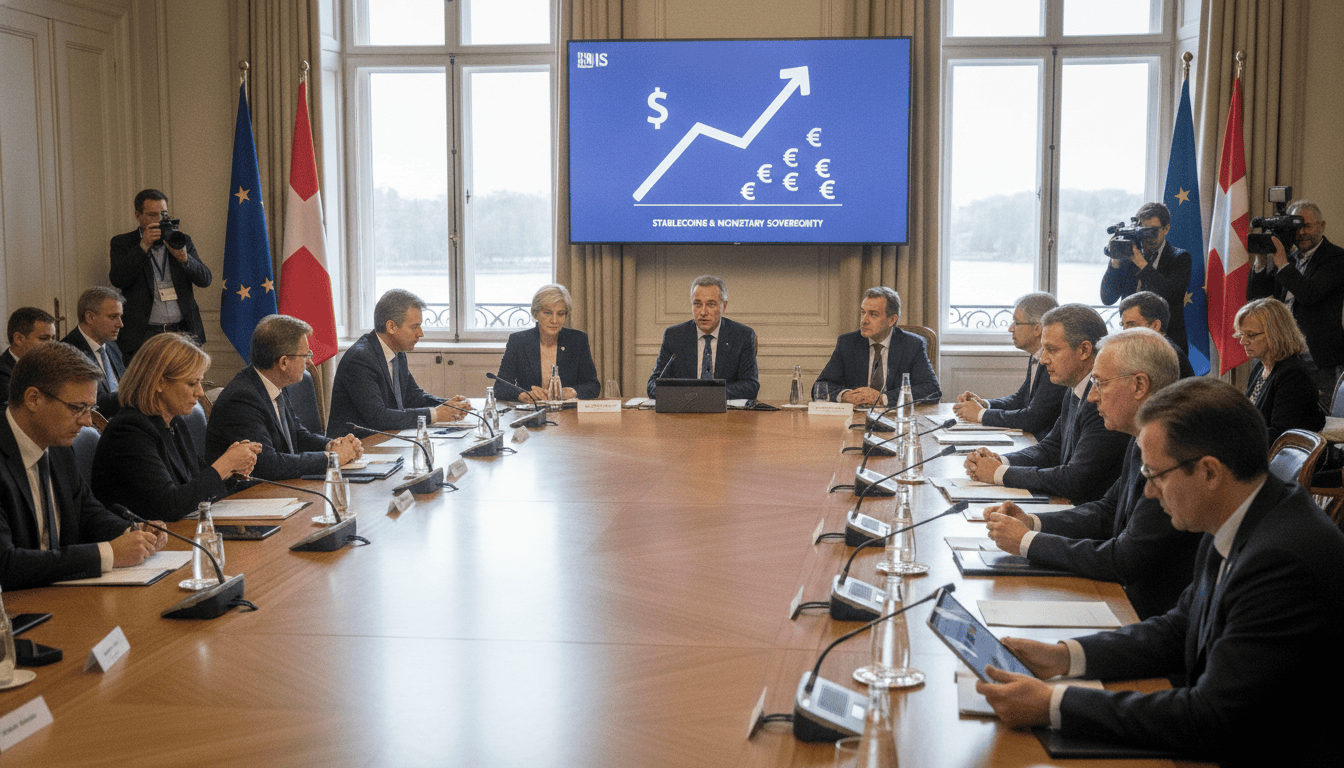
Stablecoins face scrutiny at BIS as dollar-backed tokens dominate global market
BIS delegates debate stablecoins as dollar-backed tokens dominate markets; regulators weigh risks to monetary sovereignty while Europe seeks euro-based options.
The Bank for International Settlements’ annual meeting this week placed stablecoins at the center of policy discussions, as central bankers and financial supervisors examined their rise and potential risks. Delegates highlighted that the market is overwhelmingly dollar-denominated, underlining concerns about monetary sovereignty and cross-border dependence on U.S. financial infrastructure. Speakers from academia, central banks and industry agreed that while stablecoins warrant close monitoring, they do not yet pose an imminent threat to traditional monetary systems.
BIS assembly drew attention to market scale and structure
The BIS meeting featured multiple panels that dissected the architecture and growth of stablecoins, drawing on recent research and industry statistics. Presenters noted that the ecosystem has expanded rapidly in value and transaction volumes but remains concentrated in a handful of dollar-backed tokens. Policymakers used the forum to compare international regulatory approaches and to probe how market conduct and reserves underpinning tokens affect financial stability.
Dollar dominates stablecoin issuance and reserves
Analysis presented at the conference reiterated that roughly all market value of major stablecoins is denominated in U.S. dollars, with two issuers accounting for the lion’s share. The largest tokens, USDT and USDC, together represent the bulk of market capitalization and hold most of their backing in short-dated U.S. Treasury securities. Economists at the meeting cautioned that this structure creates a close nexus between stablecoin values and U.S. short-term interest rate dynamics and liquidity conditions.
Euro projects lag and new European entrants seek foothold
Speakers noted the euro’s marginal position in stablecoin markets. European offerings account for only a tiny fraction of global capitalization, with a small number of euro-denominated products capturing most of that limited market. Several speakers referenced recent and planned initiatives by European banks and consortia, including a bank-backed project expected to enter the market in the second half of 2026, aimed at boosting euro liquidity in tokenized form and reducing reliance on dollar-based instruments.
Concerns over monetary sovereignty and geopolitical spillovers
A recurring theme was the potential for foreign-currency-denominated stablecoins to erode national monetary control. Delegates warned that widespread use of tokens denominated in another currency could limit a central bank’s ability to steer domestic liquidity and influence local credit conditions. Commentators also raised geopolitical considerations: dominance by dollar-based tokens could extend U.S. financial influence through standards and infrastructure, amplifying concerns about strategic dependencies.
Use-case evidence points to store-of-value and anonymity demand
Recent empirical work discussed at the conference suggests that demand for stablecoins is often driven more by anonymity and store-of-value motives than by routine retail payments. Studies referenced by BIS participants indicate that while transaction volumes in some tokens remain high on certain platforms, overall usage as a replacement for bank deposits or cash is still limited. Central bankers highlighted that small-scale demand for private, anonymous digital value stores is plausible, but it does not yet amount to a systemic substitution for traditional money.
Regulation’s paradox: protection can deter adoption
Speakers debated why more stringent regulatory frameworks, such as those enacted in Europe, have not produced larger markets for euro-denominated tokens. Several central bankers argued regulators in some jurisdictions effectively built a robust compliance framework before a sizeable market emerged, which may have deterred early entrants. By contrast, looser regulatory environments — and the regulatory gaps faced by some issuers operating across jurisdictions — can encourage rapid adoption despite higher systemic risks.
Legal, operational and monetary questions remain unresolved
Panelists emphasized that the stability of a given token depends on more than the assets held in reserve; it also rests on legal enforceability, redemption rights, custody arrangements and the credibility of issuers. Central bank economists warned that price stability of tokenized liabilities is not guaranteed and that episodes of stress could reveal discontinuities between token values and underlying fiat balances. Regulators raised persistent issues related to anti-money-laundering controls, cross-border supervisory coordination and contingency planning for large-scale redemptions.
Shifts in market infrastructure and evolving regulatory frameworks will shape how stablecoins integrate with payments and institutional cash management. Delegates agreed that technological tokenization has potential benefits for settlement efficiency and asset digitization, but these must be weighed against legal clarity and systemic safeguards. For now, the market’s heavy dollar tilt and limited euro presence mean policymakers in Europe and elsewhere are likely to keep close oversight while encouraging responsible innovation.
