
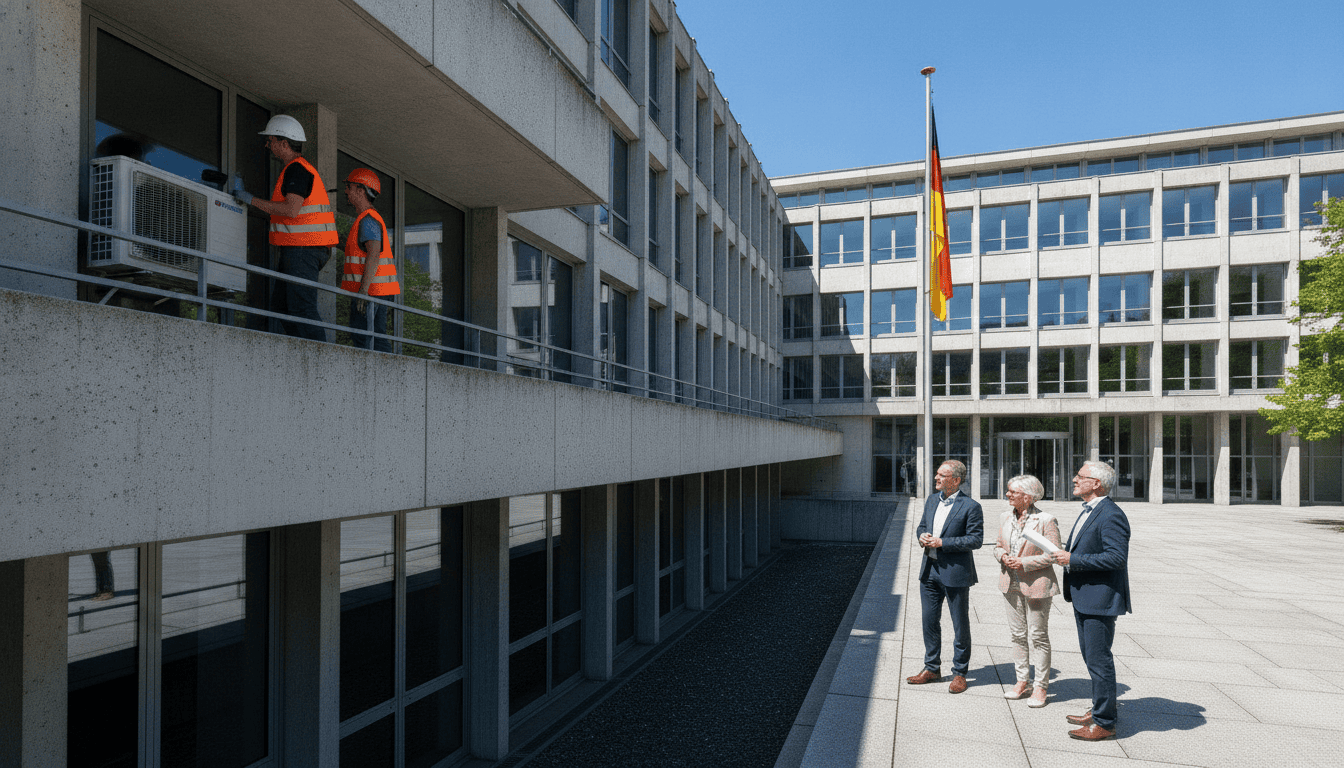
German top court rules owners can demand split air conditioner installation on balconies
Germany’s Federal Court of Justice ruled on July 17, 2026 that owners may require permission to install a split air conditioner on a balcony if installation does not unreasonably affect other owners.
The Federal Court of Justice (BGH) in Karlsruhe held on July 17, 2026 that a flat owner may legally demand that the owners’ association permit the installation of a split air conditioner with an outdoor unit on a balcony, provided the rights of co-owners are not unduly impaired. The presiding judge, Bettina Brückner, emphasized that anticipated noise from later operation does not automatically justify refusal. The decision clarifies when structural changes to façades and balconies are permissible under the German Condominium Act (Wohnungseigentumsgesetz).
Court expands individual enforcement rights
The BGH’s ruling goes beyond earlier precedents by concluding that an individual owner can seek judicial enforcement of a permission that the owners’ assembly has denied. Previously, case law primarily addressed whether a majority decision by the owners’ association could authorize split systems, but the new judgment confirms that an owner may demand approval and obtain it through the courts under statutory conditions. The court framed the entitlement around the immediate, concrete effects of the physical installation rather than hypothetical future disturbances.
Facts of the Berlin dispute
The case began with flat owners in Berlin who sought to mount a split air conditioner on their balcony but were blocked by a homeowners’ meeting vote. They challenged that refusal in court and obtained a favourable judgment from the Landgericht Berlin II, which found the installation would not impose impairments beyond what is tolerable in communal living. The owners’ association appealed to the BGH, arguing that effects such as noise, condensate and exhaust heat could reduce neighbouring property values and therefore justify a ban.
Court draws line between installation and use
In its reasoning the BGH distinguished between the immediate structural impact of an installation and subsequent operational effects. The court said that assessments must focus on direct consequences tied to the construction measures — for example, drilling the façade or mounting an outdoor unit — rather than speculative problems arising from future use. That approach echoes a prior BGH decision but extends it by enabling individual enforcement when statutory prerequisites are met, the judges explained during the hearing.
Owners’ association concerns and legal limits
Homeowners’ associations had pointed to possible noise, water discharge and thermal impacts as grounds to prohibit split air conditioners on balconies. The BGH acknowledged that such consequences can be relevant but insisted they must be demonstrable and directly linked to the installation itself, not merely feared. The court further noted that some level of disturbance is tolerable within the framework of orderly cohabitation, and that blanket refusals based on anticipated use cannot substitute for concrete, objective evidence of disproportionate impairment.
Types of systems and installation implications
Practically, buyers choose between portable monoblock units and split air conditioners; the latter consist of an indoor unit and a permanently mounted outdoor compressor that requires drilling into the façade or fixing to balcony balustrades. The BGH decision is most pertinent to split systems because they involve alterations to the building envelope. Associations and owners will now need to consider specific installation methods, mounting positions and technical safeguards when weighing approvals, rather than relying on general prohibitions.
Market trends and likely effects on demand
The emergence of hotter summers has driven rising consumer interest in air conditioning across Germany; a representative YouGov survey shows roughly 17 percent of households already have air conditioning and about 20 percent intend to acquire a unit. Industry figures from the Fachverband Gebäude-Klima report growth in sales of room climate devices from roughly 260,000 units in 2023 to about 320,000 in 2025, and market observers expect further increases in 2026. The BGH ruling may reduce barriers to installation for many condominium owners, potentially accelerating that trend.
The decision will prompt homeowners’ associations to revise internal rules and develop clear, objective criteria for permitting façade penetrations and outdoor units, while individual owners gain a clearer path to enforce installations that are technically sound and proportionate.
