
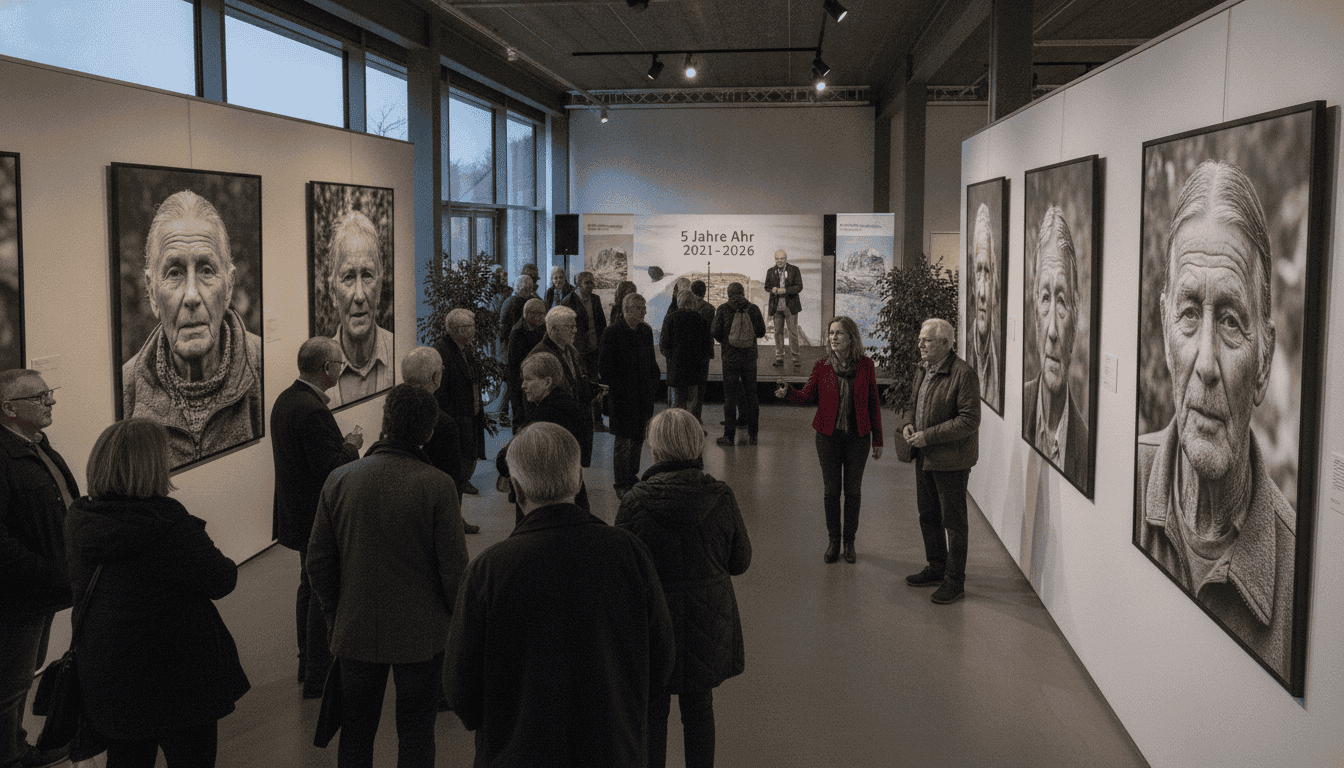
Ahrtal exhibition “We AHR strong” opens in Altenahr on fifth anniversary of 2021 flood
Ahrtal exhibition “We AHR strong” opens in Altenahr on July 14, 2026, displaying six weeks of portraits of flood survivors and marking the fifth anniversary.
Exhibition opens in Altenahr on July 14, 2026
The Ahrtal exhibition “We AHR strong. 5 Jahre, ein neuer Blick” opened in Altenahr on July 14, 2026, exactly five years after the catastrophic flood of July 14–15, 2021. Organizers say the six-week outdoor photo project presents portraits of people from the region who were affected by the disaster, placing their faces and stories along the banks of the Ahr.
The show aims to give survivors a dignified public space for remembrance while also directing attention forward to recovery and resilience. Local officials and national figures attended the opening, stressing the exhibition’s role in communal memory.
Portraits staged along the Ahr to honor survivors
Photographs are displayed in public along the river, transforming familiar streets and paths into a corridor of remembrance that connects residents and visitors. Curators said the portraits emphasize individual experiences and everyday lives, rather than purely documenting loss.
The layout was designed to encourage slow engagement; passersby encounter faces, names and short testimonies that invite conversation and reflection. The exhibition runs for six weeks and is intended both as memorial and as a conversation starter about rebuilding.
High-level attendance and ceremonial programme
The opening ceremony was attended by Cornelia Weigand, the district administrator, and Gordon Schnieder, identified at the event as the Rhineland-Palatinate minister-president. Bundespräsident Frank-Walter Steinmeier arrived about an hour late and spent time speaking with residents before the exhibition began.
Officials said the presidential visit would be followed by a quiet wreath-laying in Bad Neuenahr-Ahrweiler and a later speech to a commemorative session in the Landtag in Düsseldorf. In the evening a public memorial on the Ahrweiler market square will include the state minister-president and the federal chancellor.
The 2021 catastrophe and its aftermath
The flood that hit the Ahr and Erft valleys in the night of July 14–15, 2021, resulted from extreme overnight rainfall that overwhelmed rivers and drainage systems. More than 180 people were killed, and entire neighbourhoods, bridges and road links were swept away or devastated across the Ahrweiler and Euskirchen districts.
In the years since, residents have described prolonged periods of grief, bureaucratic struggle and the slow work of reconstruction. Many homes remain rebuilt or in the process of repair, and the exhibition organizers framed their project as part of a long-term process of public acknowledgement.
Political accountability and possible apologies
The fifth anniversary has again prompted debate about crisis management and political responsibility during the disaster. At the time of the flood, Gordon Schnieder served as a CDU state parliamentarian, a fact noted by attendees and commentators at the opening event.
Officials and observers said Schnieder might use anniversary events to address past shortcomings in coordination and communication with affected communities. His previous statements, made while in opposition, included a pledge to apologize to residents should his party win power and he be in a position to speak directly to them.
Community memory and the role of public art
Organizers described the photo exhibition as a way to balance mourning with everyday life, offering a visible, accessible platform for memory that does not confine those affected to private grief. The images aim to preserve personal dignity while prompting public recognition of ongoing needs.
Residents involved in the project said they appreciated the outdoor format because it refuses to bury memories in a single location and instead integrates them into routes people use daily. The exhibition is expected to draw visitors from nearby towns as well as local families who want to mark the anniversary together.
Five years on, the visual project seeks to keep attention on rebuilding work while resisting a narrative that reduces the affected communities to victims alone. The portraits and accompanying testimonies aim to record loss honestly while foregrounding the persistence of families, businesses and civic life along the Ahr.
