
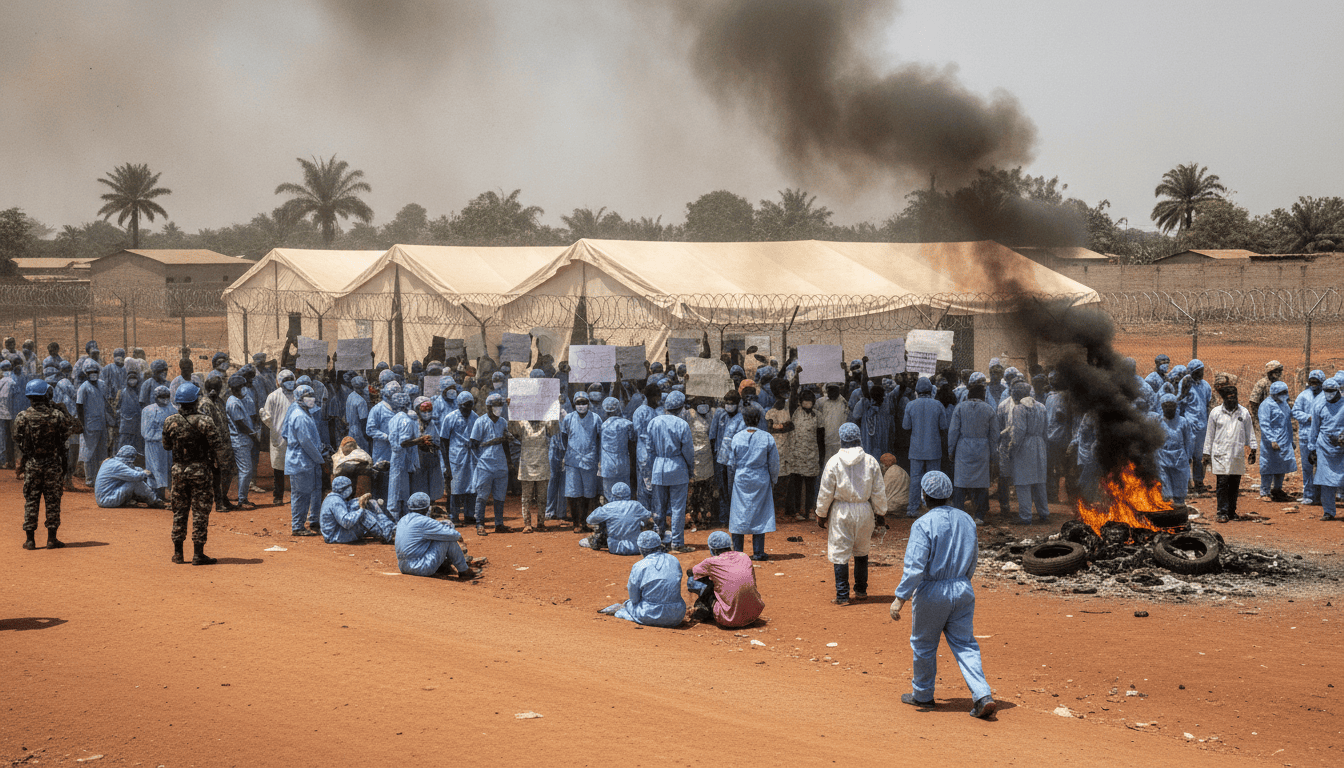
Ebola treatment centre strike in DRC halts services as staff protest unpaid wages and safety concerns
Healthcare workers at an Ebola treatment centre in the Democratic Republic of the Congo have walked off the job in a strike over unpaid salaries and deteriorating safety conditions, leaving treatment operations suspended and patients at risk.
Healthcare workers at the centre in the eastern Democratic Republic of the Congo initiated an Ebola treatment centre strike on 14 July 2026 after saying months of delayed pay and inadequate protective measures forced them to stop work. Staff representatives said many employees had not received salaries for several months and that shortages of protective equipment and safe transport heightened the danger of infection. Local officials and aid groups confirmed disruptions to care while calling for urgent negotiations to restore services.
Staff walk-off at treatment facility
Healthcare staff at the facility ceased clinical activities, sealing off wards and refusing to treat new arrivals until demands are met. Workers described the action as a last resort after repeated requests to managers and funders failed to produce payments or improved safety protocols. The strike has affected nurses, laboratory technicians and support staff who form the day-to-day backbone of the centre’s operations.
Local coordinators said emergency triage continued outside the compound but warned that the capacity to isolate suspected Ebola cases was severely limited. Family members of patients reported confusion and fear as admissions slowed and transfers to other centres were delayed. Medical evacuation routes and ambulance availability were also reported as constrained by the stoppage.
Payment delays and safety grievances
Staff spokespeople detailed chronic pay delays, saying that some workers had not received salaries for several months and that compensation promised by funding partners was late. Employees also cited shortages of personal protective equipment, inadequate infection prevention supplies, and the absence of reliable hazard pay for those working in high-risk zones. These grievances, they said, undermined morale and increased the perceived risk of on-the-job infection.
Officials at the treatment centre acknowledged operational strains but framed the dispute as a funding and logistical challenge rather than a refusal to prioritize patient care. Aid organisations supporting Ebola response efforts confirmed funding flows had been disrupted but said they were seeking immediate solutions to pay staff and replenish safety stocks. Investigations into contract and payment chains were reported to be under way.
Impact on patients and neighbouring facilities
The strike has forced the centre to suspend routine admissions and reduce active monitoring of contacts, raising concerns about potential undetected transmission. Patients currently receiving treatment faced uncertain continuity of care, with some families scrambling to find alternative facilities in a region where specialised Ebola units are scarce. Health authorities warned that delayed isolation of suspected cases could widen chains of transmission, complicating containment efforts.
Neighbouring clinics and referral hospitals reported increased pressure as they absorbed diverted patients, stretching already limited resources. Field surveillance teams said contact tracing operations were slowed by the reduction in staff capacity, threatening the timeliness of critical testing and reporting. Public health experts cautioned that even short interruptions in containment measures can undermine progress against highly infectious diseases.
Responses from government and aid organisations
Provincial health authorities called for an immediate resumption of services and said they were convening talks between staff representatives, hospital management, and funding partners. National health ministry officials described the strike as unacceptable but acknowledged the legitimacy of concerns about unpaid wages and safety shortfalls. Both levels of government indicated they would prioritise resolving payment backlogs and ensuring protective equipment was supplied.
International aid agencies and non-governmental organisations working in the area urged rapid mediation and said they were mobilising resources to stabilise operations. Several groups emphasised the need for transparent accounting of funds and for long-term improvements in supply chains and staff support. Donor representatives were reported to be re-evaluating disbursement schedules to prevent further interruptions.
Context of recent Ebola response in the DRC
The Democratic Republic of the Congo has faced recurrent Ebola outbreaks over the past decade, with response efforts relying heavily on local treatment centres and international support. These centres are often established rapidly in outbreak zones and depend on a mix of government funding, NGO logistics, and donor payments that can be vulnerable to delays. The fragility of funding mechanisms has in the past contributed to workforce instability and impeded sustained containment.
Public health authorities have repeatedly emphasised the critical role of frontline health workers in arresting outbreaks, pointing to vaccination, rapid isolation and contact tracing as pillars of the response. Observers say protecting the welfare and safety of these workers, including timely pay and adequate equipment, is essential to maintain trust and operational continuity during emergencies.
Negotiations under way and possible resolutions
Mediation between staff and management began within 24 hours of the strike, according to local sources, with authorities promising expedited payment of arrears and immediate deliveries of protective supplies. Representatives for the workforce said they would halt the strike once concrete timelines for payments and safety improvements were set and monitored. Negotiators reportedly discussed short-term cash advances, third-party audits of payroll, and independent monitoring of infection control supplies.
Stakeholders warned, however, that durable solutions require systematic fixes to funding flows and clearer contractual protections for workers in outbreak responses. Donors were urged to streamline disbursements and invest in local logistics to reduce future interruptions. Community leaders called for transparent communication to restore public confidence and ensure patients know where to seek urgent care.
The strike at the Ebola treatment centre underscores persistent weaknesses in emergency health financing and worker protection that can rapidly erode outbreak response capacity. Restoring paid salaries, reinforcing safety measures and ensuring rapid, accountable funding will be decisive in whether services resume swiftly and whether the broader epidemic response can maintain momentum in the coming weeks.
