
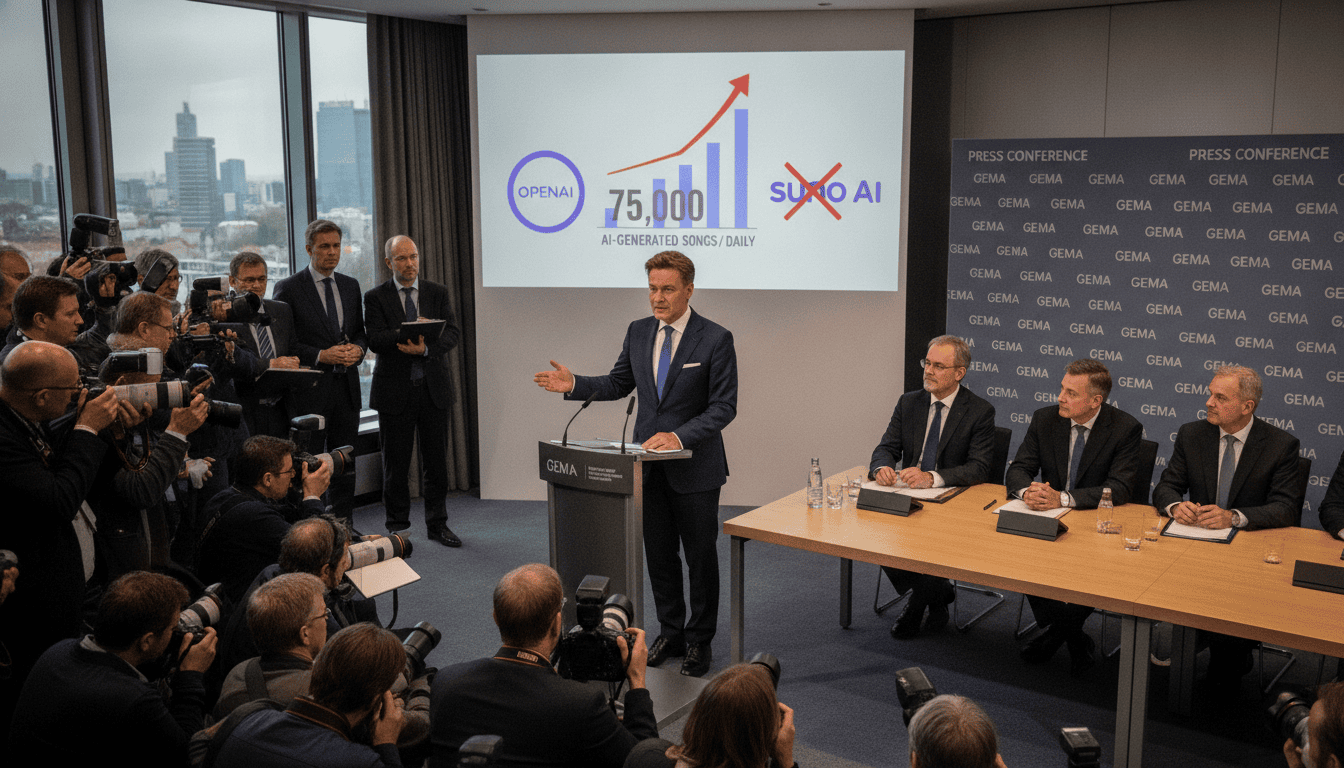
GEMA chief Tobias Holzmüller on AI dispute: “75,000 AI songs every day is alarming”
GEMA chief Tobias Holzmüller on AI dispute: Holzmüller warns that 75,000 AI-generated songs produced daily threaten creators as lawsuits against OpenAI and Suno press for licensing and transparency.
GEMA chief Tobias Holzmüller issued a stark warning this week, saying the sheer volume of AI-generated music—about 75,000 tracks per day—poses an urgent challenge for the rights sector. The GEMA chief Tobias Holzmüller on AI dispute framed the surge as alarming for songwriters, composers and publishers represented by the collecting society, which represents roughly 100,000 rights holders. His comments come amid legal action against technology firms including OpenAI and Suno and in response to growing interest in AI audio tools on streaming services. The intervention signals a more confrontational phase as music-rights organizations seek clear rules for how machine-learning systems can use and monetize protected works.
GEMA chief frames scale of AI output as systemic threat
Tobias Holzmüller said the daily flood of AI-generated tracks is not an isolated technical problem but a structural one that could distort markets. He stressed that automated production on such a scale risks commodifying musical elements that creators license and earn from today. For a society that collects and distributes royalties, the volume raises immediate questions about provenance, attribution and payment flows. GEMA’s position emphasizes that widespread unlicensed use of copyrighted works to train or generate music would undermine the livelihoods of its members.
Lawsuits filed against OpenAI and Suno reflect legal test cases
The GEMA chief referenced active litigation targeting OpenAI and Suno as part of an effort to define legal boundaries for AI in music. Those cases aim to determine whether and how companies may rely on copyrighted recordings and compositions when developing generative audio systems. For rights holders, the suits are intended to secure recognition of ownership and to compel licensing or compensation where protected material has been used. Observers say the outcomes of these proceedings could set precedents affecting platforms, developers and the broader creative economy.
Streaming platforms and new AI tools under scrutiny
Holzmüller singled out the possibility of AI features being integrated into major streaming services as especially concerning for rights administrators. New tools on platforms like Spotify could enable mass generation or personalization of songs that mimic existing artists and styles. That prospect raises practical questions about monitoring, takedown, and how royalties would be collected for derivative works. GEMA’s stance is that platforms must not become distribution channels for unlicensed AI creations without mechanisms that protect creators’ rights.
Calls for licensing, dataset transparency and fair remuneration
At the heart of GEMA’s demands are three central expectations: that companies obtain appropriate licenses, disclose the sources used to train models, and ensure authors receive fair remuneration. Holzmüller emphasized that these principles are non-negotiable for a collecting society tasked with safeguarding income streams for composers and lyricists. Transparency about training datasets would also help determine whether protected recordings or scores have been used without consent. Industry stakeholders say workable licensing frameworks and clearer disclosure practices are needed to balance innovation with legal and economic rights.
Creators face detection, attribution and market pressure
Rights holders and independent artists alike are confronting a new set of operational problems as AI-generated songs proliferate. Automated recognition systems struggle to identify subtle derivations and to attribute authorship reliably, complicating royalty distribution. Meanwhile, an influx of low-cost, machine-produced tracks could depress prices and reduce visibility for human creators. GEMA has warned that without technical and legal remedies, the competitive landscape for songwriters and composers could change rapidly and to their detriment.
GEMA has positioned itself as a central actor in shaping how generative AI is governed in the music sector, advocating for enforceable licensing, clearer transparency about model training, and protections that preserve creator income. As lawsuits proceed and streaming platforms evaluate AI offerings, the music industry will closely watch court decisions, regulatory responses and commercial agreements that follow. The stakes are high for the society’s roughly 100,000 members and for the wider future of music creation and remuneration.
