
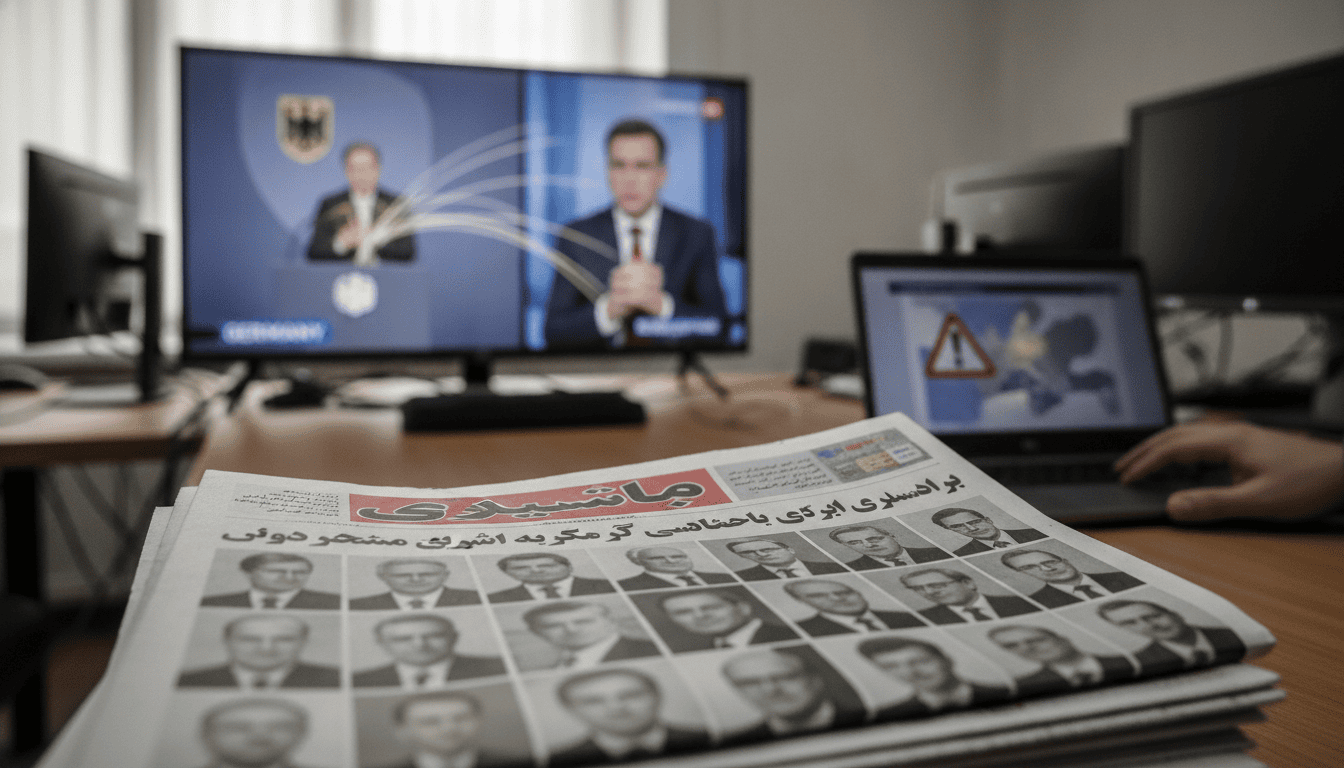
Hamshahri list names Friedrich Merz among Western leaders in Iranian revenge graphic
Hamshahri list published a graphic naming Western leaders including Friedrich Merz, prompting German politicians to warn of heightened security risks after the Iranian paper’s call for revenge.
The publishing of a Hamshahri list naming high‑profile Western figures has prompted swift concern in Berlin and across party lines. The on‑page graphic, carried by the widely read Iranian daily Hamshahri, portrayed a roster of politicians it said should “pay” for what the paper described as the death of Ali Chamenei. German lawmakers from the CDU, SPD and Greens warned that the depiction could increase the threat landscape for individuals and potentially mobilize extremists at home.
Graphic lists Merz and other Western leaders
The Hamshahri list singled out a range of Western leaders, including Germany’s Friedrich Merz, according to the newspaper’s caption. The item was headlined with language that framed the images as a list of people “awaiting the retribution of the Iranian people,” and included photographs and names of figures from several countries.
The presentation drew immediate attention because Hamshahri is one of Iran’s highest‑circulation dailies and is widely perceived as closely aligned with the Islamic Republic’s leadership. The visual format and the explicit call for vengeance — as printed — are unusual for mainstream international reportage and raised questions about intent and calibration.
German politicians raise alarm over potential threats
CDU security spokesman Roderich Kiesewetter told the Handelsblatt he believes Tehran has for some time been preparing targeted killings and terrorist attacks in the West, including Germany. His statement reflected a broader unease among law‑makers who said the list increases the perceived danger to public figures.
SPD interior spokesman Sebastian Fiedler described the development as evidence of a “high threat level,” warning that the publication could radicalize extremist milieus and encourage lone actors. Green deputy parliamentary leader Konstantin von Notz said the listing “very likely” did not occur without the knowledge or backing of elements within the Iranian regime, while noting that he did not regard the chancellor as newly exposed given existing protection measures.
List includes presidents and prime ministers across the West
Beyond Germany, the Hamshahri graphic named several other Western leaders as targets of retribution. The images shown included former US president Donald Trump, Israeli prime minister Benjamin Netanyahu, French president Emmanuel Macron, Italy’s Giorgia Meloni and Britain’s Keir Starmer, among others.
By grouping leaders from multiple NATO and Western governments, the newspaper framed the alleged grievance as broadly directed rather than aimed at a single country. That breadth complicates assessment, because it raises the prospect of symbolic messaging intended to enlist support or provoke reaction among diverse audiences.
Hamshahri’s editorial links to Tehran under scrutiny
Observers note that Hamshahri operates under supervisory structures closely tied to Iran’s ruling establishment, with editorial appointments influenced by the state. That institutional relationship has led German political figures to treat the publication’s message as potentially reflecting official sentiment or sanctioned rhetoric.
Analysts caution, however, that a one‑to‑one reading of a newspaper graphic as an operational directive would be premature. Intelligence and security services typically weigh a range of signals before concluding that state actors are sponsoring or directing violent activity abroad.
Security implications for Germany and protective measures
Security officials in Germany routinely assess threats to politicians, diplomats and public institutions, and the appearance of the Hamshahri list will be added to those evaluations. Experts say the publication could function as a radicalizing catalyst, particularly among lone actors who are susceptible to emotive appeals or symbolic calls to violence.
Protective steps for high‑profile figures vary by role and assessed risk, and Germany already maintains robust security arrangements for top officials. Nonetheless, parliamentary sources say the new material will be taken into account in ongoing threat assessments and may prompt adjustments in visible and behind‑the‑scenes protections.
Calls for diplomatic clarification and monitoring
Law‑makers across party lines urged the government to seek clarification from international partners and to monitor any concrete operational signs that would indicate planning or mobilization. Some called for heightened information sharing with allied intelligence services to determine whether the listing is part of a wider campaign or primarily rhetorical.
Officials also stressed the importance of distinguishing between incendiary propaganda and credible operational threats. Both domestic security agencies and foreign services will likely continue to track related communications, travel patterns and finance flows to detect any movement from rhetoric to action.
The Hamshahri list has prompted an unusually swift political response in Germany, underscoring sensitivities around state‑linked messaging and the potential for such material to influence extremist actors. Authorities say they will continue to evaluate the situation and act on any concrete indicators that suggest a shift from published threats to planned violence.
