
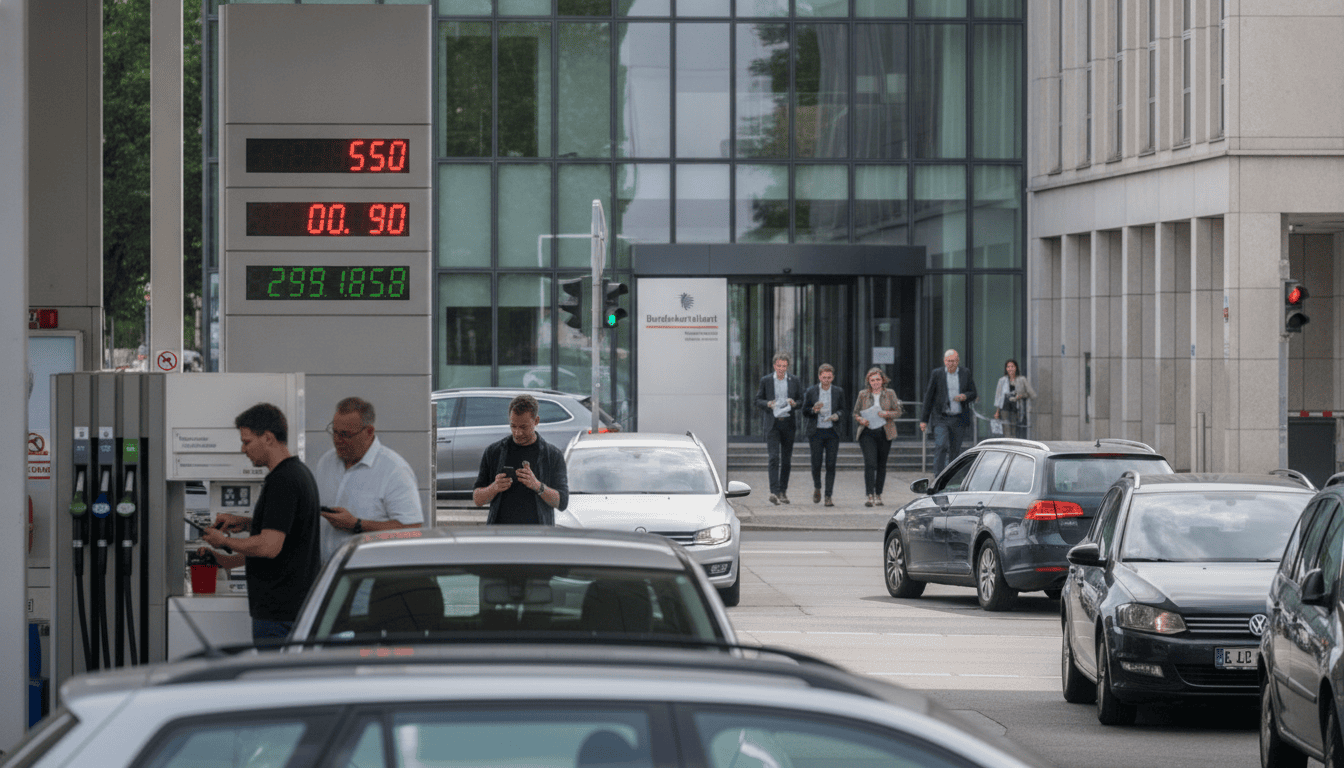
Germany’s tank rebate reached motorists by about 80%, Bundeskartellamt says
Bundeskartellamt: Germany’s tank rebate in May–June reached motorists by about 80% — diesel 82.6%, E5 77.8%. Analysis of pass‑through, costs, and rules.
The federal cartel office in Bonn reports that Germany’s tank rebate introduced in May and June was passed on to motorists at roughly an 80 percent rate, with diesel beneficiaries seeing a higher share than petrol buyers. The Bundeskartellamt said diesel prices reflected about 82.6 percent of the tax cut while E5 petrol passed through at 77.8 percent, leaving modest gaps against the nearly €0.17-per‑litre energy tax reduction. The finding settles a central question about whether the state rebate reached consumers or was largely absorbed by retailers.
Bundeskartellamt’s assessment of pass‑through rates
The agency’s analysis found that the rebate did not disappear into retail margins but was largely transmitted to pump prices, according to its statement. Officials calculated a shortfall of roughly €0.029 per litre for diesel and €0.037 per litre for petrol compared with the full tax-cut amount. Cartel office president Andreas Mundt said the measure was “not completely, but predominantly” passed through to drivers, describing the observed outcome as broadly in line with expectations.
Scale and fiscal cost of the tank rebate
The temporary tax relief cost the federal government about €1.6 billion, reflecting the scale of the intervention designed to blunt immediate price shocks. Policy makers enacted the rebate in response to a sharp jump in wholesale and retail fuel prices after renewed geopolitical tensions in the Middle East. Critics had warned that the fiscal outlay would offer a blunt benefit to all drivers rather than targeted support for households most in need.
Midday price‑change rule reduced volatility
Alongside the tax cut, the government introduced a rule limiting fuel price increases to a single raise around noon, while permitting price reductions at any time. The cartel office reported that the rule substantially dampened intraday volatility: average price changes at individual pumps fell to about eight per day from instances of as many as 50 prior to the rule. Mundt recommended drivers pay attention to timing, noting that prices tend to be lowest shortly before midday and that the typical midday increase has usually eroded by the evening.
Market behavior and enforcement challenges
The Bundeskartellamt said only a small fraction of price increases in the second quarter occurred outside the allowed midday window, suggesting broad compliance but leaving enforcement responsibility to the Länder. The office flagged that roughly 2 percent of observed increases took place at other times, and said state authorities must pursue any breaches. Retailers remain free to lower prices at will, a dynamic the cartel office said has further smoothed short‑term swings and made the market more predictable for consumers.
Fuel prices rose again after Iran conflict flare‑up
Recent geopolitical tensions in the Middle East pushed advertised fuel prices back above the €2 mark for both petrol and diesel, according to motoring organization data cited by the cartel office. ADAC reported a day‑average price of about €2.06 per litre for E10 and €2.012 for diesel on the latest reporting day, marking a clear upward move from a prior plateau. The group noted that the last time both fuels exceeded €2 at the same time had been 6 May, when the tank rebate was still in effect and headline prices reflected the temporary discount.
Economic debate over targeting and effectiveness
Economists who critiqued the rebate argued the policy was poorly targeted and inefficient, delivering broad benefits to all drivers rather than concentrating support on lower‑income households. Supporters of the rebate countered that the fast‑moving crisis required an immediate and administratively simple response to ease consumer pain at the pump. The cartel office’s findings on pass‑through provide empirical grounding for that debate by showing most of the tax cut reached consumers, while also documenting the fiscal cost and the small residual shortfall at retail.
The cartel office conclusion and the accompanying midday‑change rule together suggest the state intervention had a measurable impact on how quickly and visibly price shifts reached motorists. As European energy markets remain sensitive to geopolitical developments, regulators and regional authorities will monitor compliance and consider whether future interventions should be calibrated differently to balance fiscal cost, targeting, and market transparency.
