
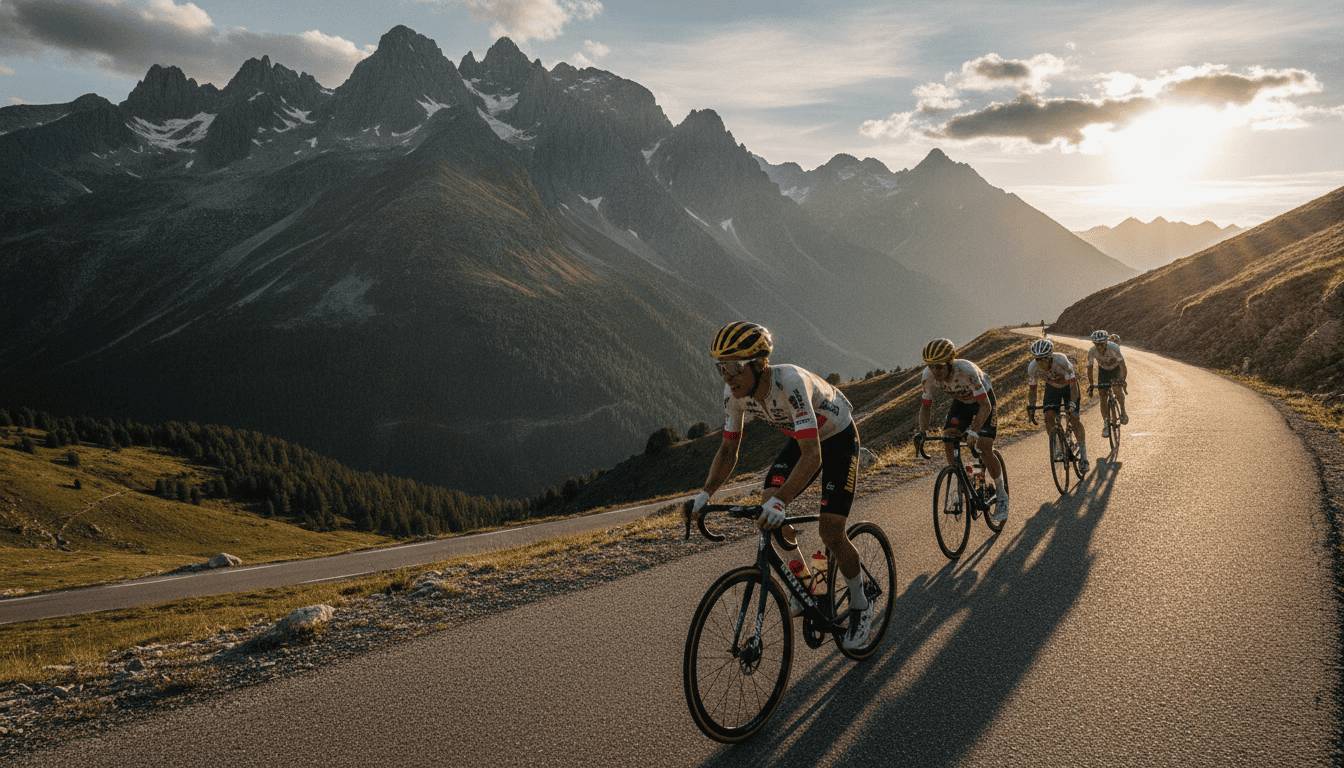
Vingegaard Tour de France: Dane shifts to long-climb strategy as he targets Pogačar on Pyrenean stages
Jonas Vingegaard enters the Tour de France with renewed form and a deliberate shift to long-climb tactics as he seeks to challenge Tadej Pogačar on decisive mountain days.
Vingegaard arrives at Tour de France with renewed confidence
Jonas Vingegaard has arrived at the Tour de France displaying a markedly different demeanour than in past editions, combining a lighter mood with concrete physical gains. The Visma-Lease a Bike leader says he feels stronger and mentally happier following a Giro d’Italia victory and a recalibrated race program. That mix of improved form and altered preparation underpins Vingegaard’s plan to make the long climbs the backbone of his bid to reclaim overall supremacy. Observers see the change as a deliberate response to previous editions where marginal losses on short, steep ramps decided the outcome.
Health precautions underline recent vulnerabilities
Vingegaard’s visible precautions — wearing an FFP2 mask before and after stages and sanitising his hands in press settings — reflect lessons from recent seasons when illness disrupted his Grand Tour campaigns. Those setbacks came after his two consecutive Tour wins and contributed to a cautious approach this year. His team and the rider himself appear intent on minimising avoidable risks so he can contest the most demanding stages at full strength. The measures also contrast with the more outwardly relaxed approach of rivals, highlighting different management of external pressure.
Visma’s strategic overhaul after 2024 attempts
Visma-Lease a Bike has altered both personnel roles and race tactics following unsuccessful attempts to unsettle Tadej Pogačar on short, punchy climbs last year. The team previously tried to exploit bonus seconds and repeated attacks on steep ramps, deploying riders such as Matteo Jorgenson to press UAE Team Emirates early. That approach failed to close the gap on Pogačar, who retained the edge on explosive, short ascents while also defending on longer slopes. The new plan moves away from chasing seconds on sharp climbs and instead leans into sustained mountain endurance — where Vingegaard historically has had the advantage.
Pyrenean sixth stage will be an early test
Race planners handed the peloton a testing Pyrenean block that could offer the first meaningful separation in the general classification on stage six. The route features the Col d’Aspin mid-stage, followed by the Col du Tourmalet and a long, uphill finish at Gavarnie-Gèdre. The Aspin’s 12-kilometre length at an average of 6.5 percent invites tempo and attrition rather than explosive bursts, making it attractive for both opportunistic moves and coordinated team efforts. The concluding climb’s 18.7 kilometres at roughly 3.7 percent may favour sustained power over punch, creating a complex tactical puzzle for both Vingegaard and Pogačar.
Where Pogačar might probe and Vingegaard must respond
Much of the stage’s outcome will hinge on where Tadej Pogačar chooses to test rivals and whether Vingegaard can follow sustained accelerations on the Tourmalet or save energy for the final run. If Pogačar attacks on steeper ramps he could aim to isolate opponents, but the longer gradients on the day play into Vingegaard’s recalibrated strengths. Success for Vingegaard would require matching attacks while preserving enough reserves to maintain pace on the terminal ascent. Failure to hang on would not rule out a later recovery in the race, but it would make an overall triumph substantially more difficult.
Mental shift and season planning behind the scenes
Team officials point to a combination of factors behind Vingegaard’s confidence: a redesigned race calendar, the morale boost from a Giro victory, and a refusal to repeat last year’s tactical mistakes. The Danish rider’s public comments about feeling “happier in the mental area” suggest psychological gains are as important as physical adjustments. That shift is visible in how he interacts with the media and race environment, trading earlier intensity for measured focus. Maintaining that balance over three weeks remains a principal challenge for any contender.
Vingegaard’s campaign at this year’s Tour de France reads as a calculated wager on his ability to exploit lengthy climbs and consistent tempo rather than recurring short-burst exchanges. The coming mountain tests will reveal whether the strategic pivot closes the gap to Pogačar or merely changes the terms of their rivalry. For now, the Dane’s combination of renewed strength, team adaptation and cautious health management gives him a viable path back into contention.
