
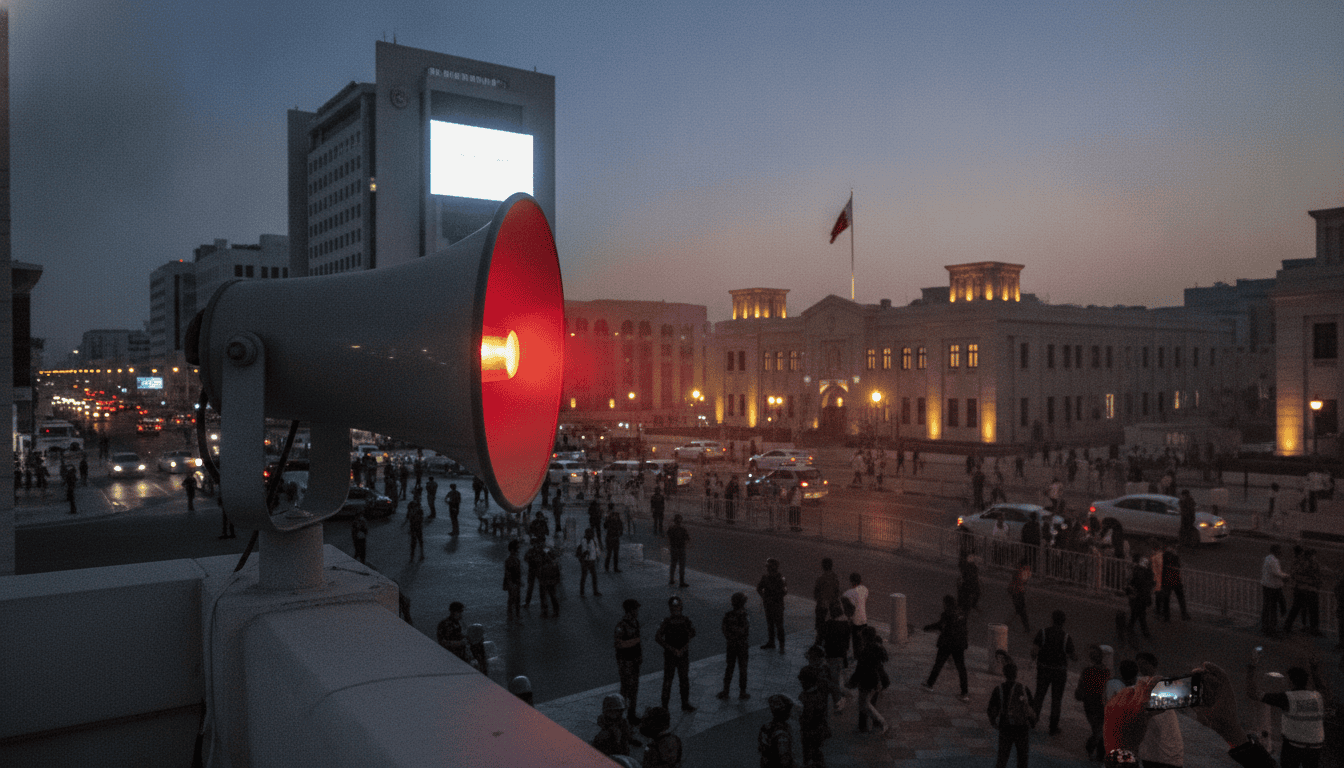
Bahrain sirens sounded twice within two hours, interior ministry urges calm
Bahrain sirens sounded twice in two hours; interior ministry urged citizens and residents to remain calm and head to the nearest safe place while authorities investigate the cause.
Bahrain sirens sounded twice within a two-hour span on Wednesday, prompting an urgent advisory from the interior ministry and heightened public concern across the island kingdom. The ministry posted on X that the sirens were activated for the second time and instructed citizens and residents to remain calm and seek the nearest safe location. Officials provided no immediate public explanation for the triggers, and emergency services said they were assessing the situation.
Sirens Activated Twice in Two Hours
Authorities in Bahrain reported that audible alarm systems were triggered on two separate occasions during the morning and early afternoon hours. The interior ministry confirmed the second activation in a post on X and repeated prior guidance that people should move to safe areas and await further instructions. Municipal and security personnel were dispatched to monitor affected neighborhoods and to coordinate any necessary evacuations or closures.
Local radio and social media channels carried reports from residents who heard the alarms and described short periods of confusion as people sought information. No official casualty reports were released in the immediate aftermath, and hospitals in Manama reported operating normally while remaining on alert. Emergency hotlines remained open as authorities collected situational reports from across the country.
Interior Ministry Advisory and Public Instructions
In its public message on X, the interior ministry urged calm and directed the public to head to the nearest safe place, language consistent with standard civil-defense protocols. Officials emphasized that residents should follow instructions from civil defense teams and local authorities and avoid sharing unverified information that could cause panic. The ministry’s statement stopped short of identifying a cause and indicated further updates would follow once assessments concluded.
Police and civil defense units conducted rapid checks of siren stations and public safety equipment to determine whether the activations were deliberate alerts, system errors, or part of planned procedures. Authorities also appealed to building managers and transport operators to keep channels open and cooperate with any emergency measures. The coordination aimed to ensure public safety while preserving calm and order across urban and residential areas.
Public Reaction and Movement Across Neighborhoods
Witness accounts collected on local forums and messaging groups described scenes of families moving to stairwells and designated safe rooms, while commuters paused on thoroughfares to seek updates. Several schools and workplaces reported brief precautionary pauses as administrators confirmed instructions from civil defense. Traffic management authorities were monitoring congestion points to ensure emergency access and to clear routes for response teams if needed.
While many residents reported compliance with official directions, some expressed frustration at the lack of immediate explanation for the repeated warnings. Community leaders urged patience and reliance on official channels, noting that rapid dissemination of accurate information is crucial during uncertain events. Volunteers were mobilized in some districts to assist vulnerable residents to reach safe locations.
Possible Causes and Official Investigations Underway
Security analysts say multiple scenarios are possible, ranging from false alarms and technical glitches to planned emergency drills or credible threats that require further verification. Bahrain’s alarm network is designed to respond to a range of risks, including natural hazards, industrial incidents, and security threats. Investigators with civil defense and telecommunications teams were reported to be examining log data and control panels for signs of malfunction or external interference.
Officials have not released whether any military or regional alerts coincided with the siren activations, and there was no immediate confirmation of cross-border activity related to the incidents. The interior ministry’s restraint in publishing details suggests a deliberate approach to confirm facts before notifying the public, a pattern seen in past incidents where authorities prioritized operational clarity over rapid speculation.
Regional Context and Emergency Preparedness
Bahrain’s emergency alert infrastructure has been periodically tested in recent years as governments across the Gulf region invest in civil defense capabilities. Local authorities generally emphasize preparedness drills and community education to reduce panic and improve response times. Analysts note that maintaining public trust in alert systems depends on timely follow-up and clear communication when alarms are triggered.
Neighbors in the Gulf have experienced a mixture of false alarms and genuine threats in recent years, and governments often coordinate on monitoring regional developments that could impact national security. The repeated activation of sirens in Bahrain will likely prompt review meetings among security, defense, and civil protection agencies to assess system resilience and messaging protocols.
Authorities said they would provide additional information when investigations yield verified findings, and they asked the public to remain attentive to official updates. Emergency services remained positioned to respond to any incident that might arise while civil defense teams completed their checks.
The interior ministry’s message to “remain calm and head to the nearest safe place” remained the central public instruction as officials worked to identify the cause of the dual activations and to reassure residents that measures are in place to protect public safety.
