
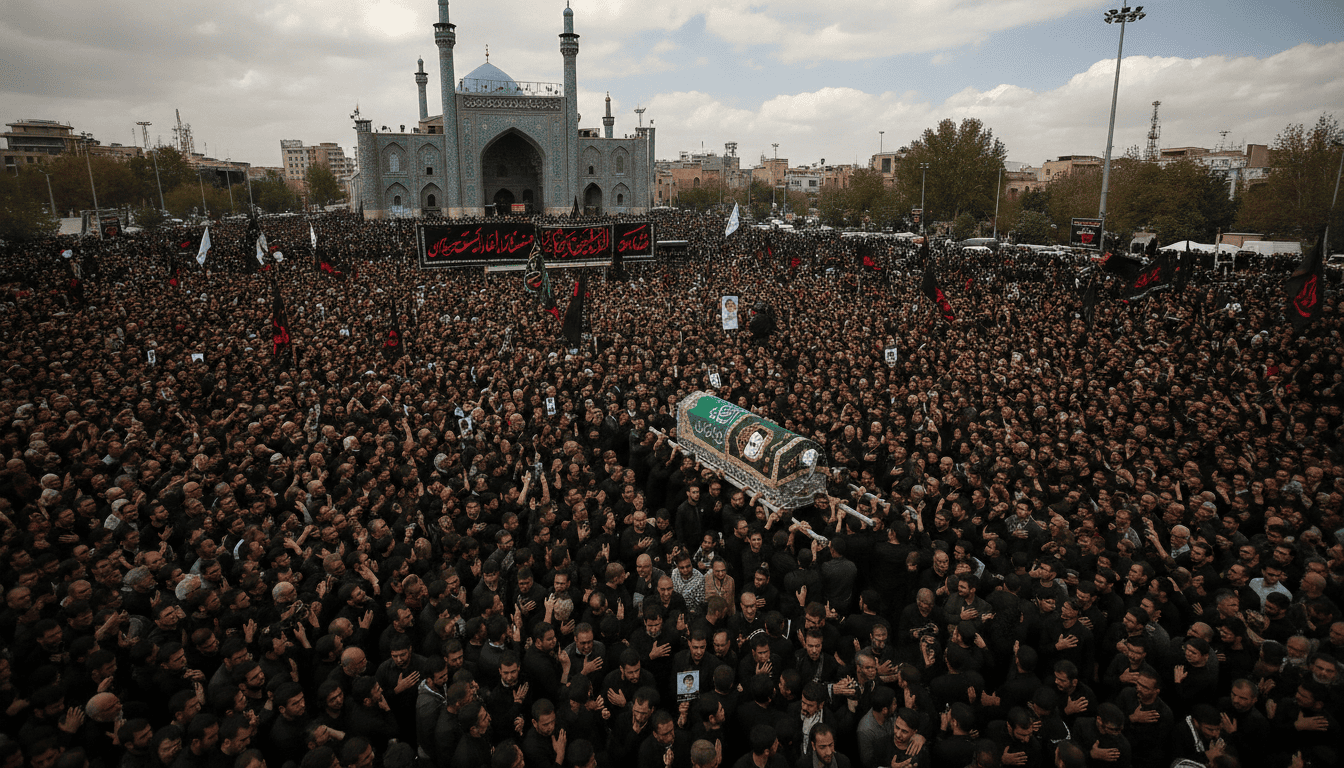
Khamenei funeral begins in Tehran as millions gather at Mosalla for public mourning
Khamenei funeral begins in Tehran with state-organised rites at the Mosalla; officials expect up to 20 million mourners during six days of public ceremonies across Iran.
Iran’s official public mourning for the slain supreme leader Ali Khamenei began at dawn in Tehran, with the coffin placed at the Mosalla complex and thousands of people arriving by foot to pay respects. The Khamenei funeral marks the start of six days of national ceremonies for the leader who shaped Iran’s politics from 1989 until his death. State television announced the commencement of the public rites as banners and chants echoed through the compound.
Mass turnout at Tehran’s Mosalla
Large numbers of mourners, many dressed in black, gathered at the Mosalla of Tehran before sunrise to view the coffin and join the ritual. Authorities reported that some attendees bore red Shiite flags, a symbol widely associated with calls for revenge, and demonstrators chanted slogans including anti-American and retributive phrases. Organisers said they expected between 15 and 20 million people to participate in Tehran alone over the coming three days, underscoring the scale the state is projecting for the Khamenei funeral.
The scene at the Mosalla reflected a tightly managed public display of grief and solidarity, with long lines forming as people walked several kilometres to reach the site. State media coverage emphasised solemnity and mass participation, while pictures from the venue showed packed courtyards and processional routes filled with mourners.
Detailed procession and burial itinerary
Officials announced a multi-stage program for the Khamenei funeral that will unfold over several days across key religious centres. The coffin will lie in state in Tehran until Monday, after which a state-organised procession through the capital is planned to accompany the body to religious cities. Following the Tehran events, authorities said the coffin would be taken to the clerical city of Qom and later to Shiite shrines in neighbouring Iraq before burial.
The final interment was scheduled to take place on Thursday in Mashhad, the supreme leader’s hometown in the northeast of Iran. State organisers framed the itinerary as both a religious commemoration and a platform for national mobilisation, signalling the government’s intent to stage an expansive public ritual around the Khamenei funeral.
Security posture and state messaging during ceremonies
The public ceremonies are being presented by Iranian authorities as a demonstration of state unity and resolve amid a fragile ceasefire and ongoing diplomatic efforts. The funerary events are taking place against the backdrop of the US–Israel military campaign that, according to official accounts, began on February 28 and resulted in the supreme leader’s death on that first day. Since early April, a ceasefire has been reported, but officials have used the funeral period to reiterate themes of defiance and deterrence.
Security measures around major routes and religious sites have been heightened, and state-controlled broadcasts have consistently emphasised messages of mourning and national cohesion. Analysts say the Khamenei funeral offers Tehran an opportunity to project internal strength while signalling to regional and international audiences that the Islamic Republic remains consolidated.
Succession and the new supreme leader’s absence
A week after Ali Khamenei’s death, state authorities named his son, Mojtaba Khamenei, as the new supreme leader, but he has not appeared publicly since the announcement. Reports indicate he was wounded in the same attack that killed his father, and his absence from the ceremonies has fuelled speculation about his condition and the stability of the succession. The nomination of Mojtaba, a figure with limited public exposure compared with his father, raises questions about the clerical establishment’s role and the durability of the transition.
The absence of the new leader at the initial public rites has prompted state media to focus heavily on symbolic displays of continuity — religious ritual, mass participation and scripted leadership appearances by other senior figures — as they manage both grief and political logistics around the Khamenei funeral.
Regional implications and diplomatic backdrop
The Khamenei funeral is unfolding amid a recently fragile regional calm, with diplomatic channels reported to be active even as tensions remain high. Officials have framed the ceremonies as not only a domestic observance but also a message to adversaries that the state can marshal popular support and maintain order. International actors watching the events will be assessing whether the displays of public mourning translate into a consolidated leadership capable of steering Iran through the post-crisis period.
Foreign governments and regional capitals have so far responded cautiously, citing the sensitive security and political environment. The procession through Qom and the planned stops at Iraqi Shiite shrines are likely to draw international attention because of their potential to mobilise cross-border religious networks and influence regional dynamics during and after the Khamenei funeral.
Final statements from Iranian officials framed the ceremonies as both a religious obligation and a reaffirmation of the regime’s narrative, even as questions about the new supreme leader’s visibility and the longer-term political consequences remain unresolved.
