
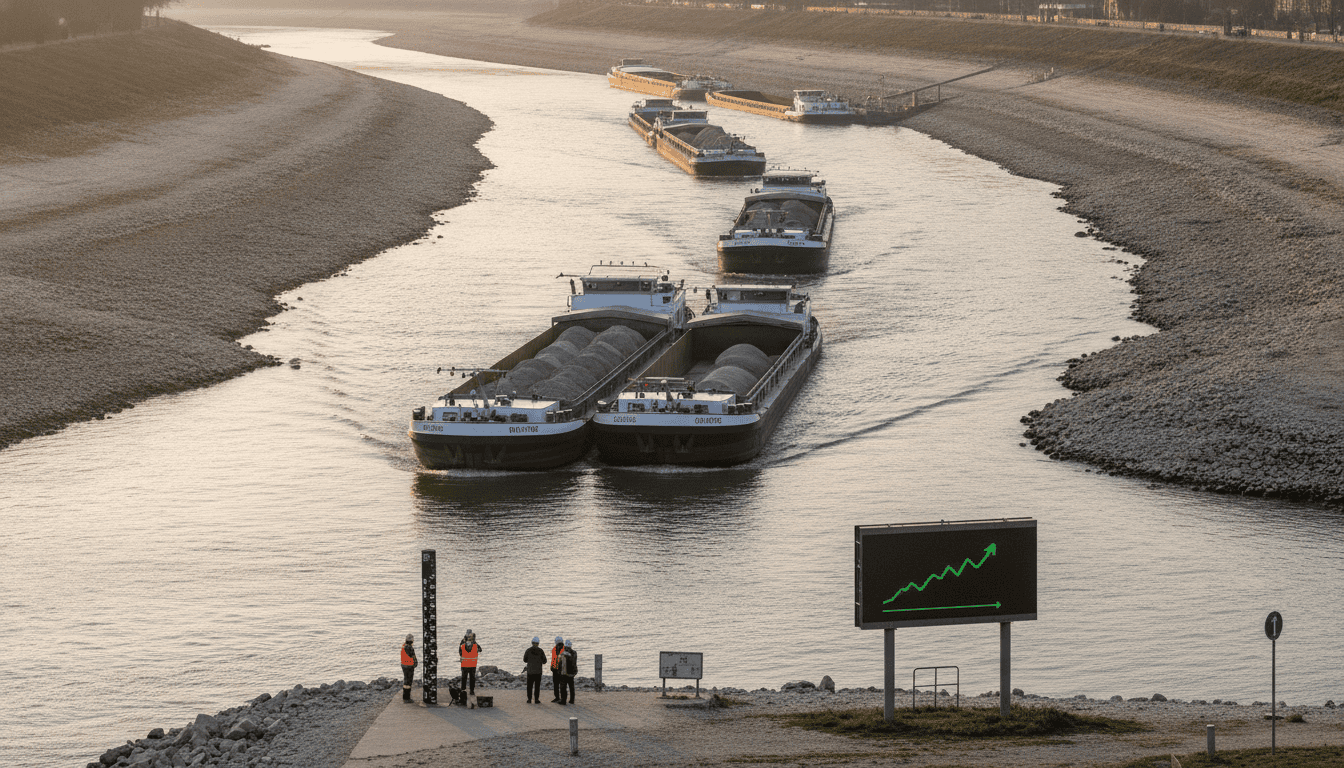
Low Water on the Rhine Forces Reduced Loads and Raises Shipping Costs
Low water on the Rhine is forcing inland vessels to cut cargo and disrupting supply chains, as operators and ports race to adapt to diminished flows and rising freight expenses.
The Rhine is experiencing significantly reduced water levels after a hot June and a longer-term decline in Alpine snowmelt, a combination that is straining inland navigation and the transport of critical raw materials. Shipping companies report that barges are now sailing with much lighter loads to maintain safe drafts, increasing per-ton transport costs for commodities such as salt and chemical feedstocks. Authorities say there are no formal navigation bans during low-water conditions, leaving loading decisions to shipmasters and operators.
Heat and shrinking Alpine melt squeeze Rhine flow
Low water on the Rhine is closely linked to recent heat and a persistent reduction in snow cover across the Alps, which traditionally supply meltwater that sustains summer river levels. The June heatwave accelerated evaporation and reduced river discharge, compounding a longer-term trend of lower spring snowpack and earlier melt. Hydrologists and industry sources warn that without sustained Alpine recharge, seasonal lows may become more frequent and exacerbate navigation challenges for inland waterways.
The consequences of these shifts are not limited to brief summer disruptions but reflect structural changes in river hydrology that affect planning for transport, industry and ports. Companies that rely on predictable river depths are reassessing supply chains and storage strategies to manage variability in waterborne logistics.
Operators reporting roughly half loads on some routes
Logistics operators say inland vessels are carrying markedly smaller loads to reduce their draft and navigate shallower sections of the Rhine safely. A spokesperson for a Cologne-based logistics group reported that some barges are operating with roughly half their usual cargo, citing deliveries of rock salt as an example where tonnage has been reduced. The smaller loads boost the number of trips required for the same volume, elevating operational costs while still often remaining more economical than rail or road alternatives for bulk goods.
Shippers are facing a trade-off between leaving cargo by river and shifting to costlier rail or truck transport; many are choosing to accept higher river freight rates while investing in alternative vessel designs that can operate in lower depths.
Federal waterways authority: no bans, captains decide
The Federal Waterways and Shipping Administration (WSV) has emphasized that low-water conditions do not trigger the kind of traffic bans seen during high-water emergencies. Instead, the WSV says responsibility for safe loading and navigation rests with the shipmaster and the vessel operator, who determine how much cargo to carry based on draft and river conditions. This regulatory posture leaves commercial actors to manage risk and adjust loads, while the authority monitors conditions and issues guidance.
Industry representatives note that this approach provides operational flexibility but also creates commercial uncertainty, since decisions to downsize loads or re-route cargoes can vary by operator and vessel type.
Industry adaptations: shallow-draft ships and digital monitoring
Major industrial shippers are responding with investments in equipment and systems designed for low-water resilience. Chemical companies with large Rhine-facing plants have acquired shallow-draft vessels that can operate with reduced depths, while logistics firms are ordering new ships optimized to carry more cargo at lower drafts. Digital early-warning systems that track river gauge data in real time are being used to plan loading and unloading windows and to sequence shipments around anticipated low stretches.
Proactive fleet renewal and improved monitoring reduce the immediate risk of supply interruptions, but these measures require capital and long-term planning, a burden that smaller operators may struggle to meet.
Ports and dredging keep channels navigable
Key port authorities, including major facilities at Duisburg, report that the low-water situation has not yet forced large-scale closures, though they are maintaining round-the-clock observation and intervention. Port operators conduct targeted dredging at harbor entrances and transshipment areas to limit the formation of new shoals and protect access for vessels. Duisport and other operators say regular maintenance dredging and operational adjustments have so far kept traffic moving, but they continue to monitor the situation closely.
Port dredging and channel management offer immediate relief in localized areas, but experts caution that such measures are not a substitute for broader watershed-level responses to changing hydrological patterns.
The federal waterways administration expects rainfall over the coming weekend to temporarily raise Rhine levels, but it warns the effect may not be sustained and that levels could recede once high-pressure conditions return. Industry planners say short-term improvement helps scheduling but does not solve the underlying seasonal and climatic drivers that produce repeated low-water episodes.
Low water on the Rhine is shaping shipping economics and prompting structural changes across river transport and industrial logistics, with companies balancing higher freight costs, fleet investments and operational flexibility to safeguard supply chains in a drier future.
