
Merz cabinet meeting at Defence Ministry signals Germany’s readiness ahead of NATO summit
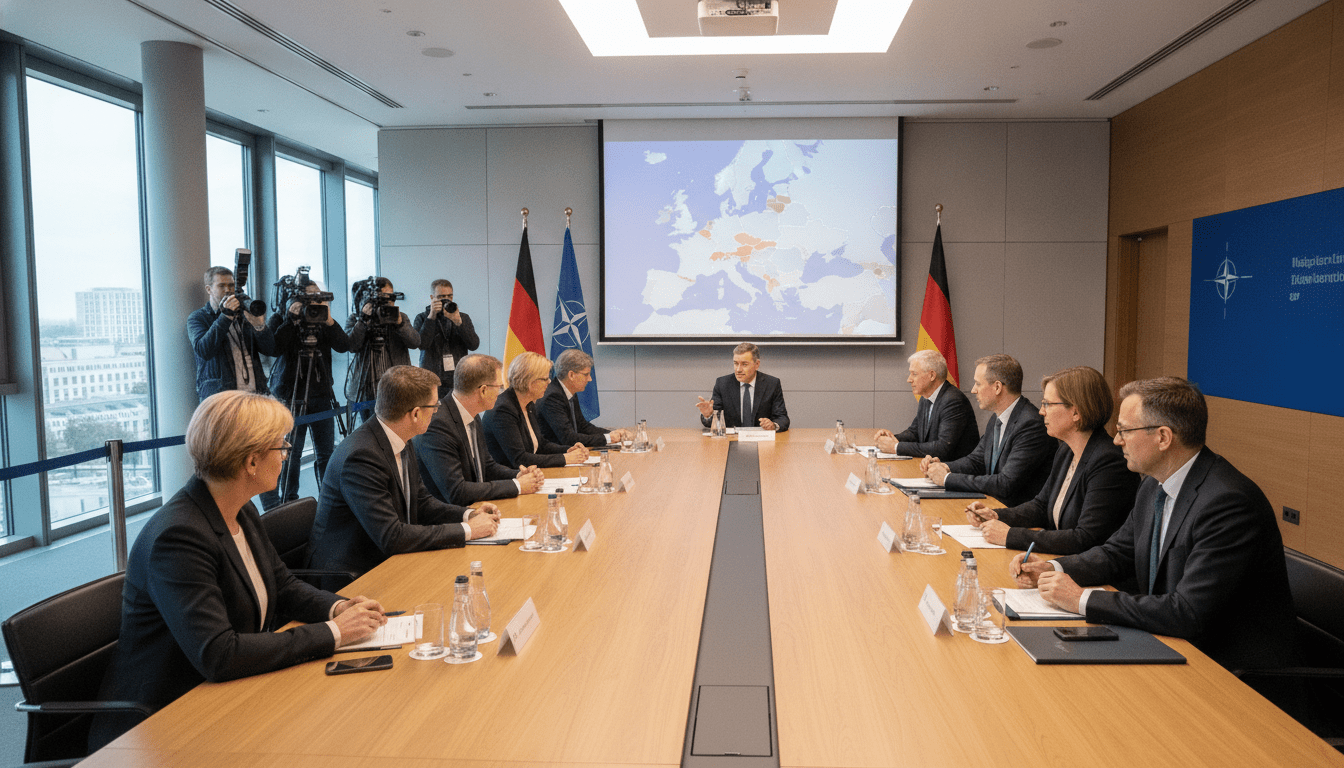
Chancellor Friedrich Merz convened his cabinet at the Defence Ministry in a stark demonstration of Germany’s security priorities, with NATO Secretary General Mark Rutte attending ahead of next week’s summit in Ankara. The Merz cabinet meeting brought defence and deterrence firmly to the top of the domestic agenda and featured a joint press appearance that underlined Germany’s role in alliance burden-sharing. Officials framed the gathering as both practical and symbolic, intended to show unity before high-level talks in Turkey. (bundeskanzler.de)
Cabinet meets in defence headquarters
The weekly cabinet sat in the Bundeswehr’s Berlin headquarters on Wednesday morning, marking the second time this legislative period the government has held its meeting at the Defence Ministry. Government notices said the session would focus on security and defence topics and that a joint press conference with Chancellor Merz, Defence Minister Boris Pistorius and NATO Secretary General Mark Rutte would follow. The choice of venue was explicitly presented as a signal of priority on military readiness and industrial capacity. (bundeskanzler.de)
NATO secretary general praises German effort
Mark Rutte used his Berlin visit to praise Germany’s recent steps on defence, saying “Germany leads and Germany delivers” and commending increased investment and production. Rutte highlighted concrete capabilities and placements cited by NATO officials, and described Germany’s contribution as an “extraordinary achievement” for the Alliance. His remarks framed Berlin’s moves as central to NATO’s capacity to deter and, if necessary, defend. (nato.int)
Timing ahead of the Ankara summit
The meeting came days before a scheduled NATO summit in Ankara that alliance officials say will focus on delivery — on spending, production and support for partner states. German leaders stressed the timing was deliberate: an internal display of cohesion and preparedness ahead of multilateral negotiations on force posture and industrial mobilization. Rutte and Merz both signalled that the summit’s agenda will include concrete expectations of allied contributions. (nato.int)
Concrete contributions and operational steps
In his public remarks the NATO secretary general singled out specific German contributions, including the permanent stationing of an armoured brigade in Lithuania and the 1st German-Netherlands Corps taking tactical command responsibilities in the Baltic region. Rutte also urged defence industries across NATO to open new production lines and expand supply chains to meet immediate demand for equipment and munitions. German officials reiterated commitments to increase defence spending and strengthen logistical and industrial capacity in the coming months. (nato.int)
Political optics within Germany
Berlin’s decision to host the cabinet at the Defence Ministry carries clear domestic and international signalling purposes, senior aides said, emphasizing unity between the government’s civilian leadership and the military apparatus. Photographs and filmed footage from the session showed Chancellor Merz and Minister Pistorius welcoming Secretary General Rutte, underscoring the coordinated message. Observers note the event is designed to reassure allies and voters alike that defence policy is being prioritized and that commitments will be followed by delivery. (reutersconnect.com)
Chancellery and NATO sources said a joint press conference set for midday would recap the meeting’s outcomes and outline next steps ahead of Ankara, with officials expected to reiterate calls for accelerated defence production and clearer burden-sharing across the alliance. The public presentation in Berlin reinforces an emerging NATO narrative that practical outputs — equipment, basing, and synchronized production — will define the success of the upcoming summit. (nato.int)
Germany’s leadership in recent defence initiatives and the high-profile nature of Wednesday’s Merz cabinet meeting underscore how alliance diplomacy now blends domestic politics, industrial strategy and battlefield support for partners. As NATO ministers and heads of government prepare to meet in Ankara, Berlin’s demonstration aims to convert announcements into concrete capability and to shape the summit’s focus on measurable delivery.
