
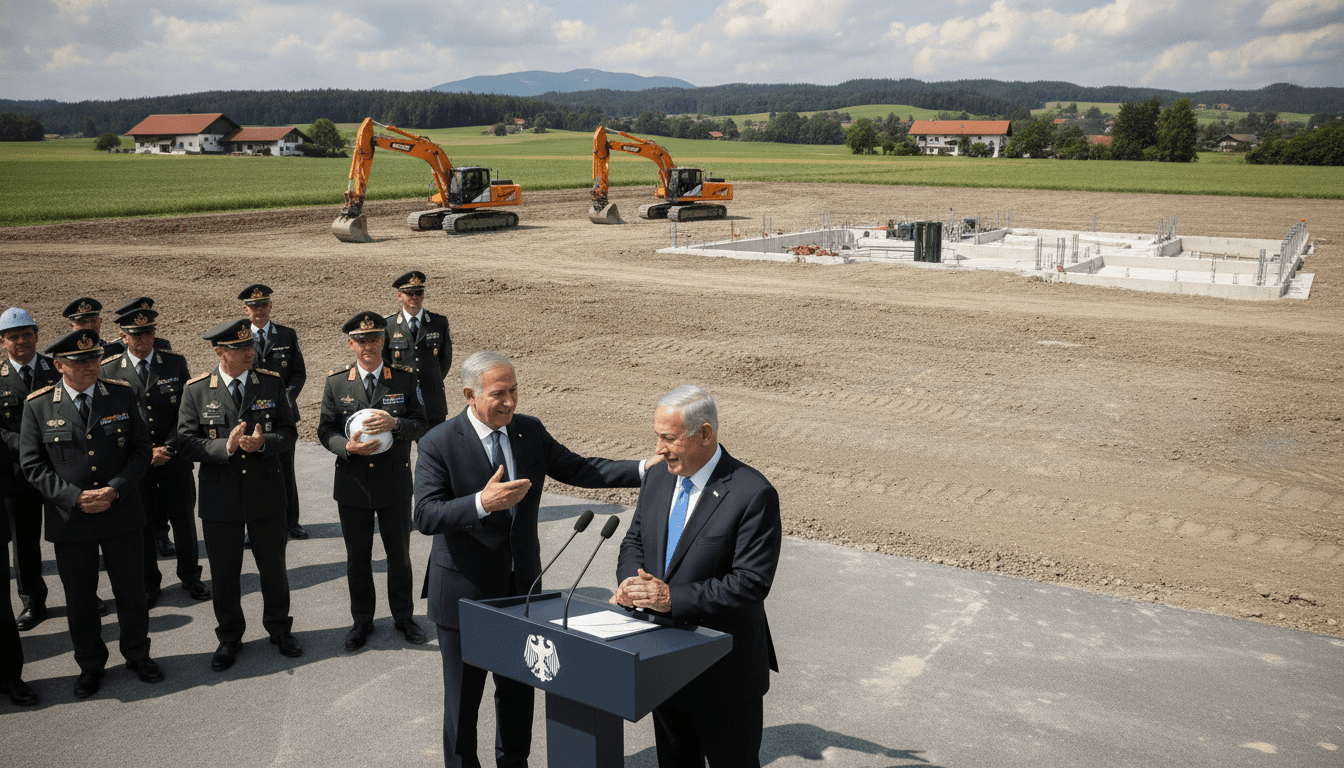
Söder unveils Bavarian site as Germany moves to deploy Arrow 3 missile defense
Bavaria’s Markus Söder unveiled one of three planned Arrow 3 sites as Germany moves to deploy high-altitude missile defense to strengthen NATO security.
Germany’s federal government and the Bundeswehr have confirmed plans to host the Arrow 3 missile defense system at three locations, and Bavarian minister-president Markus Söder has publicly disclosed one of those sites. The Israeli-built Arrow 3 interceptor is intended to engage hostile ballistic missiles at exo-atmospheric altitudes, reportedly reaching beyond 100 kilometers. Officials framed the deployment as a step to enhance long-range missile protection for national territory and allied infrastructure.
Söder unveils first Arrow 3 site in Bavaria
Markus Söder personally announced the location of the first planned Arrow 3 installation in Bavaria during a public statement that highlighted regional security priorities. He described the site as part of a national plan to strengthen Germany’s capacity to defend against high-altitude missile threats. The disclosure follows federal decisions to expand the Bundeswehr’s air and missile defense capabilities.
Arrow 3 interceptor’s capabilities and purpose
The Arrow 3 system is designed for exo-atmospheric intercepts, aiming to neutralize ballistic missiles before they re-enter the atmosphere. Its role complements shorter-range air defenses by addressing long-range missile threats at very high altitudes. Military planners say that capability helps protect critical infrastructure and contributes to a layered continental defense approach.
Planned three-site deployment across Germany
Officials have indicated the Bundeswehr will operate the Arrow 3 at three separate locations to provide overlapping coverage and redundancy. One site has now been identified in Bavaria, while the other two locations remain to be named and will require further coordination with local authorities. The multi-site plan aims to ensure geographic dispersion so that no single attack could disable the entire capability.
Infrastructure needs and technical integration
Establishing Arrow 3 batteries requires substantial infrastructure, including launch pads, dedicated command centers, and integration with long-range radar systems. Authorities will need to connect the system with Germany’s existing air- and missile-defense architecture and ensure interoperability with NATO sensors. Construction, testing, and personnel training are expected to span several years before the batteries reach full operational readiness.
Political debate and domestic responses
Söder’s announcement has triggered political discussion over costs, sovereignty, and public consultation in host regions. Supporters argue the deployment fills a critical defense gap and reassures partners in NATO, while critics have raised questions about expenditure, environmental impact, and transparency of site selection. Local governments and municipalities where installations are planned will likely demand detailed assessments and public hearings as the program advances.
NATO coordination and regional security implications
German authorities emphasize that Arrow 3 deployment will be coordinated within NATO’s collective defense framework to enhance allied deterrence. The system’s long-range, high-altitude intercept capability is expected to contribute to NATO’s layered missile defenses and shared situational awareness. Observers note the move may affect regional security calculations and will require diplomatic engagement to address concerns from neighboring states.
The Bundeswehr and federal ministries have signaled that further technical details, timelines, and exact locations for the remaining Arrow 3 sites will be announced as planning progresses and requisite assessments are completed. In the meantime, Bavaria’s disclosed location marks the first concrete step in a broader effort to field an advanced, high-altitude missile-defense layer on German soil.
