
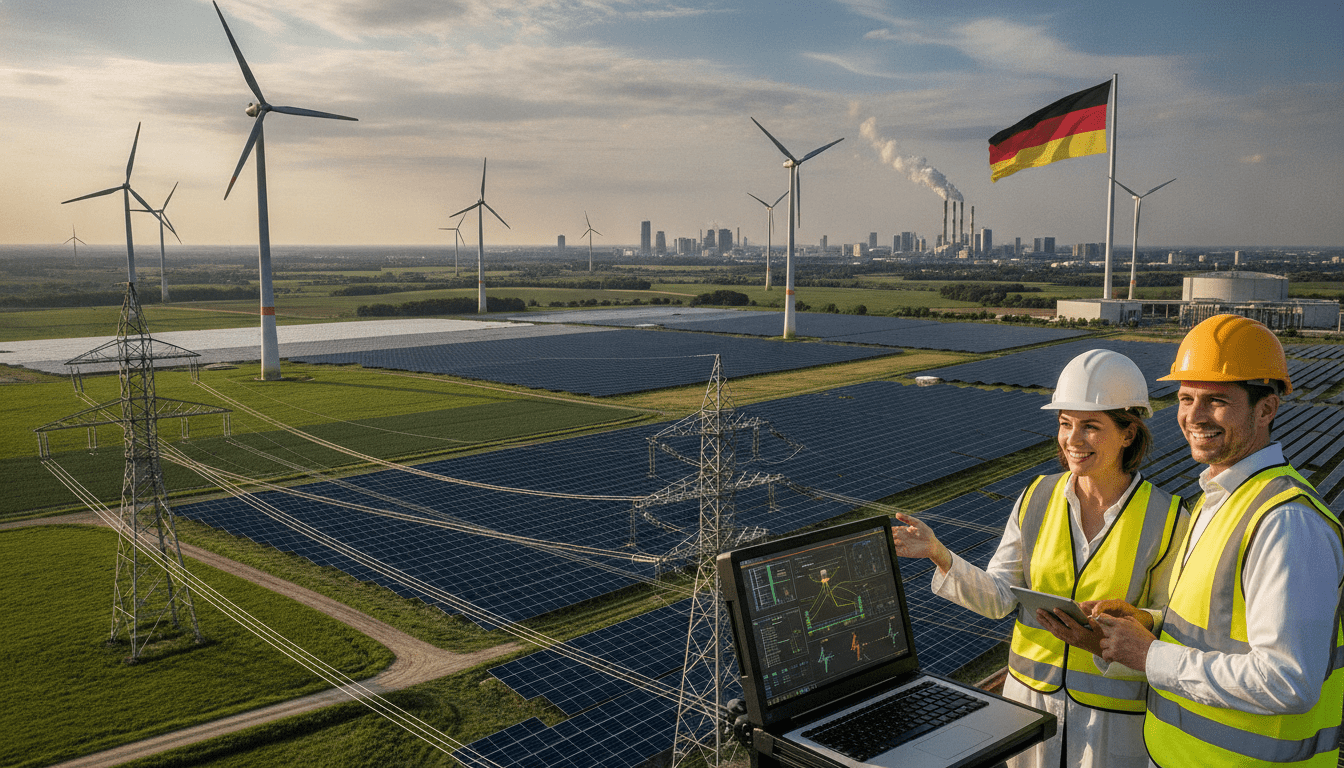
Renewable energy supplies record 58% of Germany’s electricity in first half of 2026
Renewable energy supplied 58% of Germany’s electricity in the first half of 2026, marking the highest first-half share on record and driven mainly by stronger wind generation and rising solar output. Projections from the Centre for Solar Energy and Hydrogen Research Baden-Württemberg (ZSW) and the German Association of Energy and Water Industries (BDEW) underpin the estimate. The result raises questions about grid planning, market effects and the speed of policy measures to sustain the trend.
Record share of renewable energy in H1 2026
Renewable sources produced an estimated 58 percent of Germany’s electricity consumption between January and June 2026, up by nearly three percentage points from the same period a year earlier. The total gross electricity generation for the six months was about 263.5 billion kilowatt-hours, with renewables contributing roughly 152.2 billion kilowatt-hours of that supply. This performance outpaced the 55.8 percent share recorded for the full year 2025 and represents a new milestone for the first half of any year.
Wind power surge drives the increase
The rise in renewable energy was largely attributable to higher wind power production, which rebounded after a comparatively calm stretch in the prior-year period. Onshore wind output increased by approximately 7.0 percent and offshore wind jumped by about 28.3 percent, according to the industry projections. Those gains were decisive in lifting the overall renewable share, demonstrating the sensitivity of annual and seasonal totals to wind conditions.
Solar contribution and generation mix
Photovoltaic plants also contributed to the upward shift, with solar generation rising roughly 3.7 percent year on year in the first half of 2026. In absolute terms, onshore wind and solar ran nearly neck and neck, generating about 52.9 billion and 52.4 billion kilowatt-hours respectively during the period. Together, wind and solar accounted for the majority of renewable generation, underscoring the central role of those technologies in Germany’s power mix.
Impact on energy security and prices
Industry analysts say a larger renewable share can blunt Germany’s dependence on fossil fuel imports and reduce exposure to volatile commodity markets. ZSW leadership has argued that expanding renewables strengthens system resilience and helps shield consumers from abrupt price shocks. At the same time, grid operators and market participants face new operational challenges as variable generation increases, including balancing requirements and storage needs.
Industry groups press for faster legislation
Both ZSW and the BDEW urged the federal government to accelerate pending legislative reforms, naming updates to the Renewable Energy Sources Act (EEG) and the Wind-At-Sea law as priorities. BDEW CEO Kerstin Andreae warned that key draft bills had not yet been presented even though half the year had passed, calling for faster political action to maintain deployment momentum. Responsibility for the dossier sits with Federal Minister for Economic Affairs Katherina Reiche (CDU), and industry representatives said clearer rules and timetables are needed to translate higher generation into sustained capacity additions.
Climate context and near-term outlook
Experts noted the recent heatwave as a reminder of the climate stakes tied to faster decarbonization, with renewables described by ZSW officials as the most effective tool to cut emissions at scale. Looking ahead, continued growth will depend on weather patterns, grid expansion, permitting speeds and the pace of policy reform. Stakeholders say that without faster implementation of supportive measures, gains in production could stall even as demand and electrification trends rise.
Germany’s renewable share in the first half of 2026 highlights a turning point for the power sector, but sustaining the record levels will require coordinated action on infrastructure, markets and regulation to ensure that increased clean generation delivers affordable, secure and reliable electricity for consumers.
