
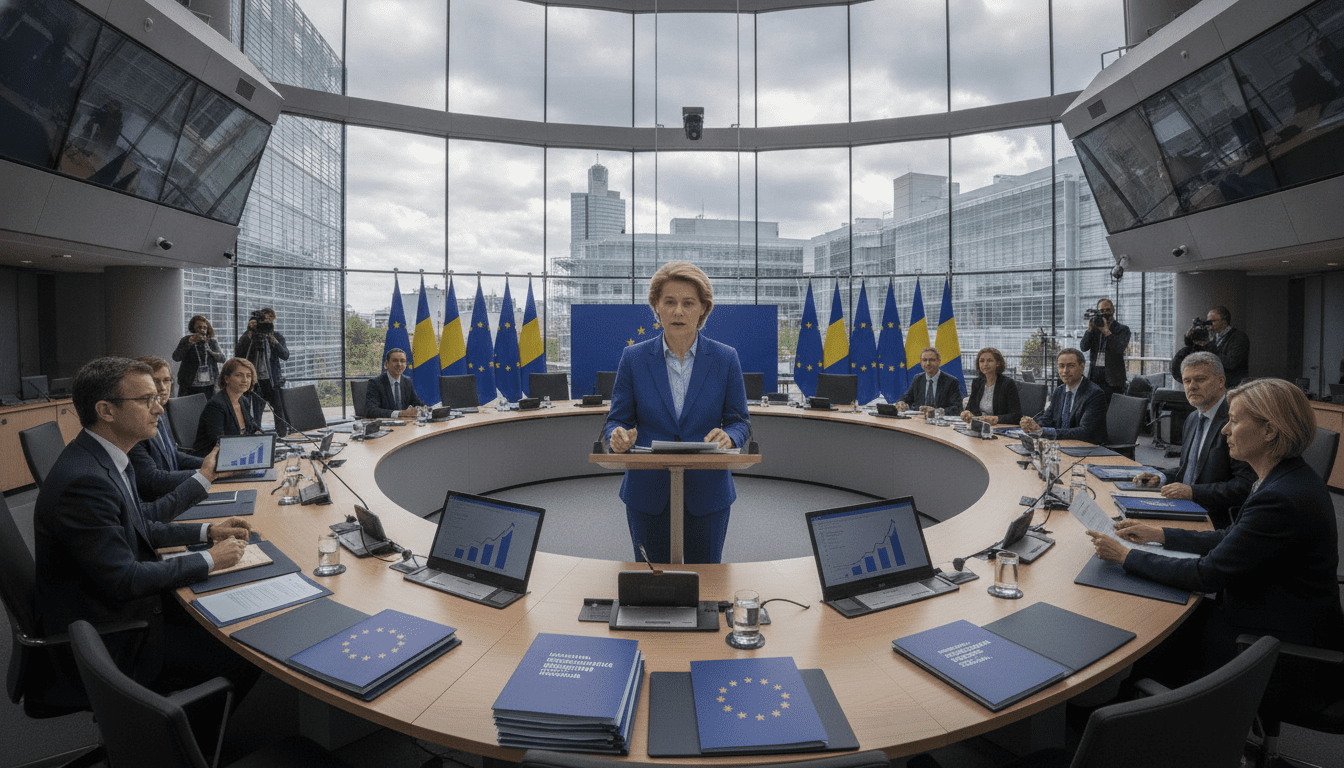
EU procurement reform would allow ‘Buy European’ weighting up to 30% in public tenders
EU procurement reform could let contracting authorities award up to 30% of public contracts on social, green, innovation or resilience criteria, including ‘Made in EU’ preferences.
The European Commission plans an EU procurement reform that would let public buyers assign up to 30% of a contract’s score to strategic criteria rather than price, effectively enabling a controlled “Buy European” preference. The draft, prepared under Commissioner Stéphane Séjourné, would allow contracting authorities to weight social, environmental, innovation and resilience factors when evaluating bids. The resilience category explicitly covers preferences for goods produced in the EU or meeting minimum EU-made content thresholds.
Commission proposal and scope
The Commission intends to present the formal reform after the summer recess, with a draft expected in September, giving member states and stakeholders a clear timetable for debate. The proposal would apply across most sectors, but the Commission says existing measures that already mandate “Made in EU” requirements—such as those in the Industrial Acceleration Act—would remain exceptions. Contracting authorities would be free to choose how to allocate the 30 percent among the four strategic criteria or to stick to price-only evaluation.
How ‘Made in EU’ and resilience would work
Under the draft, resilience would encompass the targeted preference for European suppliers and could take several forms: restricting participation by non‑EU bidders, imposing a minimum EU manufacturing share for eligible offers, or applying more favorable scoring to products of EU origin. Authorities could combine “Made in EU” thresholds with green, social or innovation requirements, or opt to use other criteria exclusively. The flexibility is intended to let procurers tailor tenders to national or sectoral policy priorities.
Supporters’ rationale for strategic weighting
Proponents argue the change addresses a loss of industrial competitiveness by strengthening demand for European goods and services in public spend. They say clearer legal rules will reduce the legal uncertainty that currently pushes many contracting authorities to award to the lowest bidder out of caution. Backers also claim the measure will increase supply‑chain resilience and support domestic innovation by creating predictable demand signals for European producers.
Internal disagreement within the Commission
Not all Commission officials back a broad 30 percent strategic carve‑out, and the proposal has been expanded incrementally, according to critics inside the institution. Dissenting voices urge limiting strategic procurement to specific critical sectors to avoid excessive protectionism and to preserve the single market’s openness. The debate over scope and thresholds is expected to be intense before the draft is finalised.
Trade-law and international implications
Legal advisers and trade experts warn that excluding foreign bidders could breach international obligations under the WTO Agreement on Government Procurement, concluded in Marrakesh in 1994. While the WTO framework allows for limited exceptions, a systematic exclusion or heavy weighting in favour of EU suppliers risks formal trade challenges. The Commission’s draft attempts to navigate those constraints by allowing nuanced approaches—such as preferential scoring rather than outright bans—but the legal tightrope remains a central point of contention.
Responses from national governments and municipalities
France pushed for a strong resilience criterion, while Germany’s federal government has signalled it prefers restricting such measures to defined sectors. Local authorities and municipal utilities have also voiced concerns. The Verband kommunaler Unternehmen has argued that many public enterprises already consider environmental, social and innovation factors in tenders and that stricter requirements could undermine operational flexibility and impose administrative burdens. Municipal resistance could shape how widely the new rules are adopted in practice.
Simplification objective alongside strategic aims
A core aim of the reform is to simplify an exceedingly complex patchwork: roughly 60 different EU laws currently touch procurement rules, producing overlap and contradictions that complicate compliance. The Commission frames consolidation and simplification as a top priority, arguing that a clearer, streamlined legal framework must accompany any expansion of strategic procurement powers. Officials say finding the right balance between simplification and a calibrated degree of strategic procurement will determine the reform’s ultimate effectiveness.
The coming months will determine whether the Commission narrows the proposal to targeted sectors, adjusts the 30 percent threshold, or clarifies which countries and companies qualify under any “Made in EU” provisions. The choices made in Brussels will shape how public contracts are awarded across the EU and could have lasting effects on supply chains, trade relations and the market position of European industry.
