
UAE foreign policy shifts as Abu Dhabi reassesses alliances after Iran conflict
Abu Dhabi reorients UAE foreign policy after the Iran war, reassessing alliances, deepening Israel ties and bolstering domestic defenses to cut dependence.
The United Arab Emirates has begun a decisive re-evaluation of its foreign policy after the recent war with Iran, signaling a shift toward greater strategic autonomy. Abu Dhabi officials and close observers say the government is mapping which partners can be relied upon in future crises and which have fallen short. This recalibration reflects lessons drawn from sustained missile and drone attacks and aims to reduce dependence on traditional security guarantors.
Abu Dhabi re-evaluates alliances after Iran war
Senior Emirati interlocutors describe an internal “loyalty map” exercise that ranks other states by their wartime support for the Gulf monarchy. Nadim Koteich, an analyst with close government contacts, says the leadership is scrutinizing who can be trusted in high-stakes confrontations. That review is shaping diplomatic outreach and defense planning across multiple theaters.
Gulf monarchies confront strategic uncertainty
The Iran conflict has prompted a regional reassessment among Gulf monarchies that would otherwise prefer to focus on economic diversification. Gulf rulers say deterrence and détente with Tehran produced inconsistent outcomes, undermining confidence in long-standing strategies. Leaders now face the twin challenge of safeguarding security while maintaining the stability needed for domestic reforms and foreign investment.
U.S. assurances do not fully allay Gulf concerns
Visits by U.S. officials to the Gulf this week aimed to reassure partners, but scepticism remains widespread in regional capitals. U.S. Secretary of State Marco Rubio defended a Washington-backed ceasefire framework and pledged to address ballistic missiles, drones and proxy threats. Yet many Gulf governments recall previous U.S. promises that went unfulfilled and remain wary of reliance on external guarantees alone.
Emirates deepen security cooperation with Israel
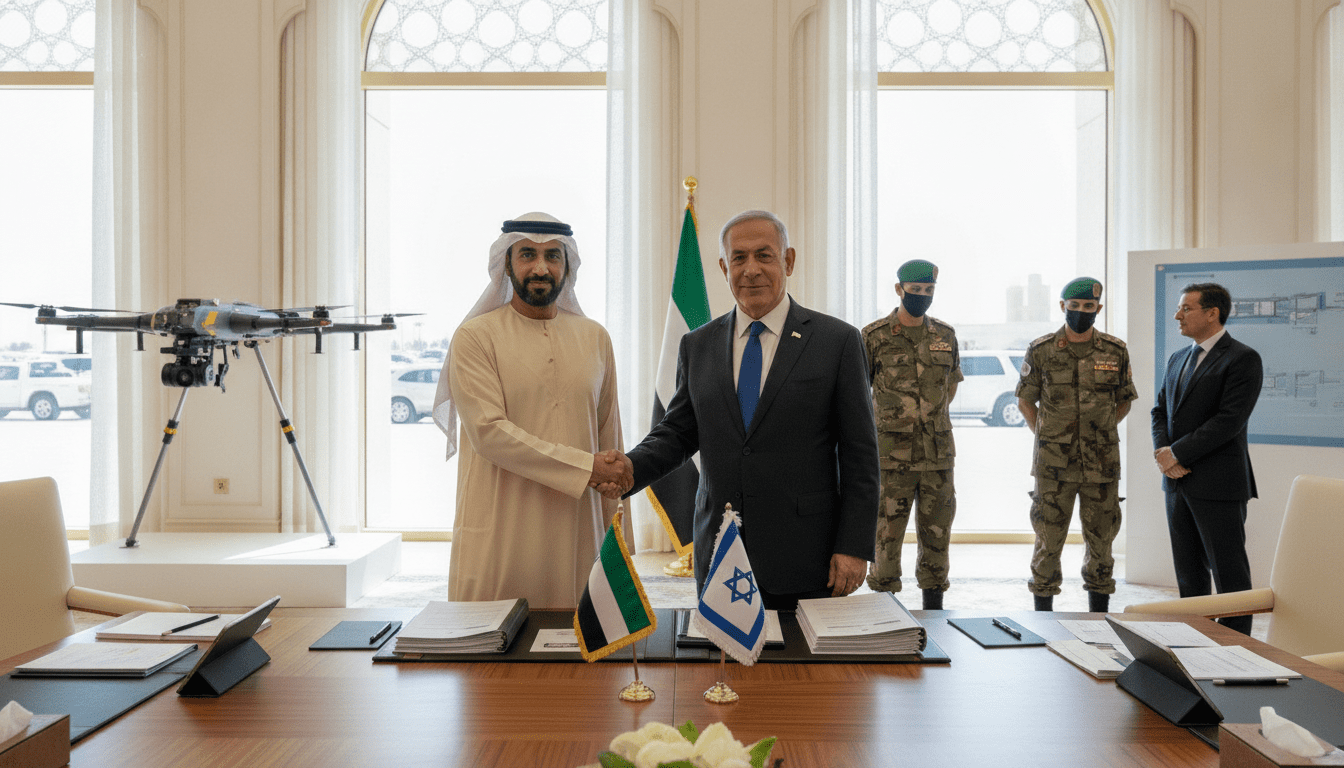
Abu Dhabi has moved closer to Israel in operational terms during the conflict, according to multiple Emirati sources. Reports indicate that Israel provided advanced missile-defense capabilities and that military and intelligence coordination increased during peak hostilities. While the rapprochement is tactically driven and often handled discreetly, officials in both capitals portray the cooperation as foundational for broader security and economic ties.
Abu Dhabi distances itself from some Gulf institutions
The Emirates have openly criticised the performance of regional bodies such as the Gulf Cooperation Council and have scaled back participation at senior levels. Anwar Gargasch, an advisor in Abu Dhabi, publicly questioned the council’s effectiveness in the face of historic threats. Instead of multilateral forums perceived as weak, Abu Dhabi is cultivating bilateral relationships with partners that demonstrated tangible support, including countries in Asia and Europe.
Abu Dhabi invests in sovereign defence capabilities
A major pillar of the policy shift is the rapid development of a domestic defence industry focused on missile and drone defence. Emirati leaders argue that indigenous capabilities are essential to deter future attacks and to avoid being forced to rely excessively on foreign militaries. Observers warn that a purely defensive posture could evolve into more ambitious capabilities over time, but for now the Emirates insist on measures that secure trade routes and national infrastructure.
Economic and political stakes drive diplomatic recalibration
The economic imperative looms large: prolonged insecurity would erode investor confidence and damage the Emirates’ image as a stable hub for tourism and technology. Think-tank director Mohammed Baharoon says Abu Dhabi views the conflict with Iran as a structural rivalry, not a temporary dispute, and that this shapes both security policy and international partnerships. Senior Emirati voices, including Minister Reem al-Hasheimi, have framed the confrontation as a clash of models that leaves little room for complacency.
The shift in UAE foreign policy reflects a pragmatic calculation: build credible self-defence, reward demonstrable partners, and limit dependence on institutions or patrons seen as unreliable. Abu Dhabi’s approach mixes discreet security cooperation, selective diplomacy, and domestic military investment in pursuit of a steadier strategic footing in a volatile region.
