
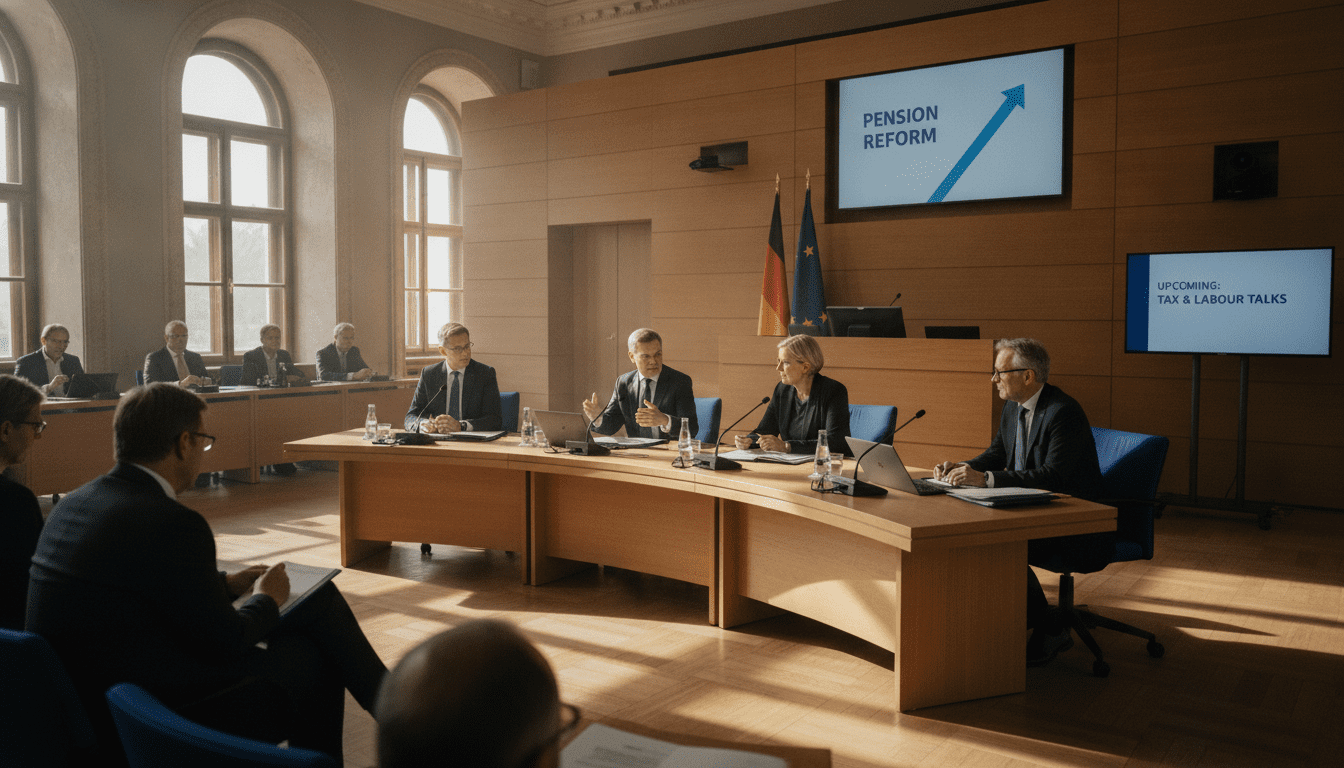
Pension reform unites German coalition but poses tests on taxes, labor rules and budgets
German coalition unites around a pension reform proposal, seizing short-term momentum while facing sharp hurdles on taxes, labor rules and fiscal limits.
Unusual unity after pension reform commission report
A pension reform proposal has delivered an unexpectedly upbeat moment for Germany’s governing coalition, bringing Chancellor Friedrich Merz and Labour Minister Bärbel Bas together in public solidarity. The commission’s 80-page report, containing 33 measures including a proposal to build a capital buffer within the statutory pension system, was hailed by both as a major achievement. That alignment stands in contrast to earlier months when the two ministers were often seen as representing opposing priorities within the government.
Political leaders from all three coalition parties have been circulating through Berlin receptions buoyed by the sense that the government has produced a substantive result after a rocky first year. The question now is whether the momentum from the pension reform can be translated into agreement on other contentious files such as taxes, labour-market changes and bureaucracy reduction.
Details of the commission’s proposal and implications
The pension commission proposed creating a capital stock inside the statutory pension insurance to bolster future retirees’ funding, a move that would initially raise wage-related labour costs. Friedrich Merz described the idea as “brilliant,” while Bärbel Bas called the commission’s work a “complete work of art,” urging that few, if any, of the recommendations be discarded. Some measures in the package, however, are likely to alarm trade unions because they entail trade-offs on early retirement and other protections.
Supporters argue the model spreads costs and risk across time, potentially stabilising the system without abrupt benefit cuts. Critics caution that building a capital buffer requires upfront financing and political consensus on distributional effects, a combination that can be elusive in coalition negotiations.
Political reactions and the union-business divide
Reaction to the pension reform has been sharply divided along familiar lines. Trade unions have expressed strong reservations, while some business groups have treated aspects of the package skeptically. The report’s mixture of enticements and constraints—seeking higher overall pension levels while tightening early retirement pathways—illustrates the balancing act that produced the compromise.
Coalition figures insist that the compromise mechanism used for the pension file could serve as a template for other complex negotiations: each side concedes specific points in return for broader gains. Yet union pushback shows how quickly consensus can fray when reforms touch core interests of organised labour, especially on employment and retirement protections.
Fiscal and tax reform face immediate obstacles
The pledge by Social Democrats to deliver meaningful relief for low and middle incomes—up to about €500 per year for some households—remains politically fraught and fiscally expensive, with an estimated bill near €20 billion. That cost raises questions about financing and whether the federal government can carry the burden alone. State premiers have so far resisted contributing to such tax relief, meaning the federal budget would likely have to absorb most of the expense.
One option under discussion is to pare back tax subsidies and preferential treatments using a horizontal, percentage-based reduction across exemptions. That “rake” approach could raise revenue without immediate federal transfers to the Länder, but it also invites concentrated opposition from affected interest groups and could be politically unpalatable. Observers say the most likely outcome may be modest technical fixes—such as adjusting the tax scale for inflation—rather than a headline-grabbing reform.
Debate over labour-market flexibility intensifies
Labour-market changes are another flashpoint. Proposals range from allowing more flexible fixed-term contracts for start-ups under collective-bargaining safeguards to loosening dismissal protections for high earners with agreed compensations. SPD figures have floated targeted relaxations for innovative companies, tied to tariff agreements and works-council approvals, while the CDU has pushed for broader easing of regulations in smaller firms.
Union leaders warn that any perceived rollback of worker protections could undercut social stability and invite backlash, particularly if the government appears to trade pension goodwill for concessions on employment rights. The coalition is divided on the scope and thresholds for reforms such as higher income cut-offs or employer-size tests, and negotiators will need to reconcile competing demands ahead of formal decisions.
Timing and the tests ahead for the coalition
The immediate political test arrives with the coalition committee meeting on Wednesday, 1 July, when leaders will try to capitalise on the pension package’s goodwill and set timetables for follow-up legislation. The government has already cleared a separate health reform for Bundesrat consideration slated for 10 July, signaling simultaneous pressure on multiple fronts. Success on both health and pensions would represent two major structural undertakings not attempted by recent German administrations.
Yet the coming budget cycles for 2027 and 2028, and the need to find savings or new revenue, will intensify pressure on the coalition to produce credible financing strategies. Commentators note that the coalition’s ability to convert short-term rapprochement into durable agreements will determine whether the pension commission’s success becomes a template or an isolated triumph.
Political stakes and electoral backdrop
The reforms unfold against the backdrop of rising support for the right-wing AfD and looming regional elections in eastern states, heightening the political premium on visible competence and reassurance. Social scientists quoted in recent coverage suggest that fear of decline, rather than decline itself, fuels protest-party gains; a government that can project confidence and deliver reforms may blunt that appeal. Coalition officials are thus conscious that the optics of cooperation—leaders appearing together and presenting shared plans—carry electoral as well as policy significance.
Whether the coalition’s new-found unity on pension reform will survive the harder bargaining ahead is uncertain. Negotiators will need to craft compromises that respect fiscal limits, placate key stakeholders and retain public credibility if the government hopes to sustain the current political upswing.
For now, the pension reform stands as a rare example of cross-party agreement inside the government, offering a window into possible pathways for future reforms while underscoring the scale of the compromises still required.
