
Kriegsdienstverweigerung: Linkspartei startet “Ausmusterungs-Offensive” und entfacht politische Debatte
Left party launches campaign to encourage conscientious objection to conscription, prompting responses from coalition partners and opposition amid public protests.
Campaign launch and immediate goals
The Linkspartei has announced an “Ausmusterungs-Offensive” aimed at increasing Kriegsdienstverweigerung among eligible citizens, framing conscientious objection as a legitimate democratic choice. The campaign combines outreach in schools, legal aid for draft registrants, and public demonstrations to normalize refusal of military service.
Party officials describe the initiative as both a political statement against renewed conscription and a practical effort to assist those who wish to submit formal objections. Organizers say the drive will include information centers, legal counseling, and coordinated public actions in major cities this summer.
Political reactions across the spectrum
The new offensive has prompted swift responses from other parties, illustrating a sharp divide over military policy and civil liberties. Coalition partners have expressed concern about the campaign’s potential to undermine defense planning, while some opposition groups accuse the Linkspartei of politicizing an issue that touches on national security.
Senior politicians in the ruling bloc have called for calm and emphasized the need to balance individual conscience with collective obligations. Meanwhile, centrist parties have urged dialogue, proposing parliamentary hearings to clarify legal implications and administrative procedures triggered by a surge in objections.
Street protests and public mobilization
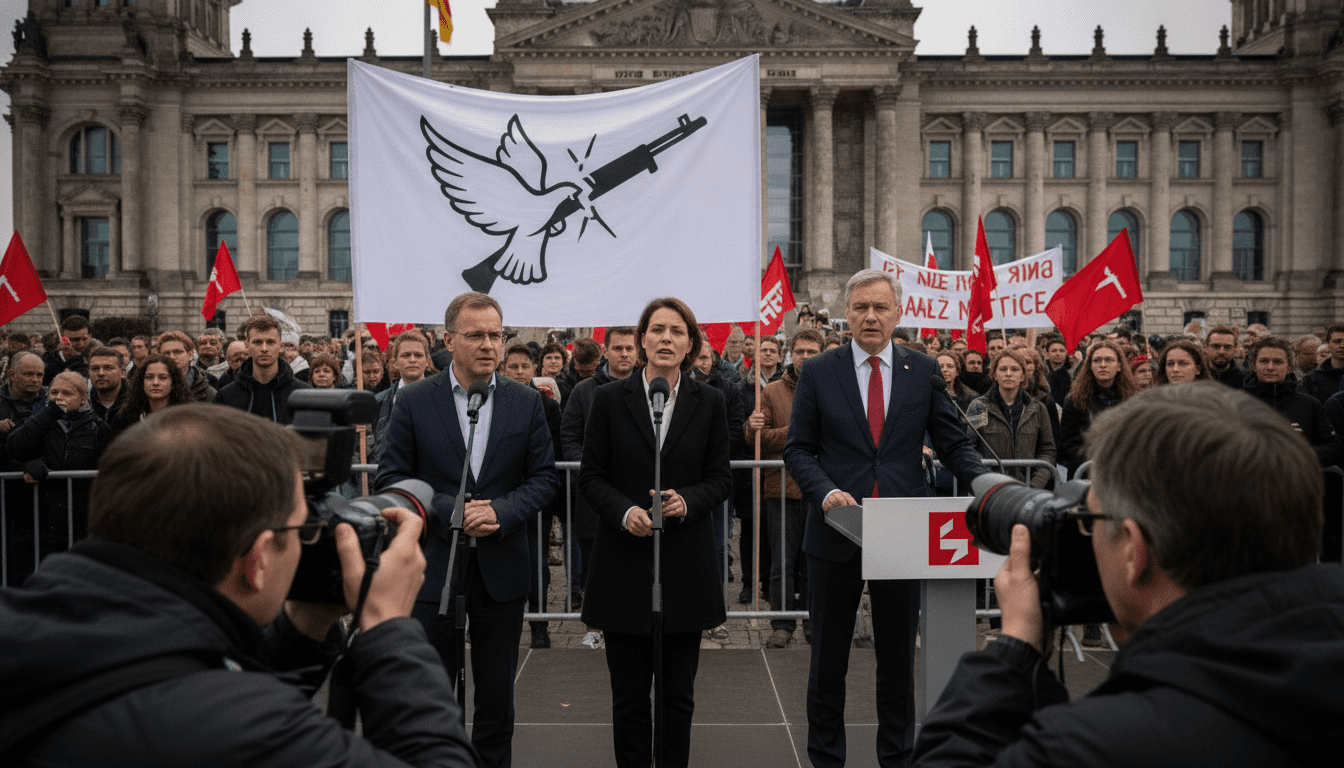
Large public demonstrations accompanied the campaign launch, including youth-led rallies in urban centers such as Hamburg where school strike movements voiced support. Organizers reported substantial turnout, citing enthusiastic participation from students, pacifist networks, and civil society groups.
Counter-demonstrations by veterans’ associations and supporters of a strong defense posture also appeared around several events, underscoring the polarizing effect of the offensive. Municipal authorities monitored gatherings closely and called for peaceful conduct while police managed logistical arrangements to prevent clashes.
Legal framework and administrative consequences
Under current law, provisions exist for recognizing conscientious objection and managing conscription procedures, but experts warn that a rapid rise in Kriegsdienstverweigerung filings could strain administrative capacity. Military and civil authorities may face a surge of formal declarations, appeals, and requests for alternative service placements.
Legal scholars note that existing jurisprudence protects the right to object on grounds of conscience, but implementation depends on clear administrative guidelines and sufficient staffing. The Linkspartei’s offer of legal assistance aims to help applicants navigate bureaucratic steps, yet it may also prompt legislative clarifications if volumes prove unmanageable.
Impact on defense planning and recruitment
Defense officials have warned that a coordinated campaign encouraging refusal could complicate recruitment forecasts and reserve planning if extended conscription models are pursued. Analysts argue that while immediate effects may be limited, persistent advocacy for Kriegsdienstverweigerung could influence longer-term policy debates about force structure and the role of compulsory service.
Military planners emphasize that contingency scenarios account for variable mobilization rates, but acknowledge that widespread objection movements would necessitate adjustments to training schedules and alternative service frameworks. Some analysts suggest that the debate may accelerate discussions about professionalizing forces versus reinstating broader conscription.
Alternatives and support services promoted by campaigners
Campaign organizers have outlined practical alternatives to frontline military service, stressing access to civilian service placements in healthcare, disaster relief, and social work. They argue that expanded civilian options would satisfy societal needs while respecting individual conscience.
Alongside outreach, the initiative includes partnerships with non-governmental organizations offering psychological counseling and administrative assistance for applicants. Advocates maintain that facilitating registered Kriegsdienstverweigerung advances both personal rights and community resilience through redirected civic engagement.
Potential legislative responses and parliamentary scrutiny
Lawmakers have signaled plans for parliamentary inquiries to assess the legal, administrative, and security implications of a sustained objection campaign. Committee hearings could review how current regulations are applied and whether statutory updates are necessary to handle significant shifts in objection rates.
Some deputies propose codifying faster processing times for conscientious objection claims, while others intend to examine the balance between civic duty and individual rights more broadly. The parliamentary debate is likely to frame the coming months, as parties seek to translate public reactions into policy proposals.
Public opinion appears divided, with younger cohorts showing greater sympathy for rights-based arguments and older voters emphasizing security imperatives. The tension between these perspectives will shape political maneuvering and possible compromises in the months ahead.
The Linkspartei’s Ausmusterungs-Offensive has transformed Kriegsdienstverweigerung from a niche legal right into a live political contest, forcing parties, administrators, and citizens to confront difficult choices about military obligations, civil conscience, and the shape of public service in a changing security environment.
