
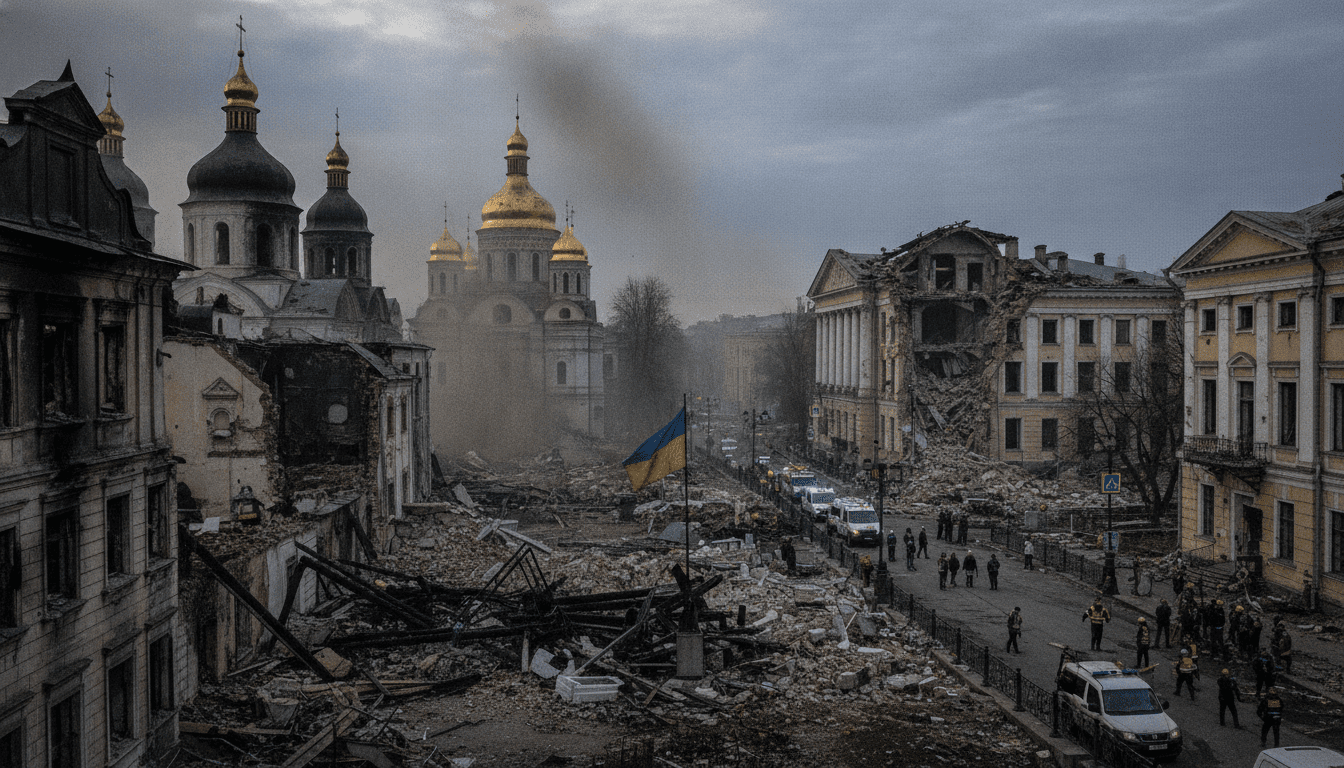
Heavy Russian strikes set Kyiv Pechersk Lavra and Mystetskyi Arsenal ablaze, Zelenskyy calls it a crime against Ukrainian culture
Russian strikes damaged the Kyiv Pechersk Lavra and Mystetskyi Arsenal, igniting the Dormition Cathedral roof and museum halls in one of the heaviest attack waves since the war began.
Cathedral roof and museum damaged in intense strike wave
The roof of the Dormition Cathedral within the Kyiv Pechersk Lavra caught fire after a series of strikes that also damaged the nearby Mystetskyi Arsenal National Art Museum. The attack came amid one of the heaviest waves of bombardment the country has seen since the war began, officials reported.
Smoke and flames were visible over the Lavra complex, a site venerated by Orthodox believers across Ukraine, Russia and Belarus, as well as a UNESCO World Heritage property. Firefighters and security services moved to contain the blazes while authorities assessed the scope of structural and cultural loss.
President Zelenskyy labels the attack a major crime against Ukrainian culture
President Volodymyr Zelenskyy described the assault on the Lavra and the museum as “one of the greatest Russian crimes against Ukrainian culture,” reflecting the government’s framing of the strikes as a deliberate assault on cultural heritage. The president’s remarks underscored the symbolic as well as physical harm inflicted by the bombardment.
Ukrainian officials condemned the strikes as an attack not only on buildings but on the nation’s historical memory and identity. Government spokespeople said investigations would determine responsibility and document damage to support future accountability efforts.
Heritage status and religious significance under threat
The Kyiv Pechersk Lavra, often referred to in English as the Pechersk Lavra or Kyiv Monastery of the Caves, is among the most significant religious complexes in Eastern Orthodoxy and is listed as a UNESCO World Heritage site. The Dormition Cathedral holds centuries of iconography and religious artifacts, making any damage deeply consequential for heritage preservation.
Experts warned that fires and blast damage can irreversibly harm frescoes, icons, and the fabric of ancient masonry. Conservators and cultural ministries face the immediate challenge of securing vulnerable collections and stabilizing structures to prevent further deterioration.
Emergency response and on-site accounts
Emergency services, including municipal firefighters and preservation teams, were reported to be working through the night to extinguish flames and limit spread to adjacent buildings. Initial responders prioritized life safety while attempting to protect movable cultural objects where possible.
Witnesses in the area described thick smoke and sirens as crews battled the blaze. Local residents and clergy expressed alarm at seeing the revered cathedral’s roof in flames, and volunteers mobilized to support first responders and safeguard artifacts that could be removed.
Extent of damage and provisional assessments
Preliminary inspections indicated significant fire damage to parts of the cathedral roof and interior sections, with smoke and water damage affecting adjacent chapels and communal spaces. The Mystetskyi Arsenal, a major national museum that houses rotating exhibitions and collections, also reported fire in exhibition halls and possible loss of artworks.
Authorities cautioned that full assessments will take days or weeks as experts check structural safety and catalog affected collections. Conservation teams will need to evaluate humidity, smoke residues, and thermal stress on artworks before restoration strategies can be planned.
International and cultural community reactions
The strikes drew immediate condemnation from cultural organizations and foreign governments that monitor heritage protection during conflicts. Cultural leaders emphasized that attacks on heritage sites violate long-standing principles intended to shield museums and religious monuments during hostilities.
International heritage and art conservation groups offered technical assistance and called for unobstructed access for specialists to assess and preserve damaged works. Diplomatic responses reiterated concerns about the targeting of cultural property and urged measures to prevent further losses.
Implications for cultural preservation and accountability
The damage to the Kyiv Pechersk Lavra and Mystetskyi Arsenal raises complex questions about protection, emergency preparedness, and post-conflict restitution. Preservationists noted that restoration of heavily damaged religious and cultural monuments is a prolonged, resource-intensive process requiring international expertise and funding.
Ukrainian authorities signaled plans to document the destruction thoroughly to support future legal and reparative actions. Archivists and museum professionals began inventories to determine what can be stabilized, conserved or, where necessary, reconstructed.
The strikes that set the Dormition Cathedral roof and parts of the Mystetskyi Arsenal on fire have deepened concerns about the vulnerability of cultural heritage in conflict zones, and they have prompted a coordinated response from emergency services, conservators and international partners to salvage what remains and plan for long-term recovery.
