
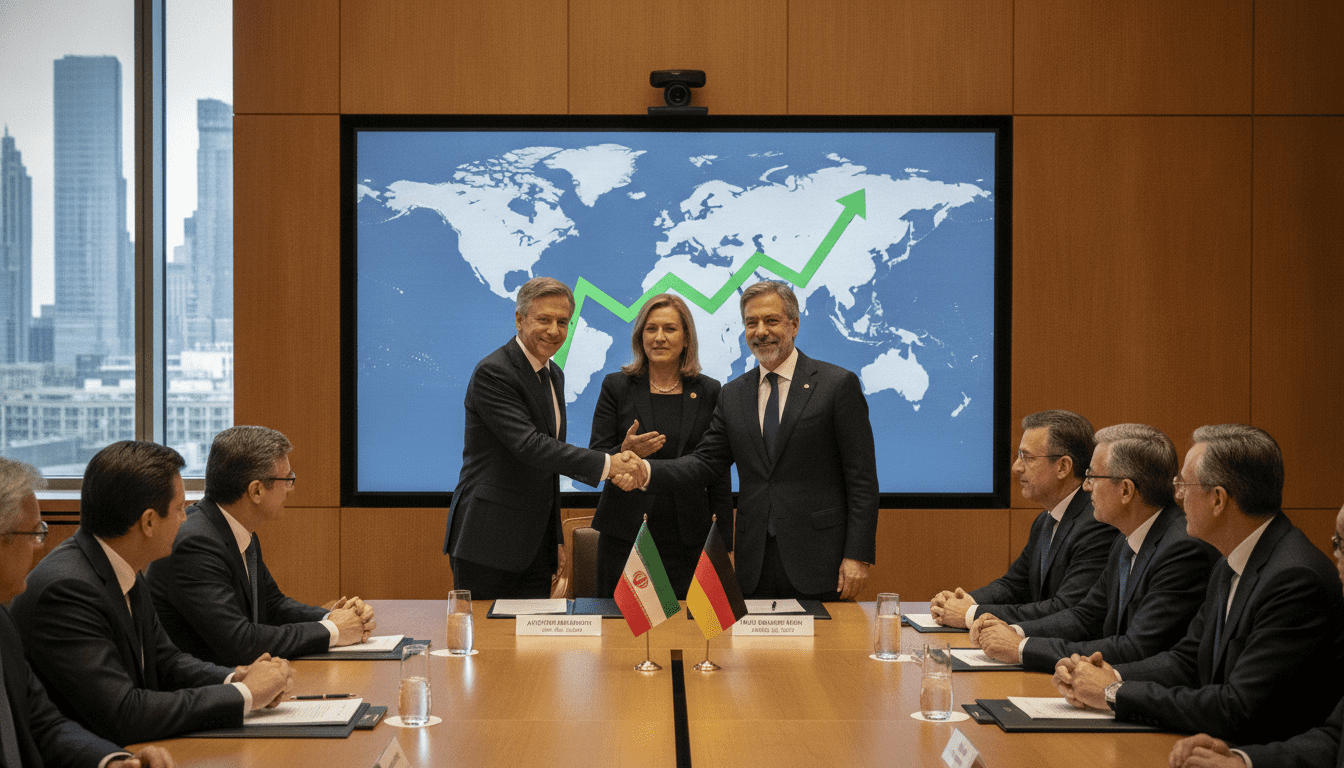
Opening of Strait of Hormuz Boosts German and Global Economic Outlook, Say Economists
Reopening of the Strait of Hormuz eases energy fears and lifts markets; German economists say growth outlook improves although inflation risks remain for months.
The weekend agreement between the United States and Iran to reopen the Strait of Hormuz has markedly improved near-term economic prospects for Germany and the wider global economy, economists said Monday. Financial and commodity markets reacted positively as oil and gas prices eased, but leading economists and central bankers warned that inflationary pressures and infrastructure damage mean benefits will take time to materialize. Analysts indicated gains for growth prospects, yet cautioned that supply-chain recovery and lingering price effects will shape the outlook into the autumn and winter.
Ifo: Europe set to gain if Strait of Hormuz reopens
Clemens Fuest, president of the Ifo Institute in Munich, told reporters that a sustained reopening of the Strait of Hormuz would provide a meaningful boost to Europe’s economic momentum. He said lower energy import risks would reduce inflationary pressure, making it easier for the European Central Bank to refrain from further rate hikes. Fuest added that while the third quarter may still show the aftershocks of the conflict, improvements should become clearer by the fourth quarter if the corridor remains open.
Markets react as oil and gas prices fall
Global markets moved swiftly on the announcement, with Asian indices surging at the start of the week and German equity benchmarks trading higher. Brent crude fell to roughly $83 a barrel, down about five percent from recent levels, and European gas prices also eased by several percentage points. Traders and analysts described the market response as broadly positive, though crude prices remain significantly above where they stood at the start of the year.
Central bankers and economists caution on lingering inflation risk
Officials and independent economists stressed that a political settlement will not instantly eliminate inflationary pressures. Monika Schnitzer, chair of the German Council of Economic Experts, noted that higher energy costs feed into production and trade with a delay, so consumer-price effects will persist for months even after shipping routes reopen. Bundesbank President Joachim Nagel warned that reconstruction and logistical normalization will take time, and that fiscal measures which temporarily suppressed prices could expire, sustaining price pressures.
Damage to energy infrastructure will slow a full rebound
While the agreement raises the prospect of resumed oil flows, experts highlighted that physical damage to production and liquefied natural gas facilities cannot be repaired overnight. The rebuilding of facilities and the gradual restoration of regular tanker schedules are expected to stagger the return to pre-crisis supply levels. Economists said this structural lag will keep energy markets more volatile than usual as capacity is restored and inventories rebuild.
Germany’s gas storage presents a summer window to refill
Analysts from the Kiel-based IfW pointed to Germany’s relatively low gas storage levels for this time of year and said the easing price environment offers a strategic opportunity to refill reserves ahead of winter. Lower summer spot prices would allow utilities and gas buyers to purchase volumes at more favorable terms than they have faced recently. If storage can be replenished at reduced costs, the country may avoid extreme supply tensions next winter and reduce the likelihood of shortage-driven policy measures.
Revisions to growth forecasts and persistent fiscal drag
Institutes differ on the scale of near-term growth revisions, but most see the risk of a recessive outcome receding following the deal. The IfW’s economists have forecast a milder expansion for Germany this year and stronger growth next year, while the Commerzbank’s chief economist maintained a cautious view of “meagre” growth for both Germany and the euro area. Forecasters also highlighted a substantial hit to purchasing power from elevated energy prices this year and the next; that fiscal drag will be lessened by a settlement but not fully erased.
The diplomatic breakthrough that would reopen the Strait of Hormuz has given policymakers and markets reason to hope for a clearer path away from the crisis-driven energy shock. Still, officials and analysts agree that months of logistical recovery, reconstruction and careful policy calibration lie ahead before improved headline growth translates into sustained relief for consumers and businesses.
