
FIFA World Cup 2026 Match Schedule: Groups, Venues and Germany’s Fixtures
Complete FIFA World Cup 2026 match schedule: groups, kickoff times in CEST, venues across USA, Mexico and Canada, Germany’s fixtures, TV and streaming info.
The FIFA World Cup 2026, staged across the United States, Mexico and Canada from June 11 to July 19, 2026, expands to 48 teams and a record number of matches and host cities. The tournament schedule, with kickoff times listed in Central European Summer Time (CEST), outlines group-stage fixtures, the new round of 16 format and the full knockout calendar. This guide summarizes groups, venues, Germany’s match dates and broadcast arrangements for fans and viewers.
Groups confirmed and key matchups
The tournament draw produced twelve groups of four nations, setting up a global mix of established powers and newcomers. Notable group pairings include Brazil with Morocco, Scotland and Haiti, and France alongside Senegal, Iraq and Norway in a group that could shape the knockout bracket.
Group E pairs Germany with Curaçao, the Ivory Coast and Ecuador, a combination that places the defending European contenders into a varied tactical challenge. Several groups contain heavyweight clashes early in the schedule, which could determine the shape of the knockout rounds and the allocation of the eight best third-placed qualifiers.
Germany’s group-stage schedule and broadcast details
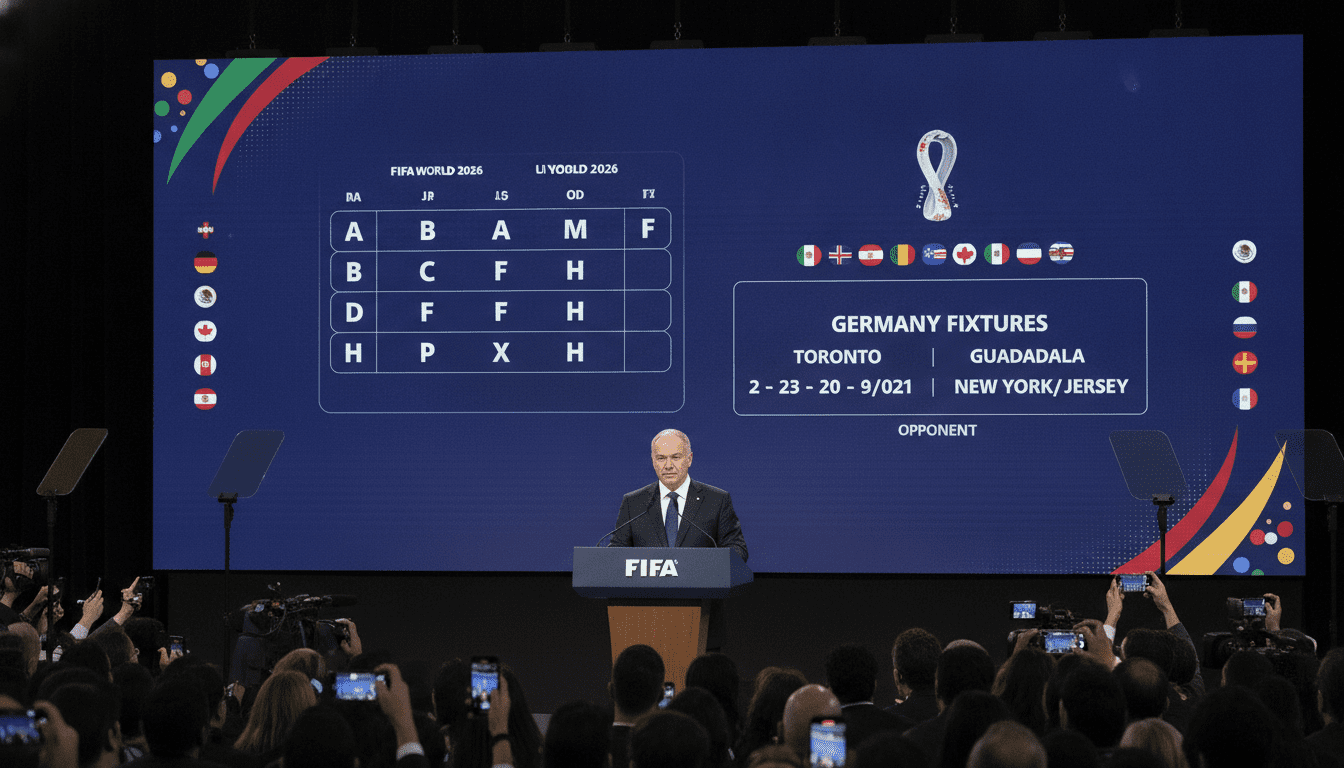
Germany, drawn in Group E, opens its campaign on June 14 in Houston against Curaçao at 19:00 CEST, a match scheduled for ARD coverage. The DFB side then travels to Toronto for a June 20 meeting with the Ivory Coast at 22:00 CEST, which will be shown on ZDF. The group phase closes on June 25 in New York with Ecuador versus Germany at 22:00 CEST, broadcast by ARD.
If Germany tops the group, its path leads into the newly introduced round of 32; should it finish second or as one of the eight best third-placed teams, opponents will be slotted according to the tournament matrix. Viewers in Germany can follow most matches across public broadcasters and MagentaTV, which holds rights to stream the entire tournament.
Early results and opening-day highlights
The tournament kicked off on June 11 in Mexico City, where the host side recorded a 2-0 win over South Africa in the opening match. Early fixtures have already produced decisive results and a mix of high-scoring encounters and tighter contests, setting an unpredictable tone for the group stage.
Home teams and continental favorites alike have faced varied fortunes in the opening rounds, with host-nation crowds and travel logistics shaping performances. These initial outcomes will influence seeding for the round-of-32 matchups and underline how quickly standings can shift in the expanded format.
Match schedule structure and knockout progression
The World Cup schedule lists kickoff times converted to CEST, reflecting the six- to nine-hour time difference across host cities. Group-stage play runs through late June, followed by a round of 32 (the new “Sechzehntelfinale”) that pairs group winners, runners-up and the eight best third-placed teams into a fixed knockout bracket.
Knockout rounds begin at the end of June and continue through the quarter-finals and semi-finals in July, with the final scheduled for July 19 in New York at 21:00 CEST. The calendar provides designated windows for each knockout match, allowing broadcasters and teams to plan travel and recovery, but the expanded tournament also compresses travel for squads moving between distant venues.
Venues, capacities and time-zone implications
Matches are staged at 16 stadiums across three countries: eleven in the United States, three in Mexico and two in Canada. Key venues include the Azteca Stadium in Mexico City, Toronto’s main stadium and New York/New Jersey’s large-capacity arena in East Rutherford. Stadium capacities range from about 45,000 in Toronto to roughly 94,000 in Arlington (Dallas area).
Time differences will affect match-day routines: most North American venues operate six to nine hours behind Central European Summer Time. Teams, broadcasters and supporters in Europe will need to account for these offsets when scheduling viewing, travel and recovery, especially when matches are played on back-to-back days across distant venues.
Television, streaming rights and where to watch
Public broadcasters ARD and ZDF hold rights to a significant share of the tournament, together transmitting 60 of the 104 matches. MagentaTV offers access to all fixtures through a paid service, including live streams of simultaneous games for viewers who want full coverage. Both ARD and ZDF will stream matches in their media libraries and via their mobile apps, while MagentaTV provides comprehensive streaming options for subscribers.
National broadcasters and streaming partners will also provide highlights, live commentary and statistics centers to track group standings and the ranking of third-placed teams. Fans should confirm local kickoff times in CEST and check individual program schedules for pre-match analysis and post-game coverage.
The World Cup’s expanded format and transnational footprint present a complex but accessible schedule for viewers, with centralized kickoff times in CEST and clear broadcast windows across public and pay platforms. For supporters planning to follow Germany or other nations, consulting the match list, verifying times in local and Central European Summer Time, and confirming broadcast channels will ensure you don’t miss key moments as the tournament progresses.
