
FIGC Chief Giovanni Malagò Pushes Roberto Mancini Return Amid National Team Turmoil
FIGC president Giovanni Malagò moved on July 28, 2026, to secure Roberto Mancini as Italy coach after Paolo Maldini’s abrupt resignation, intensifying a week of upheaval in Italian football.
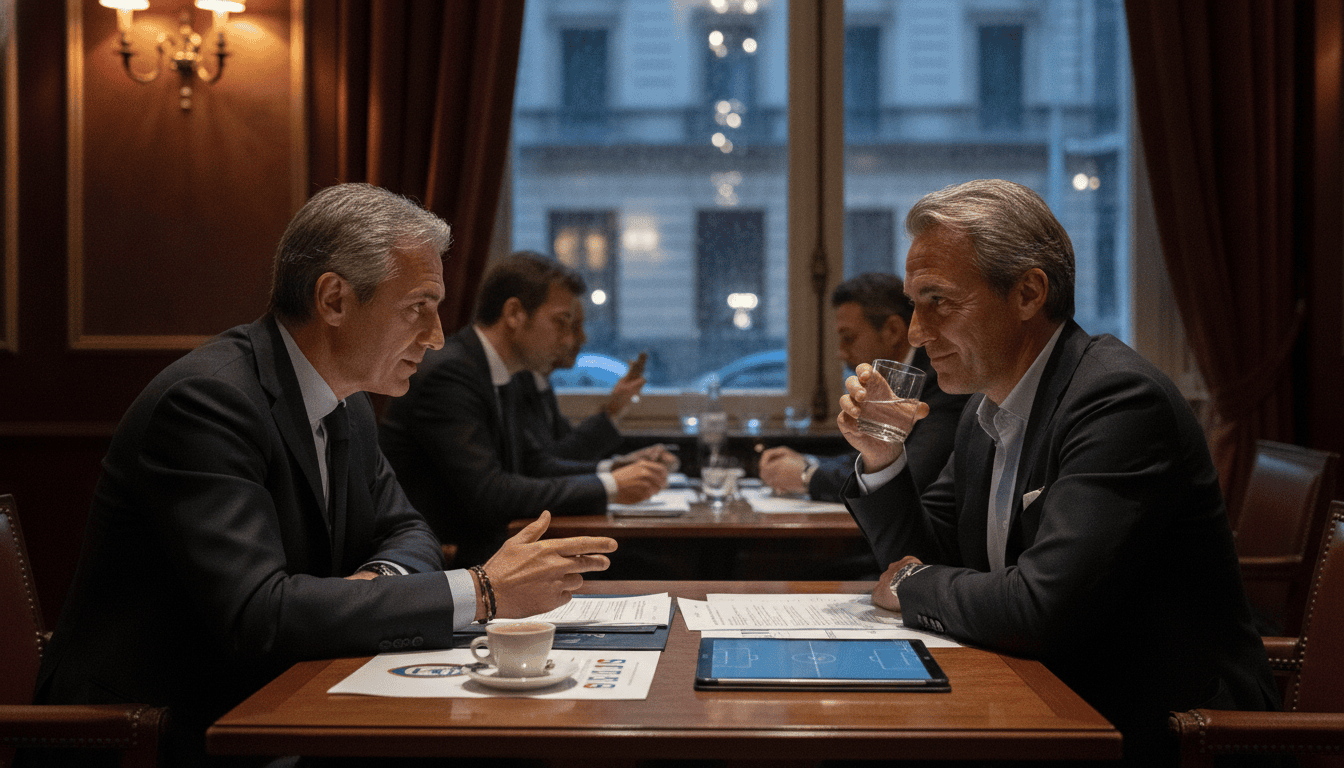
On Tuesday morning in Rome, FIGC president Giovanni Malagò convened a decisive meeting that set the federation on a new course after weeks of public controversy. The Italian football federation confirmed that Malagò is seeking to bring Roberto Mancini back as national coach, a move expected to be formalized at a presentation on Wednesday. The session capped a turbulent period that saw Paolo Maldini resign as technical director after just 16 days and triggered fierce debate across media and fan circles.
Malagò Takes Direct Control at FIGC Meeting
Giovanni Malagò, who assumed the FIGC presidency on June 22, has moved from a hands-off approach to active intervention in the federation’s personnel decisions. Observers noted his visible presence in Rome and a willingness to override previously touted divisions of authority within the federation. Malagò told assembled reporters he intended to make the necessary decisions to end the leadership vacuum afflicting the national team.
The president’s shift followed a rapid series of developments that exposed fractures between FIGC leadership, the sporting director, and the public. Malagò framed his involvement as a response to the urgency of preparing Italy for upcoming Nations League fixtures in September and stabilizing the institution.
Paolo Maldini Resigns After 16 Days as Technical Director
Paolo Maldini’s departure marked a dramatic reversal after his appointment was intended to restore technical credibility to the federation. Maldini, who had been recruited to lead sporting strategy and to recruit a new national coach, stepped down amid disagreements over the selection process and the reassertion of presidential authority. The resignation leaves a conspicuous gap in the FIGC’s planned sporting leadership.
Maldini’s exit has been widely interpreted as symptomatic of a deeper institutional crisis, where competing claims of responsibility and public scrutiny have undermined attempts at reform. The rapid unraveling of the Maldini era has intensified pressure on Malagò to produce credible, stabilizing appointments quickly.
Guardiola and Pirlo Rejected as Candidates in High-Profile Search
The search for a successor to the previous coach included high-profile names whose candidacies collapsed for different reasons. Pep Guardiola was publicly ruled out, reportedly due to salary expectations and his recent commitments, leaving the FIGC to pursue other options. Guardiola’s clear unwillingness to relocate or take on the national role removed what many saw as the marquee solution.
Andrea Pirlo emerged briefly as a favored candidate but withdrew after a heated media backlash highlighted his commercial ties and recent coaching record abroad. Critics focused on Pirlo’s sponsorship links and his employment history, arguing such associations would complicate the federation’s public standing. Pirlo later described his withdrawal as bitter but defended his personal relationships and professional choices.
Chiellini Declines Role; Claudio Ranieri Set to Serve as Technical Director
Giorgio Chiellini visited federation headquarters as a representative of Juventus and confirmed he intends to remain aligned with his club rather than assume the FIGC sporting leadership. Chiellini indicated he prefers to continue supporting Juventus sporting director Giovanni Carnevali, signaling that the federation must look elsewhere for experienced hands. His refusal narrowed the pool of former players willing to accept the high-pressure national role.
In the immediate aftermath, the federation moved to appoint veteran coach Claudio Ranieri as technical director, a pragmatic choice aimed at bringing seasoned managerial experience into the FIGC. Ranieri, 74, is expected to provide organizational leadership and work with the incoming national coach on short-term preparations.
Mancini Expected to Return as Italy Coach Despite Mixed Reception
By midday, Malagò and federation officials disclosed they were in advanced talks with Roberto Mancini and were “expecting his signature,” signaling a swift resolution to the coaching vacancy. Mancini, the Euro 2021-winning manager for Italy, remains a polarizing figure due to his controversial departure to Saudi clubs in 2023. Many fans and columnists have expressed disquiet at his potential reappointment, describing it as politically and emotionally charged.
The Gazzetta and other outlets called the choice “incomprensibile,” noting the irony of rejecting Pirlo on political grounds only to consider Mancini, whose recent career moves provoked allegations of betrayal among parts of the Italian public. Federation leaders, however, defended the move as one likely to deliver immediate sporting competence and tactical continuity ahead of competitive fixtures.
Public reaction has been sharply divided, with sections of the fan base and media skeptical of both the process and the personnel choices. Critics contend that the sequence of appointments reflects top-down decision-making rather than a transparent, consultative selection. Supporters argue that an experienced hand like Mancini could steady the team and accelerate competitive rebuilding.
The FIGC now faces the twin challenges of rebuilding public trust and preparing the national squad for competitive action in the autumn. With Claudio Ranieri in a coordinating role and Roberto Mancini poised to assume coaching duties, federation officials say the immediate priority is to establish a clear training program and a consistent selection policy. Observers will watch closely whether the appointments produce short-term results and whether they help reconcile a fractured relationship between the federation and Italy’s footballing public.
For now, the federation’s authority rests with Malagò’s decisions, and the coming weeks will determine whether his intervention ends the leadership carousel or simply reshuffles discontent within Italian football.
