
Smarcel: Cologne Startup Unveils Mobile Parcel Station to Tackle Last‑Mile Bottlenecks
Cologne startup launches Smarcel mobile parcel station to ease last‑mile, reduce permit hurdles and offer app‑located flexible locker parking for carriers
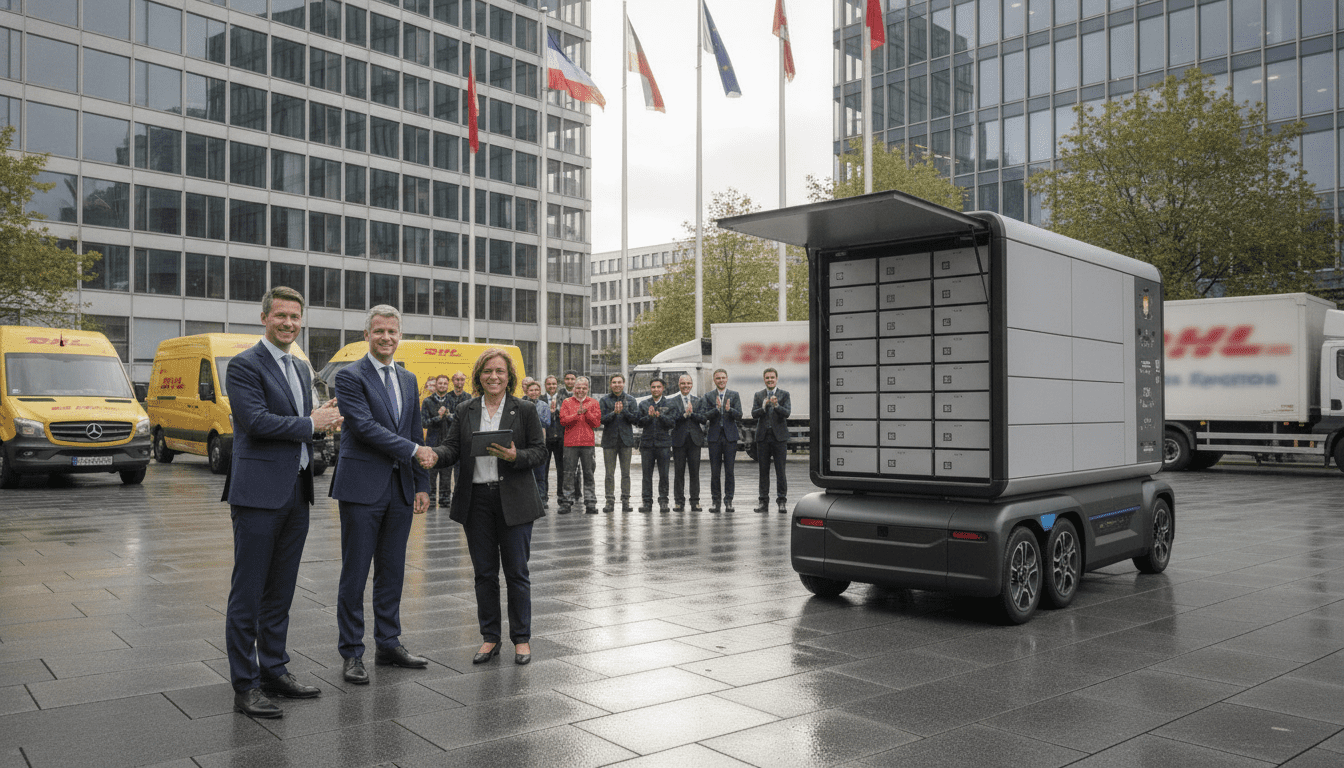
The Cologne-based startup Innovative Robot Delivery has unveiled Smarcel, a towable mobile parcel station designed to ease last‑mile pressure and provide carriers with a flexible, app‑tracked locker solution. The Smarcel, a trailer-sized unit that can be hitched to most vehicles, is built to sit on public parking spaces and move between locations as demand shifts. The founders say the system addresses growing parcel volumes, scarce delivery capacity and the planning hurdles that slow rollouts of permanent parcel lockers.
Smarcel targets last‑mile delivery pressure
The Smarcel concept is pitched as an answer to congested inner cities and overstretched local shops that can no longer absorb peaks in parcel traffic. By operating from ordinary parking spaces, the mobile parcel station is intended to reduce the need for time-consuming site searches and complex permissions required for fixed installations. Founders argue this mobility can shorten deployment from months to days, allowing operators to test locations and shift capacity during peak times.
Founders’ experience includes DHL Packstation
The three founders bring deep experience in the parcel sector: Boris Mayer — credited with inventing the original DHL Packstation roughly two decades ago — together with Christof Schares and Christian Borger. The team, aged in their fifties and sixties, spun out from corporate roles to pursue a flexible alternative to stationary lockers. Their background has shaped Smarcel’s design priorities, focusing on practical constraints such as parking availability and the operational burden of loading and returns handling.
Prototype “One” is an automated mini‑warehouse
The current prototype, dubbed One, contains an automated interior that functions like a compact high‑bay warehouse on wheels. Parcels enter through a standardized chute and rest on motorized trays while onboard robotics scan, measure and stack items to maximize capacity. Customers select parcels via an app and a robotic system delivers the tray to an access port, and the founders say the same architecture could enable packaging‑free pickup in the future.
Parking flexibility avoids planning hurdles
A central selling point is that Smarcel needs only a temporary parking space rather than a permanent site and planning permission. The founders envision supermarket forecourts, market squares or other public lots as ad hoc locations where a Smarcel can operate for part of a week and then be moved elsewhere. That flexibility not only sidesteps lengthy permitting processes but also allows parcel operators to tailor presence to local demand patterns and events.
Costs, funding and projected returns
At present each Smarcel carries an estimated sticker price of around €80,000, though the company aims to reduce that to the middle five‑figure range as production scales. The startup has raised roughly €6 million from private risk capital and about €3.8 million in public grants, with additional investment and in‑kind partnership from logistics suppliers. Management says internal models indicate a Smarcel could recoup its initial capital roughly twice over across a ten‑year lifespan, driven by faster depot loading and lower site acquisition costs.
Paid pilots with four parcel companies
The founders report paid pilot agreements with four carriers, spanning Norway, Switzerland, Moldova and Germany, as they move from lab prototypes to field tests. Partners include Posten Bring in Norway, Planzer in Switzerland, Nova Post in Moldova and initial trials with DHL in Germany. While these pilots signal commercial interest, the company acknowledges it remains to be seen whether any partner will commit to broad deployment after evaluation.
The Smarcel team is also exploring series production partnerships with warehouse‑systems firms to shorten the leap from prototype to volume manufacturing. If pilots validate uptime, user experience and loading efficiency, the company expects to refine the cost base and accelerate rollouts.
