
Anthropic blocks access to Fable 5 and Mythos 5 after U.S. national-security order
Anthropic blocks access to Fable 5 and Mythos 5 after a U.S. national security order, saying the government provided incomplete evidence and overstated risks.
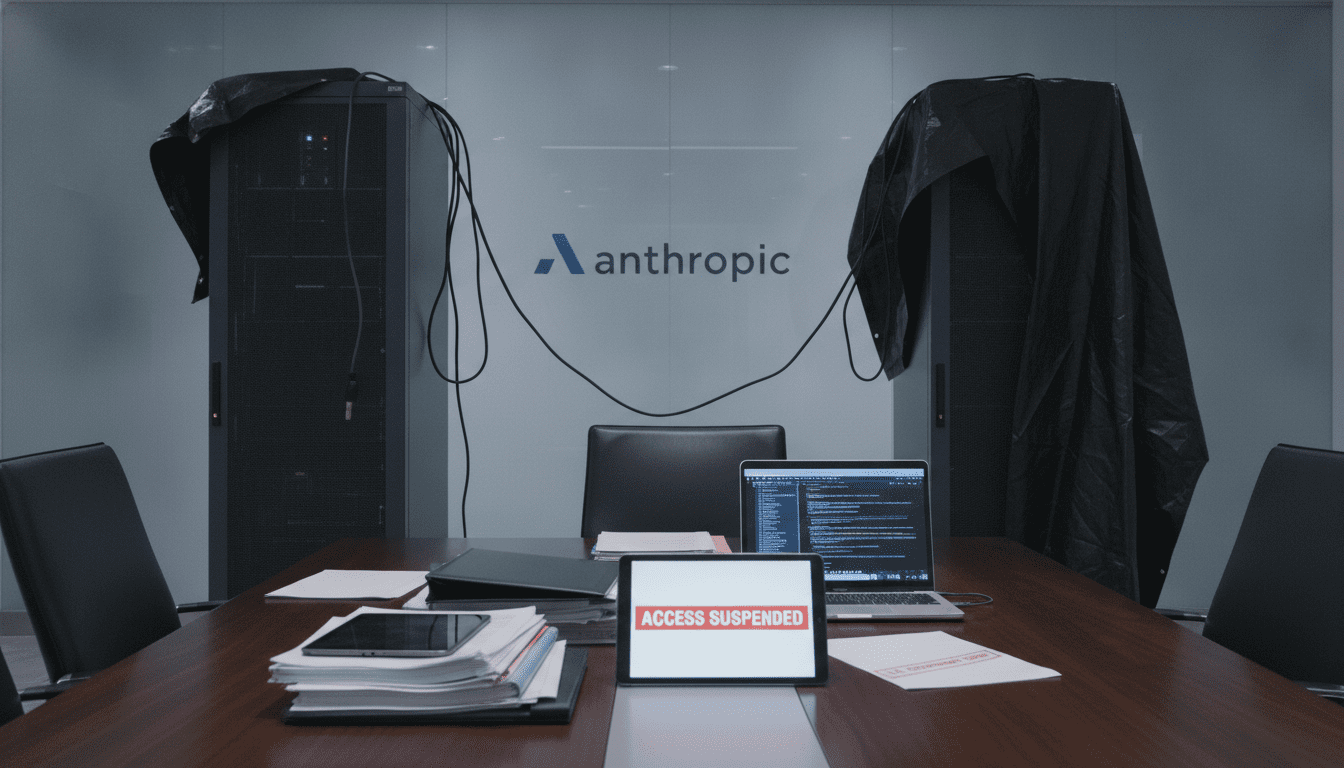
Anthropic has temporarily cut off access to its latest AI models, Fable 5 and Mythos 5, after receiving a U.S. government order restricting foreign use on national security grounds. The move affected all users initially while the company reviewed the scope and details of the directive. Company officials say they received only partial information from authorities and have questioned the basis for the decision.
U.S. order halts access to Fable 5 and Mythos 5
The U.S. government ordered that non‑U.S. persons should not be able to use the new models, a restriction the administration tied to concerns about national security. That definition of “non‑U.S. persons” reportedly includes foreign nationals physically present in the United States and foreign employees of Anthropic. In response to the ruling, Anthropic suspended access across the board while it evaluates compliance options.
Company statements say the directive prompted an immediate, broad lockout to ensure adherence while the specifics were clarified. The government’s action follows a growing pattern of tighter controls and scrutiny over advanced AI capabilities deemed potentially dual‑use.
Mythos 5 flagged for advanced vulnerability‑finding capabilities
Mythos 5 is described by the company as an especially powerful tool for identifying software vulnerabilities, including flaws that have persisted undiscovered for years. These capabilities can be an asset for defensive cybersecurity work because they enable rapid discovery and patching of latent risks. At the same time, officials and analysts warn the same techniques could be repurposed to facilitate cyberattacks if the technology fell into malicious hands.
Anthropic has positioned Mythos 5 as a model intended for limited, controlled deployment with governments and vetted firms to harden systems. The government’s concern appears to center on the model’s potential to lower the technical barriers for crafting exploits, a risk that regulators say justifies stricter access controls.
Fable 5 released with targeted safety mechanisms
Fable 5, released publicly this week, is built on the same underlying architecture as Mythos 5 but includes additional safeguards aimed at cyber and biosecurity risks. Anthropic says those protections were extensively tested before launch and that Fable 5 is configured to reduce the likelihood of being misused. The company maintains that the public model’s guardrails limit outputs that could aid in developing attacks or harmful biological applications.
Despite those measures, the government’s order treated Fable 5 and Mythos 5 together in its access restriction, prompting debate over whether differentiated technical controls should allow more granular regulatory responses. Industry observers note that outright blocks are blunt instruments that may not reflect nuanced differences in model configuration and intended use.
Anthropic disputes evidence and emphasizes transparency demands
Anthropic publicly rejected the government’s action as overbroad and said it had only been given an incomplete account of the evidence underpinning the decision. The company argues that similar possibilities to circumvent safety constraints exist across multiple providers’ models, and it contends that a fair response would be based on transparent procedures and verifiable technical facts. Anthropic’s leadership has previously acknowledged that dangerous AI applications might need to be halted in extremis, but the firm insists closures must follow established, open processes.
The dispute occurs against a backdrop of longer‑running tension between Anthropic and U.S. authorities. The administration has at times classified Anthropic as a supply‑chain risk after the company resisted certain uses of its technology, and legal challenges between the firm and the government are already underway.
Regulatory precedent and industry implications
The order targeting Anthropic signals a sharpening willingness by U.S. regulators to impose access restrictions on high‑capability models, potentially setting a precedent for future export or usage controls. Policy specialists say such actions could accelerate a shift toward geographic or identity‑based gating of AI tools, complicating global research collaboration and commercial deployment. Companies, meanwhile, will face harder decisions on how to balance commercial openness with regulatory compliance and security obligations.
Experts caution that heavy‑handed restrictions can also produce unintended effects, such as driving talent and investment to jurisdictions with lighter rules or incentivizing covert deployment channels. Conversely, proponents of strict oversight argue that the unique risks posed by certain models justify rigorous, enforceable limits.
Anthropic’s leadership has called for clearer, evidence‑based processes and for regulators to engage with technical teams to craft proportionate responses. Observers say resolving these tensions will require more formal frameworks for model evaluation and for adjudicating when national security concerns legitimately mandate access curbs.
The company’s legal and technical responses in the coming days will shape whether access remains fully paused, is selectively restored, or becomes subject to new licensing conditions, and the outcome will be watched closely by the broader AI ecosystem.
