
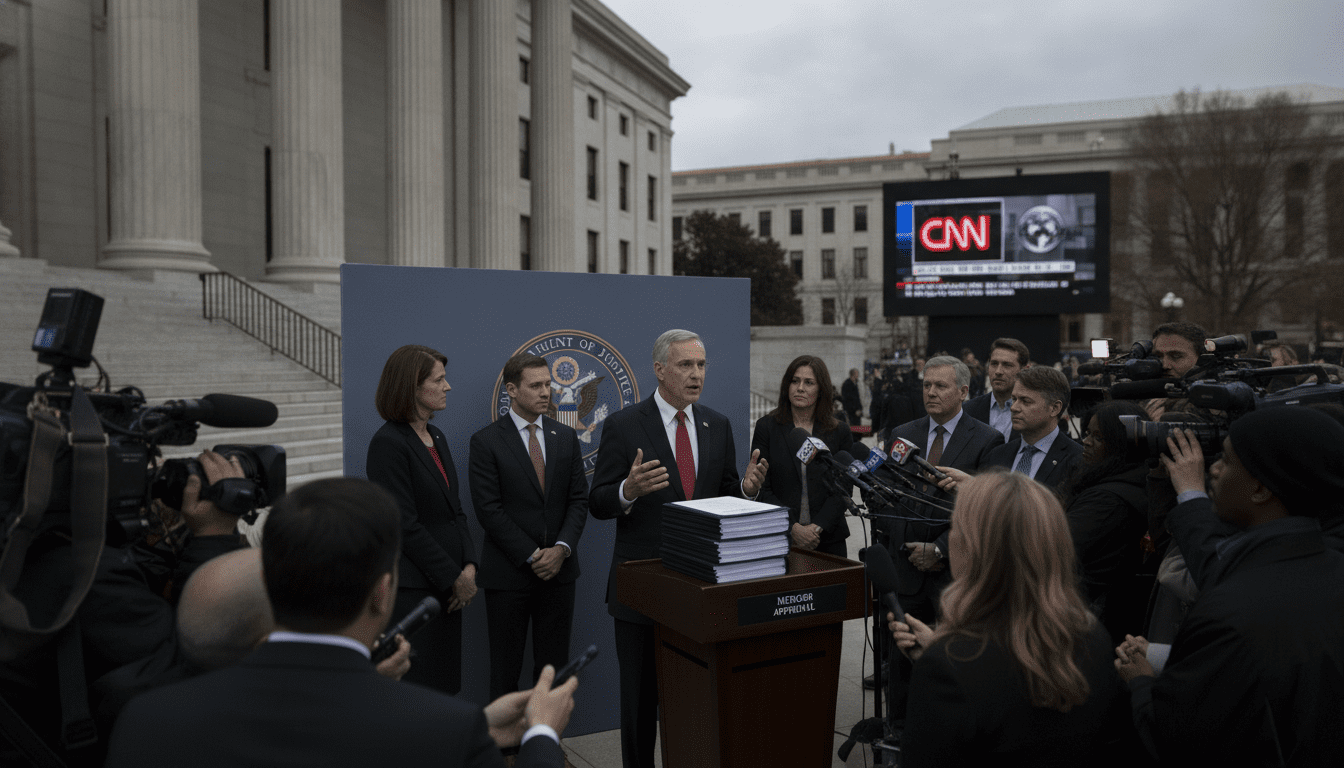
DOJ Clears Paramount Skydance Acquisition of Warner Bros. Discovery in $111 Billion Deal
U.S. Justice Department approved the Paramount Skydance acquisition of Warner Bros. Discovery on June 12, 2026, finding no antitrust remedy needed.
The U.S. Department of Justice’s antitrust division formally approved the Paramount Skydance acquisition of Warner Bros. Discovery on Friday, June 12, 2026, concluding a months-long review without requiring divestitures or other conditions. The decision clears a roughly $111 billion transaction that transfers the full Warner Bros. Discovery group — including studios, broadcast assets and cable networks — to Paramount Skydance.
Justice Department Signs Off After Months-Long Review
The Justice Department said it found the merger “unlikely to harm competition or American consumers,” signalling that the combined company would not pose a threat to streaming services, traditional television or the broader film industry. Officials concluded their assessment after examining market overlap, content licensing practices and distribution dynamics.
The approval came after a detailed inquiry by the antitrust division that parties said lasted several months and culminated on June 12, 2026. No remedies were requested, an outcome that surprised some industry observers given the transaction’s scale.
Deal Structure and Assets Included in the Transaction
Paramount Skydance’s purchase, valued at approximately $111 billion (about €96 billion), covers Warner Bros. Discovery’s full portfolio of assets, including theatrical studios, television production units and linear networks. The acquisition notably includes the cable news channel CNN and other major broadcast properties.
Paramount and Warner Bros. signed their definitive agreement in late February 2026, after rival suitors, including Netflix, withdrew from the bidding process. Shareholders of both companies approved the deal in late April 2026, clearing a key corporate hurdle ahead of the Justice Department’s sign-off.
Hollywood Creatives Issued an Open Letter Warning of Risks
Ahead of the approval, a coalition of actors, writers and directors expressed concern about the merger’s potential effects on creative diversity and working conditions. In an open letter, signatories including Ben Stiller, Sandra Hüller and Joaquin Phoenix warned the consolidation could concentrate decision-making and weaken bargaining power across the industry.
Critics argued that a single dominant owner of major studios and networks might reduce the range of greenlit projects and compress wages and benefits for production crews. The coalition urged regulators and courts to scrutinize the transaction for risks to artistic independence and industry labor standards.
States Prepare a Legal Challenge Led by California
Despite the Justice Department’s approval, at least ten U.S. states, led by California, indicated plans to file a lawsuit challenging the takeover. State officials have raised concerns about market concentration and the potential for reduced competition in local advertising, programming and streaming marketplaces.
Those state-led actions are expected to move quickly; reports indicated filings could arrive within weeks of the federal clearance. If litigation proceeds, the companies face a separate legal review in state or federal court that could delay or alter the closing and implementation of the merger.
Concerns Over Editorial Independence at CNN and CBS
The transfer of CNN and other news assets to Paramount Skydance has drawn scrutiny over potential editorial influence. Observers highlighted the involvement of David Ellison and his father, Larry Ellison of Oracle, known supporters of former President Donald Trump, as a point of concern for newsroom independence.
The takeover follows earlier controversy at CBS after the appointment of Bari Weiss to a senior editorial role, with critics alleging political interference in programming decisions, including on the program 60 Minutes. Media watchdogs and journalists have said the new ownership structure could intensify scrutiny of editorial safeguards and reporting integrity.
Market Impact and DOJ Rationale Cited in Approval
In justifying its decision, the Justice Department emphasized that the combined company’s scale does not automatically translate into anticompetitive conduct in streaming or theatrical markets. Investigators examined content-sharing agreements, streaming subscription dynamics and whether the merger would raise rival costs or limit consumer choice.
Analysts noted the DOJ’s assessment reflects current market fragmentation, where multiple global streamers and independent studios continue to compete for subscribers and theatrical audiences. Still, industry participants warned that the long-term effects of consolidation on pricing, content variety and distribution deals will bear watching.
The companies now face parallel legal and political challenges despite the federal clearance, and the next steps are likely to play out in state courts and shareholder oversight forums. Observers say industry watchers, creatives and regulators will continue to monitor how the merged company balances commercial goals with commitments to editorial independence and creative plurality.
