
Ultra-Orthodox Conscription Protests Disrupt Roads and Rail Across Israel
Thousands of ultra-Orthodox conscription protests blocked highways and a rail line, clashing with police as arrests and injuries were reported.
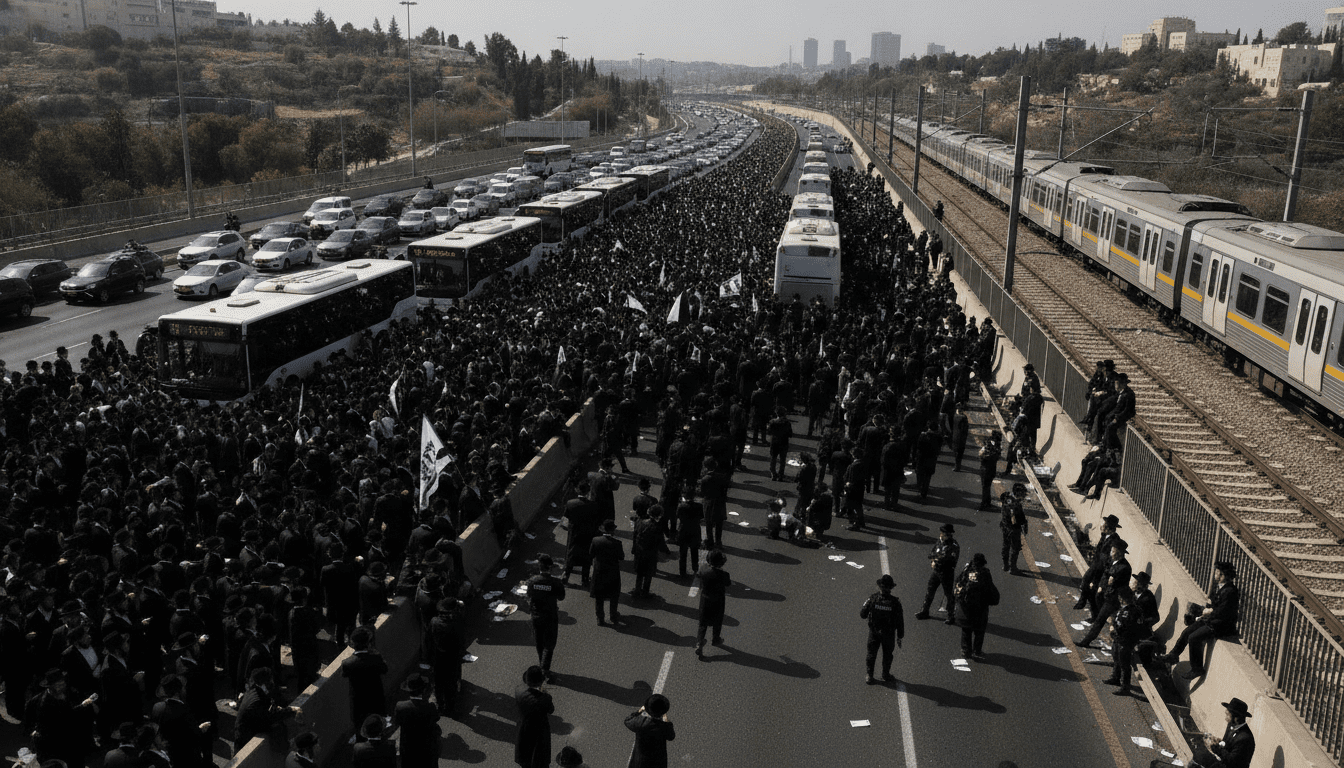
Israel saw widespread disruption this week as thousands of ultra-Orthodox demonstrators staged protests against conscription, blocking major roads and a rail corridor that serves commuters into Tel Aviv. The ultra-Orthodox conscription protests forced long traffic delays across the country and prompted confrontations with security forces, who used crowd-control measures to clear transport routes. Authorities reported arrests tied to the demonstrations, and emergency services took in several injured people following clashes and traffic incidents.
Mass roadblocks and rail stoppages
Protesters gathered at multiple junctions, rendering key highways nearly impassable and bringing at least one central rail line to a halt, snarling commuter traffic into major urban centers. Video and on-the-ground reports described dense groups of demonstrators standing on carriageways and at rail crossings, forcing trains to stop and motorists to reroute or abandon vehicles. Commuters experienced delays stretching for hours, and authorities warned travelers to expect continued disruption while clearance operations continued.
Police response and crowd-control tactics
Security forces responded with a range of crowd-control tactics as tensions rose at several sites, with media reporting the use of stun grenades and water cannons to disperse protesters. Police said they intervened where demonstrators blocked vital infrastructure or where clashes with motorists occurred, and made arrests at multiple locations. Officials characterized some of the actions by demonstrators as dangerous to public safety, while protesters accused security forces of excessive force.
Violent incidents and emergency reports
Among the incidents during the demonstrations, a motorist who stepped from her vehicle while holding a stick was attacked by demonstrators, according to initial accounts; details of the confrontation remain under investigation. Israel’s emergency service reported that a 93-year-old man was struck during the protests and received medical attention, highlighting the risk to bystanders. Emergency responders described a chaotic scene in areas where roads and rail lines were blocked, and urged the public to avoid protest hotspots.
Arrests of draft resisters trigger unrest
The immediate trigger for the demonstrations was the detention of ultra-Orthodox men accused of evading military service, arrests that prompted an escalation in street actions across the country. Protesters demanded the release of those detained and denounced steps they see as punitive measures against their community’s longstanding exemption practices. Organizers framed the demonstrations as a defense of religious lifestyle and communal autonomy, while authorities said arrests were carried out under the law.
Background: end of draft exemptions in 2024
For decades, strictly observant male yeshiva students were largely exempt from mandatory military service, a practice that came under sustained political scrutiny and legal challenge. That exemption effectively ended in 2024 after repeated attempts to renew it failed in the legislature, prompting the government to begin enforcing conscription requirements more broadly. The policy shift has produced recurring protests and a deepening rift between the ultra-Orthodox community and state institutions.
Military warning and national security concerns
Israeli defense officials have warned that widening exemptions are not sustainable and cited a looming shortfall in combat-ready personnel if recruitment does not expand. The military has emphasized the need for a broader pool of recruits to maintain readiness amid regional security pressures, framing integration of ultra-Orthodox men into the armed forces as a matter of national resilience. Critics of forced conscription argue the policy risks inflaming social tensions and undermining voluntary integration efforts, while proponents say universal service is essential for shared civic responsibility.
The protests mark the latest in a series of confrontations over the contentious issue of military service and community exemptions, exposing both the practical logistics of enforcing conscription and the deeper social fault lines it has reopened. As authorities work to clear transport routes and investigate violent incidents, political leaders face mounting pressure to find a path that reconciles citizenship obligations with religious freedoms. The coming days are likely to test whether dialogue or further enforcement will shape Israel’s approach to conscription and social cohesion.
