
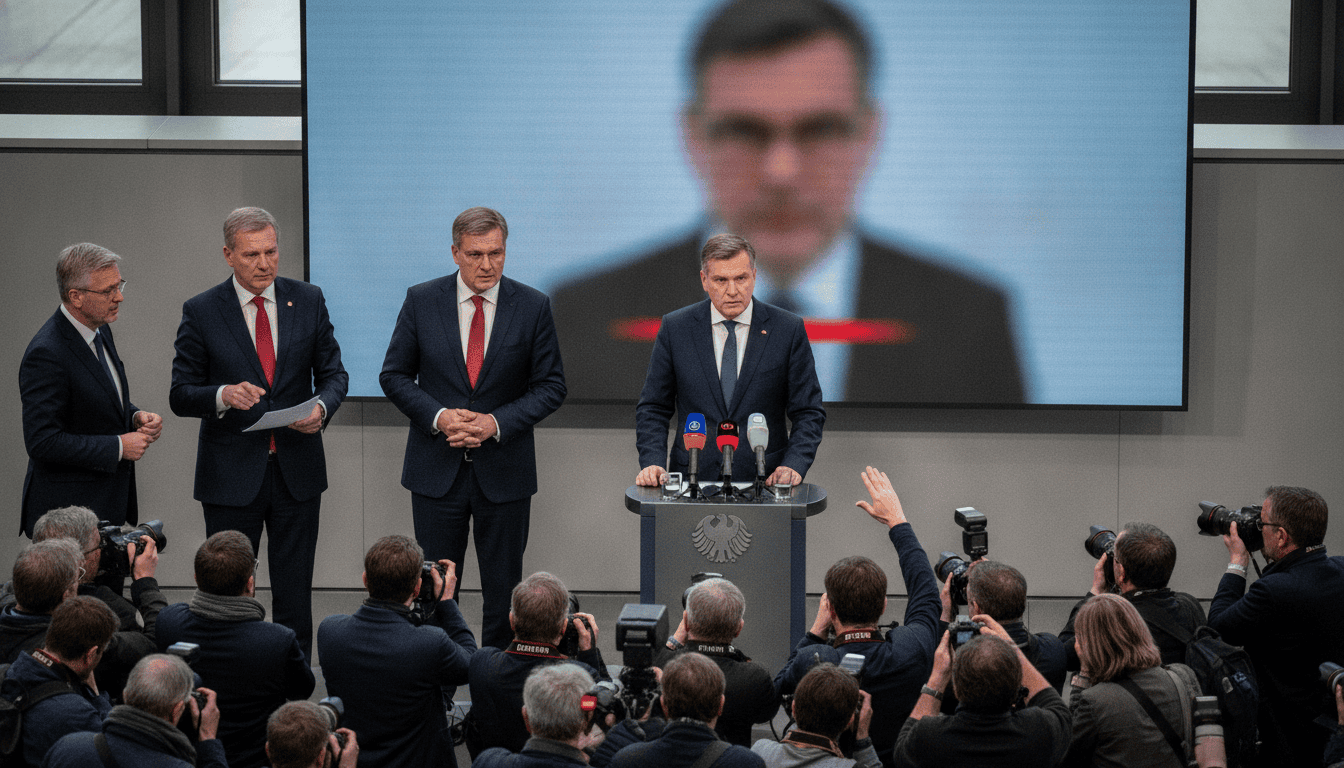
Merz cabinet reshuffle sparks backlash over transportation minister change
Germany’s government faces mounting criticism as the Merz cabinet reshuffle replaces the transport minister and reshapes defence and security priorities, stirring debate across parties and the public.
The Merz cabinet reshuffle has drawn sharp attention after the dismissal of Transport Minister Schnieder and the proposed appointment of Steffen Bilger, a move that opponents say lacks consultation and unsettles coalition partners. The change, announced ahead of the formal appointment ceremony scheduled for Wednesday, will see the new ministers only sworn in after the parliamentary summer recess. The reshuffle has become a focal point for broader disputes over defence spending, domestic security, and crisis response coordination in Berlin.
Merz’s move and the Schnieder dismissal
Chancellor Merz triggered controversy by removing Verkehrsminister Schnieder from his post, a step that political opponents and some allies described as abrupt. The decision has prompted criticism that the reshuffle prioritises political signaling over policy continuity, particularly in transport and infrastructure. Members of the coalition have expressed concern about the timing and transparency of the process, saying more internal dialogue was needed before such a major personnel change.
Appointment of Steffen Bilger and internal reaction
Steffen Bilger, a CDU parliamentarian known for his pragmatic style, was named as the likely successor after earlier plans to nominate Fritz Güntzler were withdrawn. Bilger’s supporters describe him as measured and collegial, with practical experience on federal infrastructure files. Critics warn that while his demeanor may calm some tensions, the scale of challenges in the transport portfolio requires immediate policy clarity and additional technical support.
Transport and infrastructure challenges ahead
The new transport minister faces a broad and urgent agenda that includes road and rail maintenance, congestion relief, and long-delayed investment projects. Germany’s infrastructure backlog, coupled with EU climate targets and pressure to modernize logistics chains, will demand concrete timelines and funding commitments. Observers say Bilger must balance short-term crisis management—such as construction bottlenecks—with longer-term reforms to procurement and project delivery to restore public confidence.
Defence spending and Pistorius’s defence of policy
The cabinet reshuffle coincides with renewed debate over defence policy after Defence Minister Pistorius defended a multiyear procurement plan that foresees substantial investment through 2030. The plan, which foresees heavy spending on major platforms, has drawn criticism from analysts who argue it may under-emphasize innovation, lessons from the Ukraine conflict, and support for smaller, rapidly deployable systems. Pistorius has insisted the programme addresses capability gaps, but opponents caution against fuelling a “gold rush” mentality in the defence industry without stronger oversight.
Security concerns after the CSD attack and judicial scrutiny
Security issues have intensified following the attack at the Christopher Street Day event in Berlin, prompting Chancellor Merz and Interior Minister Dobrindt to call for tougher measures against Islamist extremists. Federal authorities report several hundred individuals the BKA regards as potential threats, and officials say some of those listed remain at large. The incident has also exposed tensions between federal and state judicial authorities, with criticism that local prosecutions and preventive measures have been insufficient in some cases.
EU cooperation on crises and sanctions politics
Parallel to domestic disputes, Germany is coordinating with EU partners on multiple fronts: aerial firefighting assistance for intense summer blazes, and efforts to streamline sanction procedures targeting Russia. The EU response to wildfires has included contributions from several member states and non-EU partners, while diplomatic discussions in Brussels are examining how to prevent lone countries from repeatedly blocking sanctions. These international dimensions complicate domestic political debates and put pressure on federal ministries to deliver coherent strategies.
Public reaction and party dynamics
Public reaction to the cabinet reshuffle has been mixed, with polls showing a rise in scepticism about the government’s stability while party leaders engage in behind-the-scenes negotiations. Opposition figures are seizing on the shake-up to question the administration’s priorities, using the transport appointment and defence spending focus as examples of opaque decision-making. Within the governing coalition, some representatives are calling for clearer timelines and criteria governing future ministerial appointments to avoid similar controversies.
The reshuffle marks a pivotal moment for Chancellor Merz’s administration as it seeks to manage immediate operational demands and political fallout while preparing for a busy autumn agenda that will test the government’s capacity to deliver on infrastructure, security, and international commitments.
