
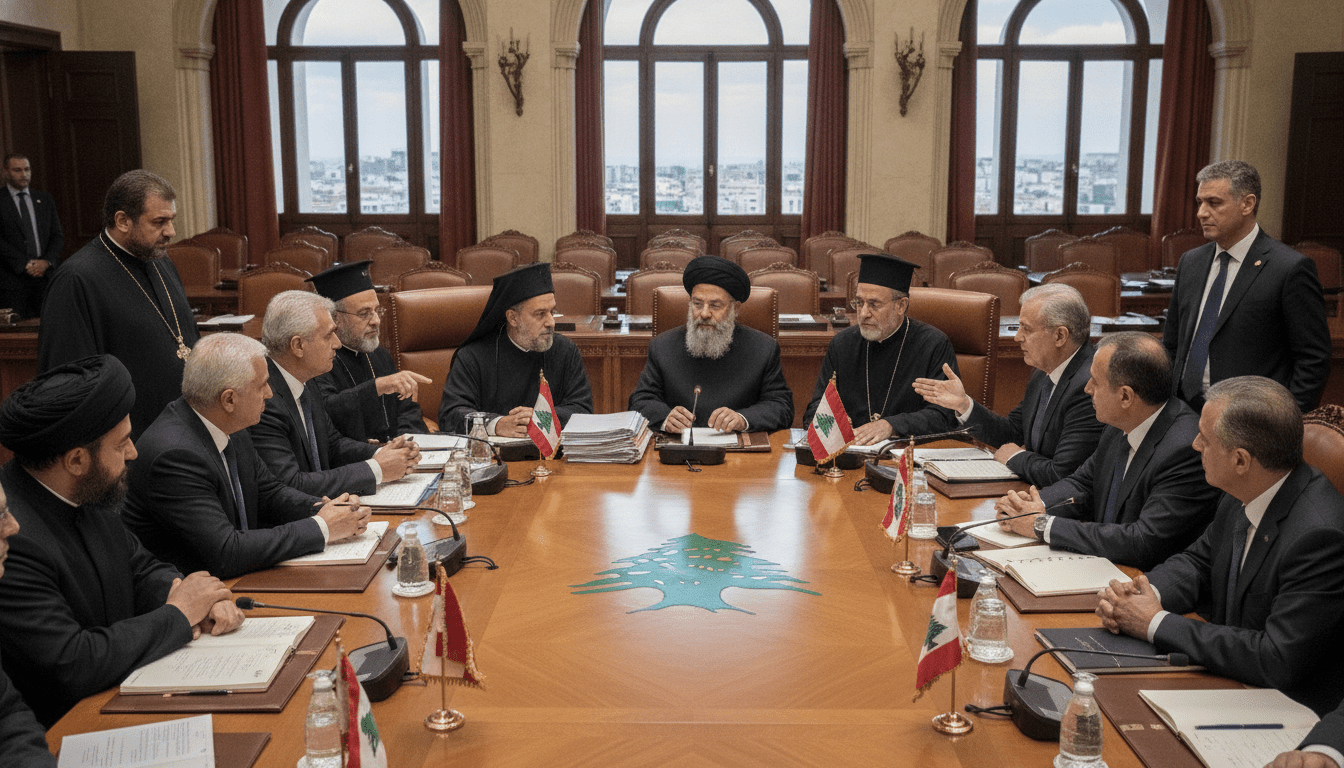
Hezbollah Clash Reshapes Lebanon’s Political Movements and National Power Balance
Hezbollah’s conflict with Israel forces a reordering of Lebanon’s political movements, deepening sectarian divides and reigniting debates over disarmament.
Hezbollah’s renewed engagement with Israel has thrust Lebanon’s political movements into a decisive moment, intensifying disputes over the militia’s weapons and the state’s authority. The confrontation has elevated questions about who controls security, how alliances will shift, and whether the fragile Lebanese government can reassert a monopoly on force. Political actors across sectarian lines are recalibrating positions as domestic pressures and regional dynamics converge.
Hezbollah’s military and political posture
Hezbollah remains Lebanon’s most powerful movement by military capability and political reach, with deep ties to Iran and a history of combining armed resistance with social services. The group argues its arsenal is a deterrent against further Israeli incursions, framing weapons as essential to national defence rather than a domestic threat.
Since 2023, Hezbollah’s operations in solidarity with Palestinians and direct clashes with Israel have increased its centrality in Lebanese politics. That prominence has empowered the group within state institutions and complicated attempts by rivals to curtail its military capacity through legal or political means.
Efforts to assert state monopoly on arms
Lebanese officials and several political blocs have renewed calls for disarmament, arguing that a state monopoly on weapons is essential to national sovereignty and recovery. Those pushing for a unified security architecture say disarming militias is a precondition for restoring public order and reviving a crippled economy.
Attempts to translate rhetoric into action face steep obstacles, including Hezbollah’s entrenched local support, the absence of a credible alternative security provider in some regions, and the risk of reigniting armed clashes. International diplomats and regional players are watching closely, but external leverage is limited by competing interests and Lebanon’s complex sectarian balance.
Lebanese Forces and Christian political pressure
The Lebanese Forces have sharpened their criticism of Hezbollah’s military role, positioning the party as a leading voice for disarmament among Christian constituencies. Party leader Samir Geagea and his allies emphasize the need for state institutions to reclaim authority and for Lebanon to steer clear of regional wars.
The LF’s stance reflects broader Christian concerns about sovereignty and the risk of collective punishment from cross-border conflict. Their political clout in parliament and presence in government provide a platform to press for legislative and security reforms, though they face resistance from pro-Hezbollah coalitions.
Future Movement’s return and Sunni political recalibration
The Future Movement, long a central Sunni force, signalled a political return under Saad Hariri by announcing renewed engagement ahead of parliamentary contests. The party’s revival aims to reconstitute Sunni representation in coastal cities and northern districts where it once held significant sway.
Hariri’s re-emergence reflects a broader Sunni recalibration in response to regional tensions and domestic instability. A resurgent Future Movement could alter coalition math in Beirut, potentially strengthening pro-Western and anti-Hezbollah votes if it manages to mobilize its former base.
Amal Movement, Nabih Berri, and leadership uncertainty
The Amal Movement continues to act as Hezbollah’s principal Shia partner while maintaining distinct political priorities and patronage networks. Longtime parliament speaker Nabih Berri remains a central broker in Lebanese politics, using his office to mediate between domestic factions and external interlocutors.
Questions about Berri’s succession and Amal’s future leadership add an element of unpredictability to the Shia duo’s internal dynamics. Any transition within Amal could shift the balance of influence in southern Lebanon and the Bekaa Valley, with downstream effects on national decision-making.
Fragmented alliances and the challenge of government formation
Lebanon’s mosaic of parties — from the Free Patriotic Movement to the Progressive Socialist Party — has historically produced coalition governments that balance sectarian representation rather than decisive governance. The current crisis amplifies the difficulties of forming a stable executive capable of addressing security, economic collapse, and public discontent.
Shifting alliances, electoral comebacks, and increasing public frustration constrain policymakers and raise the risk of prolonged stalemate. International donors and creditors have tied support to reforms and political stability, heightening the stakes for any resolution of the dispute over armed groups.
The immediate trajectory of Lebanon’s political landscape will depend on whether domestic compromises emerge and whether regional actors can be deterred from deepening involvement. For now, Hezbollah’s military role remains the fulcrum around which rival parties, sectarian communities, and foreign stakeholders are negotiating the country’s future.
